Can You Get a Boiler Grant? A Practical 2026 Guide
Learn whether you qualify for a boiler grant, where to apply, and how to navigate the process in 2026. This Boiler Hub guide covers eligibility, steps, and practical tips for homeowners and facility managers.


According to Boiler Hub, you can pursue a boiler grant if you meet program criteria and apply through government, supplier, or local schemes. This quick guide shows how to check eligibility, gather documents, and submit a complete application. Grants can offset replacement or efficiency upgrades, but availability varies by location and income.
Can a Boiler Grant Help Your Home? An Overview
According to Boiler Hub, boiler grants are not universal; they vary by country, region, and program. A typical grant helps cover part of the cost of replacing an old boiler with a higher-efficiency model or financing energy-improvement measures such as insulation or smart controls. Grants are typically means-tested or tied to energy-efficiency standards, and you may need to work with an approved installer or contractor. Homeowners and facility managers should approach grants as part of a broader energy retrofit plan, not a single payout. This overview explains who might qualify and where to start. The Boiler Hub Team emphasizes that program availability can shift with budgets and policy changes in 2026, so stay informed about current offerings.
Eligibility: Who Qualifies for a Boiler Grant
Eligibility criteria vary, but several common threads recur. You may need to own your home or operate a commercial property, demonstrate need through income or energy costs, and show that your current boiler is inefficient or failing. Some programs target low-income households, seniors, or those in fuel-poor regions. In many cases, applicants must agree to upgrade to an approved, high-efficiency boiler or to implement prescribed energy-efficiency measures. Always verify whether the grant requires installation by a licensed professional and obtain any necessary consent from landlords if you rent. In short, readiness, residency, and energy impact are the big levers that determine whether you receive support.
Where to Find Boiler Grant Opportunities
Begin with government-backed schemes, as these are the most stable sources of funding. Check your national or regional government website for energy-efficiency grants or ECO-type programs. Contact your electricity or gas supplier, as many offer rebates or subsidies for upgrading boilers or increasing home insulation. Local councils and housing associations may administer place-based programs, especially in urban or fuel-poor areas. Don’t overlook charitable organizations and community groups that administer small grants for energy efficiency. Finally, speak with trusted installers who participate in approved funding programs; they can often guide you to legitimate opportunities and ensure you’re aligned with installation standards.
Documents and Proofs You'll Need
Having documentation ready saves time and reduces application errors. Typical requirements include a valid photo ID, proof of residency, recent utility bills, and your current boiler’s information. An up-to-date EPC or energy assessment helps establish energy savings potential and eligibility. If income or benefit status affects your eligibility, gather recent pay stubs or benefits letters. You may also need to provide quotes from approved installers and consent from landlords for rental properties. Organize these items in a digital folder so you can attach them to applications quickly. The Boiler Hub Team notes that keeping documents tidy reduces delays in 2026 budgets.
Application Process: A High-Level Flow
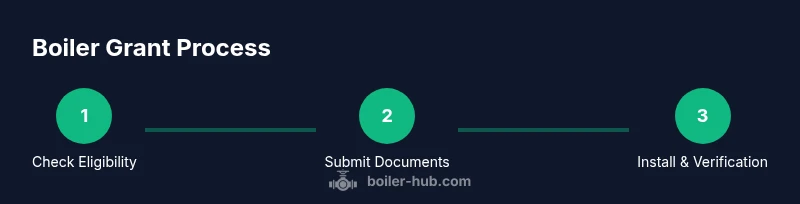
Most programs follow a similar flow: verify eligibility, collect documentation, submit an application, and await a decision. If approved, you’ll be directed to an approved installer and a plan with timelines. Some schemes require a pre-installation survey, while others permit you to proceed after submission. Expect a review window that can take several weeks, followed by a formal award or notification of funds. Keep a record of every communication for accountability.
How Grants Interact with Other Programs
Grants are often part of a wider package of support. Some applicants combine a grant with low-interest loans, energy-efficiency rebates, or installer incentives. Grants may cover only part of the cost; you’ll typically be responsible for the remainder. In some cases, a grant is a subsidy for the installation itself, while other programs reimburse energy-saving measures later after verification. Understand whether receiving a grant affects eligibility for other programs or tax credits in your region.
Costs, Long-Term Savings, and Payback
A boiler upgrade is not just a purchase; it’s an investment in lower energy use and improved comfort. A grant reduces upfront costs, shortening the payback period, but total savings depend on usage, fuel type, and efficiency of your new boiler. Consider long-term maintenance costs, potential warranty coverage, and the cost of required improvements like flue work or controls. Use energy-use estimates to model payback scenarios and determine whether the grant makes economic sense for your property.
Common Pitfalls and How to Avoid Them
Pitfalls to watch include overestimating eligibility, rushing the application, and selecting an installer based on price alone. Always verify the legitimacy of programs and installers, and never share sensitive information with unverified sources. Document everything, including consent from household members, and keep copies of all communications. If a grant seems to require unusual fees or pressure you to sign quickly, step back and verify with the program administrator.
Next Steps and Resources
Ready to pursue a boiler grant? Start by identifying eligible programs in your area, gather the required documents, and reach out to an approved installer. Use the steps outlined above to build a complete application package, and track the progress through each stage. For further help, consult official government portals and trusted energy advisers. Remember, grants vary by region and year, so stay informed about current deadlines and criteria for 2026.
Authority Sources
For accurate, up-to-date details, consult official sources such as government portals and energy agencies:
- https://www.gov.uk
- https://www.energy.gov
- https://www.energy.gov/eere/efficiency
Tools & Materials
- Energy Performance Certificate (EPC) or equivalent(A recent EPC helps establish energy efficiency baseline.)
- Proof of Identity(Passport, driving license, or national ID.)
- Proof of Residency(Recent utility bill or tenancy agreement.)
- Recent Energy Bills (gas/electric)(Last 3 months if available.)
- Income or Benefit Documentation(P60, benefits letters or tax return.)
- Landlord Consent (if renting)(Written authorization to upgrade the boiler.)
- Quotes from Approved Installers(If you have quotes, attach them.)
- Bank Details(For direct grant payments.)
- Boiler Information(Make/model, current efficiency (SAP) if available.)
Steps
Estimated time: Total time: 2-6 weeks
- 1
Gather Required Documentation
Collect your EPC, ID, proof of residency, recent energy bills, and income documents. Having everything in one place minimizes back-and-forth and speeds up the review.
Tip: Create a labeled digital folder and save scans of originals. - 2
Check Eligibility Carefully
Review each program’s criteria for location, property type, and income thresholds. Some grants require minimal energy improvements beyond boiler replacement.
Tip: Make a quick checklist of eligibility criteria before applying. - 3
Get an EPC if Needed
If your EPC is outdated, arrange an assessment to establish current energy efficiency and potential improvements. An up-to-date EPC strengthens your application.
Tip: Ask for an EPC update early to avoid delays. - 4
Identify Suitable Grant Programs
Search official portals, energy suppliers, and local authorities for available programs that match your circumstances.
Tip: Use filters like location, ownership, and boiler age to narrow options. - 5
Prepare and Submit Your Application
Fill out all forms accurately and attach supporting documents. Double-check dates, addresses, and boiler details before submission.
Tip: Keep a copy of every page and confirmation number. - 6
Arrange Installer and Schedule Installation
If approved, select an approved installer and coordinate a start date. A pre-installation survey may be required.
Tip: Request a written installation timeline and safety checks. - 7
Complete Installation and Verification
Ensure installation is completed by a licensed professional and that required safety tests are logged.
Tip: Keep all warranties and service records safe. - 8
Claim and Monitor Your Benefits
Track fund disbursement and monitor actual energy savings after installation.
Tip: Set up a simple energy-tracking plan to gauge impact.
Questions & Answers
Is there a boiler grant available for homeowners?
Yes. Many regions offer government schemes, utility rebates, or local authority programs to support boiler upgrades. Eligibility varies by location and household circumstances.
Yes. There are various government and utility programs that may help homeowners upgrade their boilers, depending on where you live and your situation.
Do I need an EPC to apply for a boiler grant?
Most programs require an energy assessment or EPC to establish efficiency and potential savings. If your EPC is outdated, obtain a current assessment before applying.
An energy assessment is usually required to show your home's efficiency and potential savings.
Can renters get boiler grants?
Renters may qualify if landlords participate or if the program targets properties rather than owners. Always secure landlord consent and ensure installation is compliant.
Renters can qualify if the landlord participates or if the program covers the property, with proper consent.
Are boiler grants loans or grants?
Grants are typically non-repayable subsidies. Some programs combine grants with low-interest loans or rebates for complementary upgrades.
Usually a grant, not a loan, though some programs mix grants with other subsidies.
How long does a grant application take?
Processing times vary by program and region, but many reviews take a few weeks to a couple of months from submission to decision.
It can take several weeks to a couple of months, depending on the program.
What if my home isn’t eligible for a grant?
If not eligible, explore other energy-efficiency programs, rebates, or phased upgrade options. Combining measures often improves overall eligibility.
If not eligible, look for other energy-efficiency programs or rebates that fit your situation.
Watch Video
Key Points
- Understand grants vary by region and program.
- Documentation readiness speeds up processing.
- Work with approved installers to stay compliant.
- Grants reduce upfront costs but may not cover all expenses.
- Track energy savings to validate program value.