Can You Get a Boiler on Finance? A Practical Homeowner's Guide
Learn how boiler financing works, compare options, and choose a budget-friendly plan. This guide covers installer and lender options, risks, and steps to secure approved financing for a new boiler.


Yes—boiler financing is a common route for homeowners and facility managers who want predictable monthly costs and to avoid large upfront payments. You can secure a loan or payment plan through installer financing, manufacturer/dealer programs, or a general home-improvement loan. Steps: compare offers and total costs, confirm installation is included, review interest rates and fees, check repayment terms, verify maintenance/warranty coverage, and ensure you can budget for ongoing fuel and service costs.
Understanding boiler financing
Financing a boiler is a practical option for homeowners and facility managers who want predictable monthly costs and to avoid large upfront payments. It can cover the price of the boiler, the installation, and sometimes related improvements such as a new flue or thermostat upgrades. Understanding the basics helps you compare offers and avoid common traps.
According to Boiler Hub, most financing options are designed to spread the investment over a term that fits your budget, while still ensuring the system remains efficient and reliable. The Boiler Hub team also notes that the total cost of ownership depends on the loan or lease terms, interest, and any maintenance plans you select. When you begin exploring options, remember that eligibility often depends on income, credit history, and the value of the installed system relative to the property.
Financing options you’ll encounter
There are several paths to finance a boiler installation. The most common choices include installer financing offered by the boiler company or installer, manufacturer or dealer financing programs, and traditional lending routes through banks or credit unions. You may also see options like generic home-improvement loans, personal loans, or credit-card-based plans. Some regions have energy or government-backed programs designed to encourage efficiency upgrades, while others rely on lender-specific offers. Each option has its own pros and cons in terms of interest, term length, fees, and installation inclusions. When evaluating options, consider not just the monthly payment but the total cost over the term, potential maintenance costs, and the impact on your budget for the life of the loan. It’s also smart to factor in any efficiency upgrades that could reduce ongoing fuel costs, which is a direct benefit of upgrading to a newer, more efficient boiler. In practice, many homeowners combine a portion of their savings with financing to minimize interest charges and shorten the repayment period. Boiler Hub’s analysis shows that carefully selecting a financing route can align monthly payments with energy-savings timelines, making upgrades more financially sustainable.
How to compare offers and total cost
A financing offer is more than the monthly payment. The key is the total cost of ownership (TCO), which includes the boiler price, installation, financing charges, and ongoing maintenance. When you review offers, create a side-by-side comparison that includes: (a) loan or lease term, (b) interest rate or APR, (c) any origination or processing fees, (d) whether the installation is included, (e) whether maintenance or warranty add-ons are included, and (f) early payoff options and penalties. A lower monthly payment with a longer term can end up costing significantly more overall. Use a simple spreadsheet to model scenarios with and without maintenance plans. If you can secure a 0% APR promo but cannot pay off within the promo period, you may lose the benefit; weigh the long-term implications before committing. If you’re unsure, seek advice from Boiler Hub’s guidance and compare at least two solid offers.
What to expect during installation when financed
Financing can affect the logistics of installation, but the core process remains the same: an assessment, design, installation, and testing. Some financing options require a deposit or pre-approval before any work begins, while others align the financing approval with the installation schedule. Expect a formal contract that specifies the scope of work, equipment details, warranties, and payment milestones. Maintaining open communication with your installer is essential, especially if your plan involves adding related improvements, such as a new flue or thermostat upgrades. Ensure the contract includes clear terms about who handles permits, waste disposal, and inspection requirements. If a lender requires insurance or warranty documentation, have those ready in advance to avoid delays. Boiler Hub notes that streamlining documentation can shave days off the approval and installation timeline, helping you get your new system up and running sooner.
Pros, cons, and risk management
Financing a boiler offers several advantages, including preserving cash flow, enabling a faster upgrade to high-efficiency equipment, and often providing bundled maintenance options. However, it also introduces responsibilities: you’ll be committing to regular repayments, potential interest charges, and longer-term financial obligations tied to the installer’s or lender’s terms. The most important risk is overextending your budget if interest rates rise or if you encounter unexpected maintenance costs. To mitigate risk, choose a plan with flexible repayment options, compare offers from multiple providers, and consider a shorter term or additional down payment to reduce interest. A well-chosen plan can stabilize heating costs and improve comfort, while a poorly chosen one may become a financial burden. Always verify that the selected boiler meets your home’s needs and that warranties and service plans align with your expectations. Boiler Hub’s guidance emphasizes the importance of aligning financing with actual energy savings and maintenance commitments to maximize value.
A clear path: getting approved and finalizing the deal
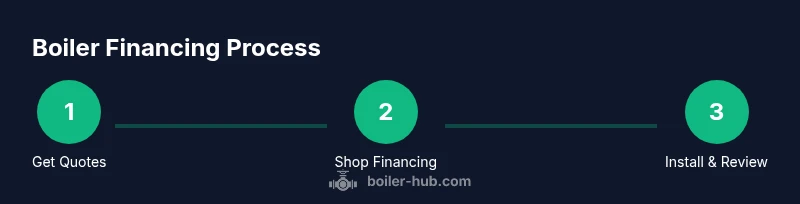
To transform an idea into a financed boiler installation, follow a structured path: gather quotes, compare financing options, check your credit and budget, obtain pre-approvals where possible, submit applications, and review final offers. Ensure quotes include all required work and that any add-ons are documented. Once you choose a plan, sign the contract, schedule installation, and plan for any required inspections. After installation, verify the system’s performance, register warranties, and set up a maintenance schedule. This approach minimizes surprises and helps you stay on track with repayments. For homeowners, Boiler Hub recommends maintaining a balance between upfront savings, monthly payments, and expected energy savings to ensure the upgrade remains financially viable over its lifespan.
Next steps and maintenance
The journey doesn’t end with installation. Schedule a professional boiler service in line with the warranty and maintenance terms. A well-maintained boiler runs more efficiently, which can translate into lower energy bills and more predictable operating costs. Keep all financing documents, contracts, and maintenance records in a single folder for easy reference. Review your plan annually to ensure it still fits your budget and energy needs. If your circumstances change—for example, a change in income or household size—revisit your financing terms or consult Boiler Hub for updated guidance. A properly financed boiler can deliver comfort and efficiency for years, provided you stay engaged with maintenance and payment planning.
Tools & Materials
- Quotes from at least two installers(Installation-included quotes preferred to ensure apples-to-apples comparison)
- Recent energy bill and boiler data(For estimating usage and potential savings)
- Personal identification and proof of address(Needed for credit checks and contract signing)
- Budget and repayment plan(Define max monthly payment and target loan term)
- Warranty and maintenance plan details(Helpful for evaluating value-adds and long-term costs)
- Budgeting calculator or spreadsheet(Useful for comparing total costs across offers)
Steps
Estimated time: 2-6 weeks
- 1
Gather baseline information and quotes
Collect your current boiler data, energy usage, fuel type, age of equipment, and at least two formal quotes that include installation details. Use this as your baseline to compare options and future maintenance costs.
Tip: Having a copy of recent energy bills speeds up the estimation and comparison process. - 2
Check financing options and eligibility
Review installer financing, independent lender options, and any government or utility programs available in your area. Research required documentation and typical eligibility criteria to avoid surprises later.
Tip: Ask lenders about pre-approval options to understand your budget before shopping. - 3
Estimate total cost of ownership (TCO)
For each offer, calculate the boiler price, installation costs, financing charges, and expected maintenance. Include potential energy savings from a high-efficiency unit to gauge long-term value.
Tip: Create a simple spreadsheet to track each scenario side by side. - 4
Compare terms and conditions
Line up term length, APR or interest rate, fees, early payoff penalties, and whether maintenance or warranty add-ons are included. Shorter terms can save money overall but increase monthly payments.
Tip: Prefer terms with clear early payoff options and no heavy penalties. - 5
Apply and obtain approvals
Submit applications to your chosen lenders. Provide the required proof of income, residence, and identity. Monitor status and respond promptly to any lender requests to avoid delays.
Tip: Limit inquiries to avoid unnecessary credit score impact; check if a soft pull is possible. - 6
Finalize contract and schedule installation
Choose the best offer, sign the contract, and arrange a realistic installation window. Confirm whether the lender requires any special permits or inspections and ensure the contract lists all inclusions.
Tip: Get a written plan outlining installation steps, timelines, and warranty terms. - 7
Complete installation and verify performance
Have the boiler installed, test performance, and verify that all components and safety features function correctly. Register warranties and set up maintenance reminders.
Tip: Keep all receipts and service records in one place for easy future reference. - 8
Plan ongoing maintenance and monitor payments
Set up a maintenance schedule and automate payments if possible. Reassess annual energy use and adjust plans if your budget or household needs change.
Tip: Annual check-ins help catch issues early and maximize efficiency savings.
Questions & Answers
Can I finance a boiler if I have bad credit?
It may be possible with specialized lenders or programs that consider income and overall financial profile. Approval can vary, and a larger down payment or shorter term may improve chances. Always compare multiple offers.
You may still find finance options, but approval can vary and may require a larger down payment or shorter term.
Do installers offer financing on all boiler models?
Not all installers offer financing on every model. Availability depends on the installer, the boiler model, and the financing partners they work with. Always confirm options before selecting a model.
Financing availability depends on the installer and model; check before you decide.
Is it possible to roll maintenance costs into financing?
Some lenders allow adding maintenance or warranty costs to the loan. Verify with the lender and ensure the added charges align with your budget and expected system performance.
Some lenders let you add maintenance costs to the loan; confirm this option.
Will financing affect my home insurance or warranty?
Financing itself typically doesn’t affect insurance. Warranty terms depend on the boiler and installation. Review both to avoid gaps in coverage or service requirements.
Finance usually won’t change insurance, but read warranty terms carefully.
How long does approval usually take?
Approval times vary by lender. Some offers are quick, potentially minutes online, while others can take several days. Plan installation around the expected timeline.
Approval can be quick or take a few days, depending on the lender.
Can I negotiate the terms or the install price?
Yes. You can negotiate interest, fees, and installation pricing. Bring competing offers and ask lenders to match or improve terms where possible.
You can negotiate both terms and installation price.
Watch Video
Key Points
- Assess financing early to align with your budget.
- Compare total cost, not just monthly payments.
- Ask about installation inclusions when financing.
- Beware long terms that cost more overall.
- Boiler Hub's guidance helps you weigh options against energy savings.