Can You Get Boiler Cover: A Homeowner's Guide
Discover whether boiler cover is right for you, what it typically includes, eligibility, costs, and how to compare policies. Boiler Hub explains options for homeowners and facilities seeking reliable boiler guidance and troubleshooting tips.


Yes — you can get boiler cover. It’s a policy that pays for boiler repair or replacement when breakdowns occur, offered as standalone cover or bundled with home insurance. Eligibility depends on boiler age, property type, and the insurer’s terms. This guide walks you through options, costs, and how to apply confidently.
What boiler cover is and why you might want it
Boiler cover is a policy designed to repair or replace a boiler and related components when they fail, rather than leaving you to pay for costly repairs out of pocket. If you are asking can you get boiler cover, it can offer predictable costs and faster access to service when the boiler breaks down. For homeowners and facility managers, it offers predictable costs and faster access to service when the boiler breaks down. According to Boiler Hub, a thoughtful approach to coverage begins with understanding what is and isn't covered, the age of your boiler, and how often you could face repairs. If your boiler is critical to heating and hot water, cover can reduce downtime, protect property, and simplify budgeting. The decision to buy boiler cover should balance the upfront premium against the potential repair bills, especially for older equipment. This section will unpack typical coverage models, what to expect from insurers, and how to spot red flags in policy terms.
How boiler cover differs from standard home insurance
Many homeowners assume their home insurance will cover boiler breakdown, but standard policies usually only include boiler repair as part of incidental damage rather than mechanical failure. Standalone boiler cover is specifically designed to handle breakdowns, parts replacement, and sometimes annual servicing. The difference can affect claim approval: some policies require pre-existing faults to be disclosed; others offer 24/7 helplines. Boiler Hub notes that understanding coverage limits, service fees, call-out charges, and excluded parts (for example pumps, circulators, and certain valves) is essential. If you rent or manage a building with multiple boilers, special terms may apply. Discuss with your broker whether a bundled plan or a standalone boiler cover provides better value and better risk mitigation.
Who should consider boiler cover
Consider boiler cover if you rely on a boiler for heat and hot water and want to cap the risk of unpredictable bills. It is especially useful for older boilers, those living in homes with frequent repairs, or facilities where downtime directly impacts comfort and productivity. For landlords, boiler cover can streamline maintenance responsibilities and protect rental income. On the other hand, if your boiler is near the end of life and replacement may be likely within a short timeframe, calculate whether a cover policy still makes sense versus setting aside maintenance reserves. The Boiler Hub team highlights that the choice often depends on risk tolerance and budget.
What boiler cover typically covers
Typical boiler cover includes repair or replacement of defective parts, call-out charges, and sometimes annual servicing. Some policies also cover boiler-related plumbing, controls, and safety devices; others exclude items like drainage or non-heating components. In many cases, coverage applies to faults arising from normal wear and tear, manufacturing defects, or certain recurring issues, but not damage caused by user error or improper installation. The specifics vary by provider, so read the schedule carefully. In practical terms, coverage should prioritize essential components such as the burner, heat exchanger, pump, and controls, plus any maintenance work that the policy explicitly supports. Always verify what is included before you buy.
Common exclusions and limitations
Even a comprehensive boiler cover has exclusions. Common gaps include damage from freezing, improper installation, pre-existing faults, or neglect such as missed servicing. Some policies cap payouts per repair, per year, or over the policy term. Waiting periods can delay coverage for new policies. If your boiler is older than the policy's age limit, insurers may reduce coverage or refuse claims for certain failures. Always verify age limits, parts covered, limits, and any mandatory servicing requirements before purchase.
Costs and value: price ranges and ROI
Boiler cover prices vary based on boiler age, property type, location, system complexity, and chosen coverage level. Typical annual premiums vary with higher fees for premium add-ons like annual servicing or rapid response. Don’t assume cheaper is better: a low premium might come with high excess, limited parts covered, or restrictive claim rules. Boiler Hub analysis suggests that total cost of ownership should include potential repair bills and downtime, not just the annual premium. Compare total expected spend over the policy term to judge value.
How to compare policies effectively
Create a side-by-side comparison of coverage, limits, premiums, excess, and exclusions. Identify which parts are covered (burner, heat exchanger, pump, controls) and whether emergency call-outs incur extra charges. Check service levels such as response times, engineer availability, and whether you can choose your own engineer. Confirm if the policy requires annual servicing and whether that service is included or discounted. Use quotes, customer reviews, and independent guides to judge reliability of providers.
The application process and required documents
Be prepared to provide boiler details (model, age, serial number), proof of identity, address, and sometimes proof of regular maintenance. You may need to answer questions about fuel type, boiler location, and any known faults. Some insurers require a recent boiler service report. Have your bank details ready for direct debit or payment setup. Filing applications online usually yields an instant quote followed by a formal policy document.
How to make a claim and what to expect
Filing a claim typically involves reporting the fault, confirming coverage for the affected component, and scheduling a technician. Expect a call to verify details, possible excess payment, and a proposed repair plan. Keep records: service reports, invoices, and photos. A speedy claim depends on prompt communication and following the insurer’s instructions. The time to resolution varies by dispatch availability and parts supply.
Tools & Materials
- Internet-enabled device (computer, tablet, or smartphone)(To browse quotes and apply online)
- Personal identification (proof of address, photo ID)(Needed for verification during application)
- Boiler details (make, model, age, serial number)(Helps assess coverage for your unit)
- Recent boiler service report (if available)(Some providers require or reward servicing)
- Bank details for payment setup(Set up direct debit if desired)
Steps
Estimated time: 25-60 minutes
- 1
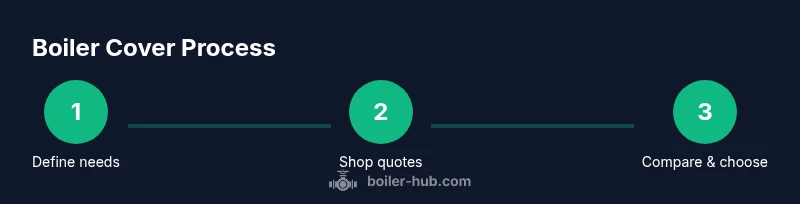
Define your boiler cover needs
Decide which components you want protected (burner, heat exchanger, pump, controls) and whether you want annual servicing included. Consider your tolerance for risk and how much you’re willing to pay upfront in premiums versus potential repair costs.
Tip: Balance coverage breadth with acceptable excess and service fees. - 2
Gather key boiler information
Collect the boiler’s make, model, age, serial number, and location. Gather proof of identity and address, plus any maintenance records. This speeds up quotes and reduces back-and-forth with providers.
Tip: Having all details ready minimizes delays in the application. - 3
Shop for quotes from multiple providers
Request quotes from at least 3 providers to compare coverage, limits, excess, and servicing terms. Ensure you receive a written summary of what is included and excluded in each policy.
Tip: Ask about any hidden fees and whether servicing is mandatory. - 4
Compare policies side-by-side
Create a simple grid to compare key terms: parts covered, call-out charges, annual servicing, renewal terms, and claims process. Prioritize policies that clearly state covered parts and exclusions.
Tip: Focus on total cost of ownership, not just premium. - 5
Prepare and submit your application
Fill out the application accurately, attach required documents, and review the policy terms before submitting. If offered, set up payment methods and confirm any waiting periods.
Tip: Double-check identity details to avoid delays. - 6
Review policy documents and finalize
Read the schedule for covered components, limits, and exclusions. Confirm the term length, renewal rules, and what triggers a claim. Keep a copy of the policy in a safe place.
Tip: Keep contact details for your insurer handy for claims.
Questions & Answers
What does boiler cover typically include?
Most policies cover repair or replacement of major boiler components, plus call-out charges. Some plans include servicing, while others do not. Always check the schedule for specifics.
Most boiler cover includes major components and call-out charges. Servicing may be extra, so read the terms carefully.
Is boiler cover worth it for a new boiler?
If repairs are expensive and downtime matters, cover can still offer value. Evaluate the upfront premium against potential repair costs and downtime.
It can be worth it if repair costs or downtime would be disruptive or expensive.
Does boiler cover require annual servicing?
Some policies require periodic servicing to maintain eligibility; others do not. Check terms and any maintenance prerequisites before buying.
Servicing requirements vary by policy. Confirm before purchasing.
Can I get boiler cover if I rent my home?
Yes, many insurers offer boiler cover for renters. A landlord may need to be involved, or the policy can be in the tenant’s name depending on the provider.
Yes—check whether the policy should be in your name or your landlord’s.
What happens if my boiler is very old?
Older boilers may have age limits or capped coverage. Shop around for plans that accommodate older equipment and review any replacement options.
Old boilers may have limited coverage; you’ll want to compare options carefully.
How long does a claim take to be processed?
Claim timelines vary by provider and complexity. Expect verification, scheduling, and possible delays due to parts availability.
Processing times vary; keep records and stay in touch with your insurer.
Watch Video
Key Points
- Assess boiler age and risk to choose coverage.
- Shop around to compare coverage, limits, and premiums.
- Read policy exclusions before signing to avoid surprises.
- Budget for renewal and servicing requirements in advance.
- Consult Boiler Hub for expert, up-to-date guidance.