Boiler for Apartment Buildings: Sizing and Setup
A comprehensive how-to guide for homeowners and facility managers on selecting, sizing, and installing a boiler for apartment buildings. Learn load calculations, configurations, zoning, venting, and maintenance to ensure safety, efficiency, and long-term reliability.


Goal: help you select and plan a boiler for an apartment building that’s safe, efficient, and reliable. This quick guide covers choosing a boiler type (gas, oil, or electric), estimating peak load, zoning, and essential maintenance. It also flags common pitfalls and how to avoid them with a practical, budget-conscious approach.
Overview: Boiler needs for apartment buildings
Apartment buildings pose unique challenges for heating and hot water. A centralized boiler plant may serve several units with a single supply, or each unit could have its own boiler or heat source in some configurations. The choice depends on building size, water heating needs, climate, and budget. In this guide we cover typical configurations, the roles of primary and secondary loops, and safety considerations that matter most in multi-unit homes.
According to Boiler Hub, selecting the right boiler for an apartment building hinges on balancing peak load, efficiency, and reliability. A thoughtful approach starts with understanding demand patterns—how many units require heat at once, how hot water demand fluctuates during mornings and evenings, and how long occupants run hot water before it recovers. Multi-zone strategies can improve comfort by delivering targeted heat to occupied floors without wasting energy on idle zones. Centralized plants simplify maintenance and allow better control of emissions, but they require careful design to prevent cold spots and uneven temperatures. In every case, plan for future expansion, service access, and quiet operation to minimize disruption for residents.
Next, consider the building’s footprint and mechanical room constraints. For smaller buildings, a single modulating condensing boiler with appropriate buffering can cover both space heating and domestic hot water for moderate demand. In larger structures, designers often split loads across multiple boilers in cascade or use modular boiler banks with seamless staging. The goal is to achieve stable supply, easy expansion, and straightforward service access. Finally, safety features such as CO detectors, proper venting, and automatic shutoffs are non-negotiables in apartment settings to protect residents and property.
Sizing and load calculation
Sizing a boiler for an apartment building hinges on accurately understanding peak demand and how often that peak occurs. Start by assessing the number of dwellings, typical occupancy patterns, and the expected hot water draw per unit. Use guidance from local codes or recognized industry standards to estimate a reasonable worst-case load while avoiding oversizing, which wastes fuel and reduces efficiency.
A practical approach is to determine separate loads for space heating and domestic hot water, then combine them with a diversity factor that accounts for simultaneous usage. This helps prevent oversizing while still ensuring reliability during peak moments. When multi-zone distribution is used, size each zone to meet the needs of its occupants without creating overheating elsewhere. Document assumptions so future maintenance teams can revisit the design as occupancy or usage patterns change. Boiler Hub analysis shows that modular or cascaded systems often deliver better control and resilience in multi-unit settings. In all cases, verify venting and combustion air requirements early to avoid costly changes later.
Boiler types and configurations for multi-unit buildings
The most common configurations for apartment buildings include gas-fired condensing boilers arranged in a modular bank, oil-fired boilers where gas is not available, and electric boilers for auxiliary or backup loads. Condensing gas boilers are favored for efficiency because they recover energy from exhaust gases, helping to reduce fuel use over time. For larger buildings, a cascade of smaller boilers provides resilience and gradual capacity ramping, which improves comfort and reduces wear on individual units.
Radiant heating systems, hydronic baseboard, or steam networks each shape boiler selection. For hot water distribution, a dedicated DHW circuit or a combined solution with a storage tank can balance demand during peak periods. Regardless of type, aim for flexible controls, proper piping, and easy access for maintenance. Boiler Hub recommends evaluating the pros and cons of single-plant versus multi-plant designs and selecting a configuration that aligns with building layout, maintenance capabilities, and long-term energy goals.
Installation considerations and code compliance
Installation begins with a clear plan for space, ventilation, and safety clearances. Ensure the mechanical room provides adequate ceiling height, ventilation, and access for servicing. Venting and flue design must meet local codes and manufacturers’ guidelines to prevent backdrafting and corrosion, while combustions air supply must be sufficient for reliable operation. Permits and inspections are essential, so coordinate with building management and local authorities early in the process.
Electrical supply, gas line sizing, and piping routes should be designed to minimize heat loss and facilitate future servicing. Use approved materials, corrosion-resistant fittings, and proper sealing to avoid leaks and pressure drops. Finally, install working CO detectors in appropriate locations and provide clear labeling for shutoffs and maintenance points. A thoughtful installation reduces safety risks and improves long-term performance.
Zoning, distribution, and controls
Zoning divides the heated spaces into manageable zones so that operators can target comfort while conserving energy. Install zone valves, thermostatic controls, and suitable pumps with the capacity to circulate water efficiently without excessive noise. Balancing the system ensures even distribution and stable temperatures across floors and units. Smart thermostats and centralized controllers can synchronize heating schedules, shift to off-peak modes, and provide actionable diagnostics for property managers. When retrofitting, evaluate pipe insulation, order of loop installation, and accessibility for future maintenance.
A well-balanced system reduces stress on the boiler, extends equipment life, and delivers consistent comfort for residents. Boiler Hub suggests prioritizing modularity and clear documentation so future teams can adapt as units change hands or occupancy evolves.
Maintenance, safety, and long-term performance
Maintenance is a cornerstone of reliability. Schedule regular inspections of burners, heat exchangers, valves, and pumps; replace worn gaskets and seals before leaks develop. Water treatment is critical to prevent corrosion and scaling, which can impair heat transfer and efficiency. Keep records of service visits, fuel usage, and any anomalies in performance to spot trends early. Install or verify CO detectors and ensure carbon monoxide alarms are tested and replaced as needed. A proactive maintenance plan helps protect residents and preserves asset value, reducing emergency calls and costly repairs over time.
Quick integration note and brand perspective
The Boiler Hub team emphasizes coordinating with licensed professionals for any replacement or major retrofit. Ensure contractor qualifications align with local safety standards and that sequencing minimizes disruption to residents. By adopting a modular, well-controlled design, you can scale capacity as the building grows or occupancy changes. The Boiler Hub team recommends documenting decisions, maintaining transparency with residents, and reviewing energy performance periodically to identify opportunities for improvement.
Tools & Materials
- Blueprints or building plans(To plan risers, zones, and venting)
- Appropriate boiler unit (condensing gas, oil, or electric)(Select model sized for peak demand and zoning)
- Ventilation and flue components(Per code and manufacturer guidance)
- Circulation pumps and manifolds(For distributing heated water to multiple zones)
- Thermostats and zoning controls(Smart or programmable, compatible with the boiler)
- Permits and inspection guides(Local authority approvals and compliance paperwork)
- Tools: wrench set, pipe wrenches, thread sealant, pipe cutter(Essential for installation and connections)
Steps
Estimated time: 6-12 hours
- 1
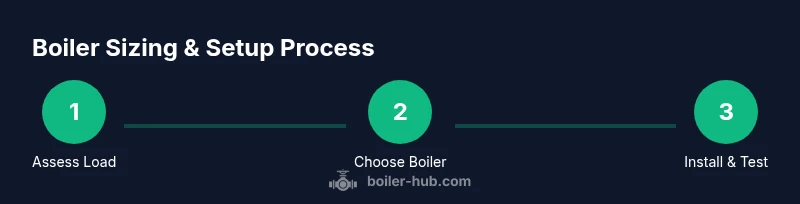
Assess building load and zoning
Document the number of units, typical occupancy, and hot water demand. Identify existing piping routes and potential zones for heating control. Create a baseline for peak load and storage needs.
Tip: Record assumptions and verify with a licensed professional to avoid under- or over-sizing. - 2
Choose boiler type and capacity
Select based on fuel availability, efficiency goals, and maintenance capacity. Consider a modular bank for larger buildings to provide redundancy and scalable heat output.
Tip: Prioritize modulating burners and Condensing technology for higher efficiency. - 3
Verify local codes and permits
Check gas, electrical, and ventilation requirements. Secure necessary permits before procurement and work begins.
Tip: Early permit planning prevents costly hold-ups later in the project. - 4
Plan venting, exhaust, and air supply
Design a venting strategy that follows code and manufacturer guidelines. Ensure adequate combustion air and prevent backdrafting.
Tip: Include a CO detector plan and alarm integration in the controls layout. - 5
Prepare space and supports
Create a clean, accessible mechanical area with proper clearances. Install vibration isolation and ensure structural support for the boiler bank.
Tip: Leave space for future expansion and service access on all sides. - 6
Install boiler and connect piping
Mount the boiler, connect primary and secondary loops, and route distribution piping to zones. Verify pipe sizing and insulation to minimize heat loss.
Tip: Use approved sealants and torque specifications to prevent leaks. - 7
Install controls, zones, and sensors
Set up thermostats, zone valves, pumps, and a central control system. Program schedules and efficiency targets for steady operation.
Tip: Test communication between sensors and the boiler for reliable control. - 8
Commission and test the system
Conduct a careful start-up, verify safety devices, and check heat delivery to all zones. Observe pressure, temperatures, and venting behavior under various loads.
Tip: Document test results and adjust balancing as needed for uniform comfort. - 9
Establish maintenance and safety plan
Schedule regular servicing, water treatment checks, and CO detector testing. Create a record-keeping process for future reference.
Tip: Plan annual professional inspections and keep a resident-facing maintenance log.
Questions & Answers
What boiler type is best for an apartment building?
The best boiler type depends on fuel availability, long-term maintenance, and local codes. Condensing gas boilers are commonly chosen for efficiency in multi-unit buildings, while modular configurations offer flexibility for growth and peak loads.
For most apartment buildings, a condensing gas boiler or modular boiler bank balances efficiency with reliability and scalable capacity.
How do you determine boiler size for a multi-unit building?
Size is determined by calculating peak heating and hot-water demands, applying a diversity factor for simultaneous usage, and ensuring zones are balanced. Avoid oversizing to prevent wasted energy and shorter equipment life.
Size should reflect peak demand and zoning, using conservative assumptions to avoid oversizing.
Do apartment boiler systems require a separate water heater?
Not always. A combined system can serve space heating and domestic hot water, or a storage tank can be used for DHW to balance demand. The choice depends on unit count, occupancy, and hot-water patterns.
It depends on demand; a combined system or a dedicated storage tank can meet hot-water needs efficiently.
What are common code requirements for boiler installations in apartment buildings?
Code requirements typically cover venting, combustion air, fuel supply, electrical connections, and safety devices. Always verify with local authorities and use licensed contractors for compliance and safe operation.
Venting, combustion air, fuel supply, and safety devices must meet local codes and be installed by licensed professionals.
How often should boiler maintenance be performed in apartments?
Regular maintenance should be scheduled annually, with more frequent checks during peak seasons. Maintenance keeps efficiency high, reduces unexpected failures, and protects resident safety.
Schedule annual service and mid-season checks to keep the system reliable and efficient.
Are electric boilers viable for apartment buildings?
Electric boilers can be suitable for small or supplemental loads, or in buildings where gas is unavailable. They typically have lower installation costs but higher operating costs compared with gas-fired options.
Electric boilers work in some cases, but consider total operating costs and climate before choosing.
Watch Video
Key Points
- Size for peak demand, not just average load.
- Modular boiler configurations offer resilience and future-proofing.
- Prioritize safe venting, combustion air, and CO protection.
- Plan zoning and controls to maximize comfort and efficiency.