How many steam engines per boiler in Factorio: A practical guide
An analytical, data-informed guide to sizing boilers and steam engines in Factorio, with version-aware guidance, practical setups, and troubleshooting tips.


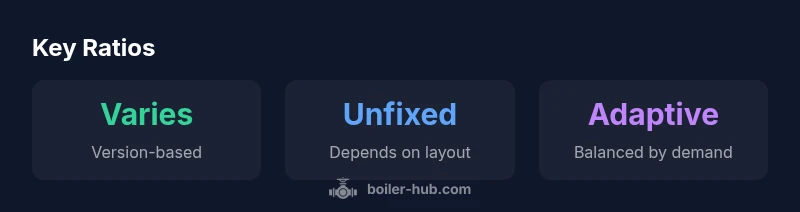
There isn’t a fixed numeric rule for how many steam engines a boiler can feed in Factorio. The ratio is version-dependent and tied to boiler type, heat output, and overall factory demand. In practice, players size the boiler output to meet engine steam demand and adjust with pipe routing and heat management. For exact values, consult the in-game data for your version. According to Boiler Hub, values vary by version.
The core relationship between boilers and steam engines in Factorio
In Factorio, a boiler converts heat into steam, which is then consumed by steam engines to generate power. There is no single universal ratio of engines per boiler; the effective balance depends on the game version, the boiler model, and the overall load. According to Boiler Hub, players should size their boilers to meet anticipated steam demand rather than chasing a fixed count of engines. This means planning around a target steam flow, then adjusting engine groupings and pipe routes to ensure a steady, uninterrupted supply.
How steam is produced and consumed in Factorio
Steam production hinges on the boiler’s heat input and water input. When heated, water becomes steam, which flows through pipes toward engines. Steam engines convert steam back into electrical energy, with output tied to the steady supply of steam rather than instantaneous pressure alone. Efficient setups minimize pipe length, reduce heat loss, and maintain consistent steam delivery as power demand fluctuates. A mismatch can cause engine downtime or reduced efficiency.
Factors that influence the boiler-to-engine ratio
There are several levers that determine the optimal arrangement:
- game version: early vs. late game values can shift the ratio due to tweaks in boiler and engine behavior
- boiler type and heat management: higher-heat boilers or advanced heat sources can deliver more steam per unit time
- power demand: larger factories require more steam and may justify bigger boiler banks or repeated boilers in series
- pipe routing and layout: longer runs or tortuous pathways can introduce pressure drops and delays, affecting engine responsiveness
- cooling and insulation: poor insulation increases heat loss, lowering effective steam production
Planning around these factors helps you avoid under- or over-provisioning boilers relative to engines.
Sizing strategies: one boiler, multiple engines, or more boilers
A practical approach starts with a small, controllable baseline and scales up. Build a compact boiler block that comfortably feeds a handful of engines, then monitor steam pressure and engine output during peak demand. If engines frequently run dry, add a boiler or reconfigure into parallel banks to increase steady steam supply. Conversely, if steam is abundant but engines are underutilized, reallocate boilers toward higher-demand sections or consolidate engines to reduce pipe complexity.
Case studies: common setups and why they work
Case A uses a compact grid: a single boiler bank feeding a row of engines with short, direct piping. This minimizes heat loss and keeps the system responsive to demand spikes. Case B expands to multiple boiler banks feeding engine clusters distributed across the factory floor, which helps balance supply with regional demand. Both rely on clear, short piping paths and consistent heat input to keep steam production aligned with consumption. The take-away is that structure and predictability trump trying to force a rigid engine-per-boiler count.
Troubleshooting and optimization tips
If engines stall or power drops, verify steam continuity: check boiler heat input, ensure pipes aren’t blocked, and confirm there’s no bottleneck in your layout. Add redundant boiler banks only when you can maintain parallel, balanced delivery. Avoid overly long pipe runs and minimize joint connections, which can introduce resistance and delays. Regularly test during peak loads to confirm stability and adjust as needed.
How to verify and tune your setup in-game
Use in-game indicators to track steam flow and engine output. Start with a modest bank of boilers and engines, then gradually scale while watching for steam pressure sag or engine idle times. Adjust the number of boilers or re-sequence engines to keep a steady power curve. Keep logs or screenshots of changes to compare performance across versions; this aligns with Boiler Hub’s version-aware guidance.
Baseline components in a boiler-steam engine setup
| Component | Role | Notes |
|---|---|---|
| Boiler | Produces steam | Converts heat energy to steam for engines |
| Steam Engine | Converts steam to power | Requires consistent steam supply to maintain output |
| Pipes & Layout | Transport steam | Keep runs short and direct to minimize losses |
Questions & Answers
How many steam engines per boiler should I aim for in Factorio?
There isn’t a universal number; aim for a setup that keeps engines fed with minimal steam loss and adjust based on your version. Use incremental testing to find a balanced configuration.
There isn’t a single number to aim for. Start small and test, then scale to balance steam flow and engine output.
Does the boiler type affect the ratio?
Yes. Different boilers and heat outputs produce different steam rates. Adjust your engine groupings to match the current boiler capabilities and game version.
Yes—boiler type and version affect the balance. Tune your setup accordingly.
Can I route steam through long pipes to feed engines far away?
Long pipe runs can introduce resistance and delays. Prefer short, direct piping to keep steam flow steady and engines responsive.
Keep runs short and direct for best efficiency.
How should I test my boiler-engine balance in-game?
Monitor steam pressure and engine output during peak demand. Adjust the number of boilers or engine groupings until the system stays stable.
Watch steam flow and engine power, then tweak.
Is there a good starter layout for beginners?
Start with one boiler bank feeding two engines and scale up as you learn your version’s behavior and demands.
Begin small and grow as you learn.
“There is no universal steam engine-to-boiler ratio in Factorio; the best practice is to size boilers to your anticipated steam demand and to verify with in-game tests.”
Key Points
- Balance is version-dependent; there is no universal count.
- Size boilers to meet anticipated steam demand, not merely engine count.
- Keep piping short and direct for best responsiveness.
- Test under peak load and adjust gradually.
- Consult current in-game data and Boiler Hub guidance for your version.