Is a Boiler the Same as a Heat Pump? A Comprehensive Comparison
A detailed, analytical comparison of boilers and heat pumps, answering is a boiler the same as a heat pump, with focus on operation, efficiency, costs, climate fit, and practical guidance for homeowners and facility managers.


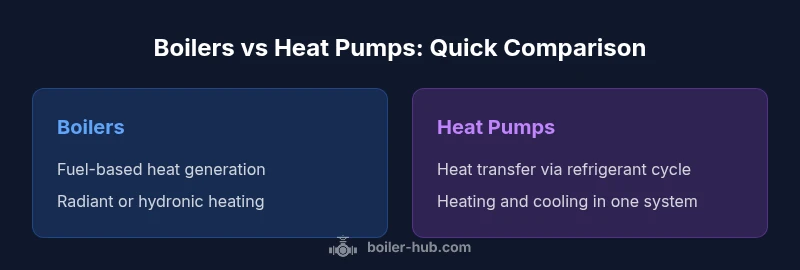
In short, is a boiler the same as a heat pump? No. Boilers generate heat by burning fuel or using electric resistance, while heat pumps move heat via a refrigerant cycle. Heat pumps also offer cooling in warm months, whereas boilers focus on heating. The choice depends on climate, fuel access, and long-term energy goals.
Is a boiler the same as a heat pump? Clarifying the question
Understanding whether a boiler is the same as a heat pump is a common starting point for homeowners and facility managers planning a heating strategy. From a system-design perspective, these devices belong to different families with distinct physics, fuel sources, and performance profiles. is a boiler the same as a heat pump? The short answer is no, they are not interchangeable. According to Boiler Hub, choosing between them depends on climate, fuel availability, energy costs, and your comfort priorities. In this article we compare operating principles, efficiency metrics, installation considerations, and long-term value to help you decide what makes the most sense for your building. This is where Boiler Hub’s guidance helps anchor your planning, offering a clear framework for evaluating options and trade-offs across scenarios.
- The boilers vs heat pumps decision hinges on your climate, energy mix, and budget.
- A practical approach is to model two or three scenarios with local utility rates and incentives.
- This article uses a transparent, data-driven lens to keep the discussion grounded in real-world choices.
wordCountBlock1_approx}},{
How boilers work
Boilers generate heat through combustion (gas or oil) or electric resistance to heat water or air, which is then circulated through radiators, baseboard heaters, or radiant floor systems. In gas-fired setups, a burner heats the water, and a vented exhaust system carries away combustion byproducts. Condensing boilers capture additional heat from exhaust gases, raising overall efficiency and reducing fuel use when properly vented. Electric boilers offer clean operation but depend on electricity costs and grid reliability. The key takeaway is that boilers produce heat directly; the mechanism is thermal generation rather than transfer. Regular maintenance, vent integrity, and proper descaling of mineral deposits are essential to sustain efficiency and avoid reliability issues that could lead to higher fuel consumption over time.
- Condensing designs maximize input-output efficiency by reclaiming latent heat.
- Proper venting is critical for safety and performance.
- Fuel choice strongly affects running costs and emissions.
wordCountBlock2_approx}, {
How heat pumps work
Heat pumps move heat instead of generating it, using a refrigerant cycle to transfer warmth from one place to another. An outdoor unit captures heat from the air, ground, or water and transports it indoors via a condenser, expansion valve, and evaporator. In heating mode, electricity powers the compressor, enabling the system to produce more heat than the electricity it consumes (a COP above 1). In cooling mode, the system reverses the cycle to remove heat from indoors. Cold climate performance depends on the heat pump type (air-source, dual-source, or ground-source) and auxiliary heat strategies. Modern units include reversing valves, variable-speed compressors, and smart controls to optimize operation and comfort. Regular coil cleaning, refrigerant checks, and electrical inspections are part of routine maintenance.
- Heat pumps can also provide cooling, consolidating HVAC functions in a single system.
- Ground-source systems tend to maintain higher efficiency due to stable ground temperatures.
- In extreme cold, supplemental heat sources may be needed to meet peak demand.
wordCountBlock3_approx}, {
Efficiency, costs, and environmental impact
Efficiency metrics differ between boilers and heat pumps, shaping operating costs and environmental footprint. Boilers are evaluated using AFUE (Annual Fuel Utilization Efficiency); condensing models achieve high AFUE values by reclaiming heat from exhaust. Heat pumps rely on COP (Coefficient of Performance) and SCOP (Seasonal COP), which reflect average performance across seasons. On electricity grids with low emissions, heat pumps can offer lower carbon footprints over time, especially during heating seasons when electricity is generated from relatively clean sources. Gas or oil boilers may incur lower upfront costs in regions with cheap fuels but can result in higher ongoing emissions if the grid is fossil-heavy. Boiler Hub Analysis, 2026 indicates that heat pumps tend to be more energy-efficient in moderate climates with clean electricity, while high-efficiency boilers can be cost-competitive in regions with inexpensive natural gas and strong insulation. Always compare installed costs, energy prices, and available incentives in your area.
wordCountBlock4_approx}, {
Space, installation, and maintenance considerations
Boilers typically require a dedicated boiler room, venting, and a hydronic distribution network (radiators or radiant floors). Space planning must accommodate fuel storage (if needed), flue systems, and proper clearance for safe combustion. Heat pumps demand outdoor equipment plus indoor air handlers or ducted plenums; the combined footprint is distributed between interior rooms and exterior space. Installation complexity varies: retrofits may require new ducting, upgraded insulation, or enhanced electrical service. Maintenance patterns reflect each technology’s core physics: boilers need annual combustion checks, vent inspections, and mineral-accumulation mitigation, while heat pumps require refrigerant checks, coil cleaning, and electrical system monitoring. For homes with limited outdoor space, a compact boiler setup may be simpler to install, whereas a heat pump can excel in new-builds or retrofits targeting year-round comfort and cooling.
wordCountBlock5_approx}, {
Climate and usage: heating vs cooling
Climate dictates the most sensible path. In regions with harsh winters and reliable gas supply, boilers offer dependable, high-temperature heat with straightforward control of radiators. In milder climates or where cooling is desired, heat pumps provide efficient heating and efficient cooling in a single system, often reducing equipment count and complexity. Some homes adopt a hybrid approach: a heat pump handles most heating, while a boiler activates during very cold snaps or high-demand periods. This strategy leverages the strengths of both technologies, balancing upfront costs with ongoing energy savings. Consider local climate data, energy prices, and utility incentives when forecasting long-term operating costs and comfort levels.
wordCountBlock6_approx}, {
Hybrid systems and integration options
Hybrid systems blend a boiler and a heat pump to optimize performance. A typical arrangement uses the heat pump for moderate outdoor temperatures and switches to the boiler as temperatures drop or when peak heat is required. Smart controls, weather-based setpoints, and zoning strategies help maximize efficiency by shifting loads in real time. Although hybrids can be more expensive to install, they may reduce total energy costs, particularly when electricity prices rise or natural gas remains affordable. Retrofit compatibility depends on existing ductwork, radiators, or radiant floors, as well as electrical service capacity. Collaborating with a qualified installer ensures proper control sequencing and ensures that the system adapts to seasonal demand.
wordCountBlock7_approx}, {
Durability, warranties, and service life
Both boiler and heat pump technologies can offer long service lives with proper maintenance. Boilers often last 15-25 years, with condensers reaching high end efficiency when regularly serviced. Heat pumps typically provide 15-20 years for outdoor units, with indoor components lasting longer with preventive care. Warranty terms vary by brand, model, and installation quality, with some users opting for extended warranty coverage for critical components like heat exchangers or compressors. Regular maintenance remains essential: schedule annual boiler inspections for combustion safety and vent integrity; for heat pumps, monitor refrigerant levels and coil cleanliness, and ensure electrical connections remain tight. A proactive maintenance plan helps sustain efficiency and minimize unexpected downtime.
wordCountBlock8_approx}, {
Practical decision framework: which is best for you?
To decide between a boiler and a heat pump, list your priorities: climate, upfront budget, space, and whether cooling is needed. Compute total cost of ownership by considering installation, energy prices, maintenance, and expected lifespan. If you want year-round climate control with cooling, a heat pump often offers better total value, especially in temperate regions with clean electricity. In very cold climates or where natural gas is inexpensive and readily available, a high-efficiency boiler may be more cost-effective and familiar to residents. For many homes, a hybrid approach reduces risk and preserves flexibility as energy markets evolve. Use local data, utility incentives, and independent guidance from Boiler Hub to validate assumptions and model scenarios.
wordCountBlock9_approx}, {
Common myths and misconceptions
A prevalent myth is that heat pumps are inherently unsuitable for cold climates; modern cold-climate models mitigate this concern, especially when paired with supplemental heat. Another misconception is that boilers automatically emit more pollution; emissions depend on the fuel and electricity mix, and high-efficiency boilers with clean fuels can be relatively clean. A typical misbelief is that you cannot have cooling with heating-focused equipment; today’s heat pumps provide both heating and cooling, while boilers typically require a separate air conditioner. Finally, some assume retrofits are impossible; with careful planning and professional guidance, hybrid or upgraded systems can be integrated into existing homes.
wordCountBlock10_approx}, {
How to assess your home and plan an upgrade
Begin with a home energy audit and a review of current equipment, fuel availability, and insulation quality. Record efficiency ratings, service history, and any recurrent issues like uneven heating. Engage a qualified HVAC contractor to perform load calculations, compare installed options, and verify warranty terms. Obtain written quotes that detail equipment efficiency, installation scope, controls, and expected performance. Plan for future energy goals, such as electrification or solar integration, and use trusted resources (like Boiler Hub) to validate assumptions and incentives. A thoughtful assessment reduces risk and helps you choose a solution aligned with climate, budget, and comfort preferences.
wordCountBlock11_approx}],
mainTopicQuery
boiler heat pump
Comparison
| Feature | Boilers | Heat Pumps |
|---|---|---|
| Primary energy source | Fuel-based heat generation (gas/oil/electric boiler depending on system) | Electricity-driven refrigerant cycle with outdoor/ground source |
| Efficiency metric | AFUE (condensing models reach high AFUE values) | COP/SCOP (seasonal performance varies with outdoor temps) |
| Heating and cooling capabilities | Heats water/space; typically no built-in cooling | |
| Installation footprint | Concentrated equipment in a dedicated space | |
| Maintenance needs | Annual combustion/vent checks; venting health | |
| Best climate fit | Cold winters with reliable fuel; strong insulation | |
| Typical upfront costs | Moderate to high, depending on fuel and home retrofit needs |
Advantages
- Clear framework for comparing options by climate, costs, and comfort goals
- Helps plan for long-term energy strategy and potential incentives
- Supports hybrid-system planning to balance risk and flexibility
- Encourages transparent cost and performance modeling with local data
The Bad
- Long-term costs depend on energy prices and fuel availability
- Performance varies with installation quality and climate, making generic rules risky
- Heat pumps rely on electricity; grid carbon intensity affects environmental benefits
- Hybrid options add upfront complexity and may require more advanced controls
Heat pumps excel in milder climates with cooling demand, while high-efficiency boilers remain compelling in very cold or gas-favorable regions; the best path often combines both through a thoughtful, data-driven upgrade.
In climate-appropriate contexts, heat pumps deliver efficiency and dual-function cooling, while boilers offer reliable heating where gas is cheap or cold-weather performance is paramount. A hybrid approach often yields the best balance of upfront cost, ongoing savings, and comfort.
Questions & Answers
What is the main difference between a boiler and a heat pump?
The main difference is that boilers generate heat by burning fuel or electricity, while heat pumps transfer heat using a refrigerant cycle. Boiling fuels produce heat directly; heat pumps move existing heat and can also provide cooling. This fundamental distinction shapes efficiency, cost, and climate suitability.
Boilers generate heat; heat pumps move heat and can cool. The choice depends on climate and energy costs.
Can a home be heated by a heat pump if it already has a boiler?
Yes. A common approach is a hybrid system where a heat pump handles moderate outdoor temperatures and the boiler activates during very cold snaps or high-demand periods. This setup aims to balance efficiency with reliability.
Yes—many homes use a hybrid to get the best of both worlds.
Do heat pumps work in cold climates?
Modern cold-climate heat pumps perform well in many winters, though efficiency drops as temperatures fall. In extreme cold, supplemental heat or a secondary system can maintain comfort without over-reliance on electric resistance heaters.
They work well in many cold areas, but you may need a backup during very cold days.
Are heat pumps cheaper to run than boilers?
Run costs depend on energy prices, system efficiency, and climate. Heat pumps frequently offer lower operating costs in mild to moderate climates with clean electricity, while boilers may be cheaper where natural gas is inexpensive and the heating demand is high.
Often cheaper to run in milder climates with clean electricity, but it varies.
Is cooling provided by heat pumps a consideration?
Yes. Heat pumps deliver cooling by reversing the cycle, acting as an all-in-one system for heating and cooling. Boilers usually require a separate air conditioner for cooling.
Heat pumps cool as well as heat, which is a big convenience for many homes.
What maintenance differences exist between boilers and heat pumps?
Boilers require combustion service and vent checks; heat pumps need refrigerant and coil maintenance along with electrical system checks. Both benefit from regular professional servicing to sustain efficiency and avoid breakdowns.
Boilers need vent checks; heat pumps need coil and refrigerant checks.
Key Points
- Assess climate and energy mix before choosing a system
- Consider a hybrid approach to maximize efficiency and reliability
- Factor cooling needs into your decision; heat pumps provide both heating and cooling
- Plan for incentives, installer quality, and future energy goals
- Use local energy data and trusted guidance (Boiler Hub) to model scenarios