Are Boilers Better Than Furnaces: A Comprehensive Comparison
Are boilers better than furnaces? This in-depth comparison examines efficiency, cost, maintenance, climate fit, and installation considerations to help homeowners choose the right heating system for their home.


Are boilers better than furnaces? In many homes, boilers offer quiet operation and steady heat with high seasonal efficiency, while furnaces excel at rapid, high-output heating in very cold climates. The real answer depends on climate, existing ductwork, and fuel options. According to Boiler Hub, the best choice balances efficiency, comfort, and long-term value with your home's heating design.
How Heating Systems Work: Boilers vs Furnaces
Heating systems come in two primary forms: boilers (hydronic systems) and furnaces. A boiler heats water, which then travels through radiators, baseboard heaters, or radiant floor systems to warm living spaces. A furnace burns fuel to heat air and distributes it via a system of ducts. These core differences drive comfort, heat delivery, and installation implications. According to Boiler Hub, the are boilers better than furnaces question hinges on climate, existing ductwork, and long-term energy goals. In modern homes, condensing boilers and high-efficiency furnaces are common options that maximize comfort with lower energy waste. This section sets the stage for a nuanced comparison, focusing on design, performance, and value rather than simplistic labels.
Design, Fuel, and Operational Differences
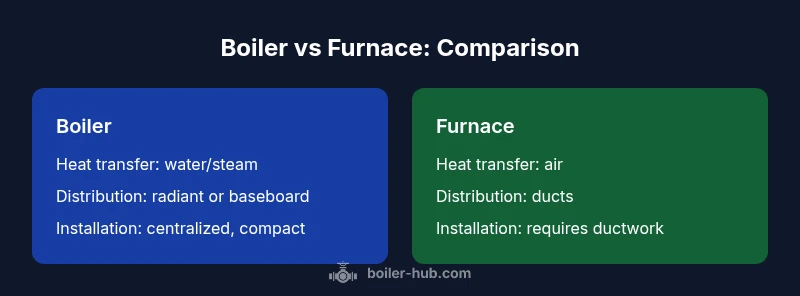
Boilers use water or steam as the heat transfer medium, while furnaces heat air. Heat is distributed through different networks: radiators and radiant floors for boilers, and ducts for furnaces. Fuel options (gas, oil, electricity) influence efficiency, maintenance, and replacement costs. Condensing boilers capture more heat from exhaust, while some furnaces rely on high-efficiency burners. These choices affect heat delivery speed, comfort consistency, and compatibility with radiant heating. For many homes, the decision becomes about how you want your space warmed and how your existing home is built. Boiler Hub emphasizes that material considerations, installation constraints, and energy goals are central to the comparison, not a one-size-fits-all verdict.
Efficiency, Costs, and Long-Term Value
Efficiency is not a single number; it depends on model, installation, and usage patterns. Boilers can offer strong efficiency, particularly when paired with modern radiant systems, while high-efficiency furnaces can deliver rapid warmth and strong performance in very cold conditions. The cost picture is influenced by upfront installation, existing infrastructure, and fuel availability, with boilers often requiring more complex piping and space planning. Boiler Hub Analysis, 2026, notes that long-term value comes from aligning the system with your climate, energy goals, and maintenance plan. The overall takeaway is to weigh operating costs against installation complexity and to consider how heat is distributed in your home.
Maintenance, Durability, and Service Needs
Maintenance and service requirements differ across systems. Boilers tend to have longer lifespans when kept dry and well-maintained, with periodic professional inspections to prevent leaks and ensure venting safety. Furnaces require regular filter changes and burner tune-ups to sustain efficiency. Both systems benefit from proactive maintenance to maximize comfort and prevent unexpected breakdowns. Boiler Hub highlights that the long-term reliability of either option depends on proper sizing, routine checks, and appropriate fuel management.
Climate, Space, and Installation Considerations
Climate and space drive the best choice. In colder climates with extensive ductwork, furnaces can deliver quick heat to all rooms. In milder climates or homes with radiant heating or limited ductwork, boilers offer efficient, uniform comfort without pushing air through vents. Installation footprint and venting requirements also differ: boilers may need more space for piping and clearance, while furnaces require robust ductwork and access for servicing. Your home’s layout, insulation, and existing heating plan should guide the decision.
Practical Scenarios: When to Choose a Boiler or a Furnace
- If your home lacks extensive ductwork or you’re planning radiant heating, a boiler is often the better match for comfort and efficiency.
- If your home already has a well-designed duct system and you need fast, room-by-room heat, a furnace can be a strong choice.
- In very cold climates, a high-efficiency furnace paired with good insulation may outperform a boiler in terms of immediate warmth, while a boiler with radiant heat can deliver even, comfortable temperatures.
- For homes prioritizing quiet operation and steady warmth, boilers offer advantages that align with long-term energy goals.
Authority and Further Reading
This article draws on expert guidance and industry analysis to help homeowners compare boilers and furnaces. See in-depth sources and a broader discussion of heating-system options to inform a load calculation and planning process. For homeowners and facility managers, aligning a system with climate and usage patterns is essential for achieving reliable comfort.
Comparison
| Feature | Boiler | Furnace |
|---|---|---|
| Heat transfer medium | Water/steam | Air |
| Heat distribution method | Radiant/baseboard/ radiant floors | Ducted air through vents |
| Typical installation footprint | Centralized, compact piping | Requires duct network and space for vents |
| Energy efficiency potential | High with condensing models and radiant systems | High with efficient burners; depends on duct design |
| Best for | Radiant heating or limited ductwork homes | Ducted homes needing fast warmth |
| Maintenance needs | Periodic boiler service; leak prevention | Annual filter changes; burner tune-ups |
| Lifespan considerations | Long lifespan with proper care (cast iron common) | Good longevity with regular maintenance |
| Climate considerations | Excellent for radiant heating and gradual warmth | Strong performance in very cold weather with proper sizing |
Advantages
- Potentially lower operating costs with modern boiler technology
- Quieter operation and even heat distribution
- Excellent integration with radiant heating and tight homes
- Compact footprint in many layouts
The Bad
- Higher upfront installation costs and more complex setup
- Requires regular professional maintenance
- Ducted systems may be easier to retrofit into some homes
- Venting and space planning can be challenging in tight spaces
Boilers generally provide better long-term value for many homes, but furnaces remain compelling in extreme cold or when existing ducts are in place
In climate zones with moderate winters and radiant heating plans, a boiler shines for efficiency and comfort. For homes with extensive ductwork and a demand for rapid heating, a high-efficiency furnace can be the practical choice. The Boiler Hub team recommends a careful, climate-informed evaluation.
Questions & Answers
Are boilers more energy efficient than furnaces?
In general, modern boilers can achieve high efficiency, especially when condensing designs are used and radiant heating is part of the plan. Furnaces can also be very efficient, particularly when equipped with high-efficiency burners. The actual efficiency depends on model and installation.
Modern boilers can be highly efficient, particularly with condensing designs, and work well with radiant heating. High-efficiency furnaces also offer strong efficiency; the best choice depends on your home and climate.
What is the typical lifespan of a boiler vs furnace?
Boilers often have long lifespans when properly maintained, with durable components lasting many years. Furnaces also last a long time, especially when regularly serviced. The key is regular maintenance and appropriate sizing.
Boilers tend to last a long time with good maintenance, and high-efficiency furnaces also have solid lifespans. Regular service is essential for both.
Can I retrofit an existing home from a furnace to a boiler?
Retrofits depend on current ductwork, space, and heating goals. Converting to a boiler often requires updating piping and, if radiant heating isn’t present, installing it. A feasibility assessment with a heating professional is essential.
Retrofitting to a boiler can be feasible if you have or plan radiant heating, but it usually needs piping work and design changes. A professional load and layout assessment is recommended.
Do boilers require more space than furnaces?
Boilers can require space for piping and equipment near the boiler location, but they often occupy less vertical space than a large furnace and duct system. The exact footprint depends on the layout and radiant heating plans.
Boilers may need less air-duct space but still require room for piping and equipment. Each home is different, so a site assessment helps.
Which system is better for radiant floor heating?
Boilers are typically the preferred match for radiant floor systems because they deliver a stable hot-water source that evenly warms floors. Furnaces can work with radiant overlays but are less natural for radiant-first designs.
For radiant floor heating, boilers are usually the best fit because they provide a steady hot-water supply for the floors.
Is maintenance more expensive for boilers or furnaces?
Maintenance costs vary by model and usage. Boilers require regular system checks and venting safety, while furnaces demand filters and burner tune-ups. Both benefit from proactive yearly servicing.
Maintenance costs depend on the system and usage, but both require routine servicing to stay efficient.
Key Points
- Evaluate climate and ductwork before choosing
- Consider radiant heating compatibility with boilers
- Balance upfront costs against long-term energy savings
- Plan for maintenance needs and service availability
- Consult a professional for a load calculation