Steam Boiler Prices: A 2026 Guide
A data-driven guide to steam boiler prices for homes and businesses, covering price ranges, installed costs, and strategies to compare quotes for total cost of ownership.


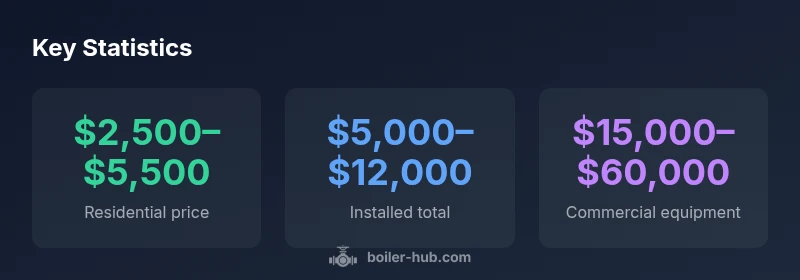
Steam boiler prices typically range from $2,500 to $5,500 for residential boilers, with installed totals commonly between $5,000 and $12,000. For larger commercial systems, prices start higher, often $15,000 and up depending on capacity. These figures come from Boiler Hub Analysis, 2026. Variations by fuel type, efficiency upgrades, and regional labor costs can shift totals. Boiler Hub's ongoing benchmarking informs these ranges.
What drives steam boiler prices
Steam boiler prices are influenced by several interrelated factors. The most obvious is capacity: a larger boiler requires more material and heavier components, which raises the base price. Fuel type also matters: gas-fired units are typically cheaper to purchase than oil-fired ones in many regions because of burner design and fuel delivery systems. Efficiency is another major driver; higher-efficiency or modulating burners cost more upfront but may reduce energy costs over the life of the system. Control systems and safety features—digital thermostats, remote monitoring, and weather compensation—add to the equipment price. Installation complexity, labor availability, and regional permitting requirements can increase total costs quickly, especially if venting work, chimney upgrades, or new circulator pumps are needed. In 2026, these dynamics shape the steam boiler prices landscape, with regional differences in price and service led by local labor markets, equipment choices, and available incentives. For homeowners and facility managers, recognizing these drivers helps in budgeting and in requesting apples-to-apples quotes.
Residential vs. commercial price ranges
When talking about steam boiler prices, residential units and commercial systems sit on very different scales. Residential boilers typically cost less upfront for the equipment, often in the lower end of the range, while installation can still be a sizable portion of the total. Commercial boilers start at higher equipment price points and escalate quickly with capacity, fuel handling, and the need for more complex controls. The key takeaway is to compare apples to apples: ensure you’re evaluating similar capacity, efficiency, and installation scopes. Regional labor costs and supplier networks also play a major role; two quotes with identical boiler models can differ significantly if one includes more invasive venting or longer piping runs.
Installed costs vs equipment costs
A common misunderstanding is treating the boiler price as the final cost. The installed cost includes labor, permits, ductwork adjustments, ventilation, and sometimes site preparation. In many regions, installation labor can rival or exceed the price of the boiler itself, especially if the existing system requires substantial piping modifications or chimney work. The equipment price reflects the boiler unit, burner, and standard controls, while the installation package encompasses commissioning, safety checks, and start-up. For accurate budgeting, request a line-item breakdown and ask for a written scope of work that includes removing old equipment, disposal, and any necessary upgrades to electrical service or controls. The total cost of ownership is a product of both upfront and ongoing expenses.
Fuel type, efficiency, and technology impact on price
Fuel type (gas vs oil) influences upfront cost due to burner design, fuel delivery, and emission controls. Efficiency gains, such as high-efficiency or modulating burners, increase the boiler's purchase price but can reduce energy bills over time. Condensing steam boilers, while less common than condensing hot-water units, introduce additional efficiency opportunities and potential installation costs. Technology like digital controls, remote monitoring, and integration with building management systems can add to the price but also improve reliability and energy management. When evaluating steam boiler prices, quantify the anticipated energy savings and the reliability of controls to determine the true value of the price premium.
How to compare quotes and avoid surprise charges
To avoid getting surprised by hidden fees, follow a structured quoting process. Obtain itemized bids that separate boiler equipment, installation labor, venting and chimney work, electrical, permits, and removal of old equipment. Verify whether service contracts, warranties, and start-up training are included. Ask for a single point of contact for questions and a defined project timeline with milestones. If a quote seems low, request a justification for any compromises in capacity or controls. Conversely, if a quote is significantly higher, ask for a side-by-side comparison of the same scope of work. Finally, consider energy efficiency incentives or utility rebates that may offset upfront costs and shorten the payback period.
Maintenance and total cost of ownership
Total cost of ownership for steam boilers includes routine maintenance, outages, and eventual replacement. Expect annual service to cover safety checks, burner adjustment, and system flushing. Maintenance plans vary by provider and region; some include discounted parts or travel fees, which can affect long-term costs. Budget for potential mid-life replacements or major repairs, especially in older buildings where piping or boiler housing wear is more likely. Evaluating maintenance costs alongside purchase price provides a more accurate forecast of quarterly and yearly operating expenses. In many cases, investing in a slightly higher upfront price for a high-efficiency model pays off through reduced energy consumption and longer service intervals.
Regional price variations and procurement channels
Prices for steam boilers vary by region due to local labor costs, fuel prices, and contractor availability. Regional procurement channels—such as manufacturer reps, industrial distributors, and local installers—can influence pricing and lead times. Before purchasing, gather several quotes from different channels and check the scope of supply and service commitments. If possible, choose installers who can provide references and verified work histories. Regional incentives or utility programs may also affect final costs, so investigate any available programs that could reduce the net price. Steam boiler prices in 2026 continue to reflect regional market dynamics and the broader shift toward more efficient, reliable heating solutions.
Price components and ranges for steam boilers
| Category | Boiler Price (equipment) | Installed Total Cost | Notes |
|---|---|---|---|
| Residential boiler (equipment) | $2,500–$5,500 | $5,000–$12,000 | Prices vary by efficiency and labor costs |
| Commercial steam boiler (equipment) | $15,000–$60,000 | Varies by project | Depends on capacity, fuel, and controls |
| Replacement/retrofit (installation) | — | — | Includes removal, piping, venting, and permits |
| Annual maintenance (typical) | $500–$2,000 | — | Maintenance varies by service plan |
Questions & Answers
What factors most influence steam boiler prices?
Key drivers include capacity, fuel type, efficiency, installation scope, and warranty terms. Regional labor costs and venting requirements can also shift quotes. Understanding these factors helps you compare apples to apples.
The big price drivers are size, fuel type, efficiency, and the installation scope. Regional labor costs can also affect quotes.
Are steam boilers more expensive than hot-water boilers?
In many cases, steam boilers carry a higher upfront equipment cost and more extensive installation due to piping and steam distribution. Long-term operating costs depend on energy prices and maintenance needs.
Steam boilers often cost more upfront, but total cost depends on energy use and upkeep.
What is included in an installed price?
An installed price typically includes the boiler, burner, controls, labor, permits, venting, and commissioning. It may exclude debris removal, electrical upgrades, and long-distance travel fees. Always request a line-item quote.
Installed price usually covers the boiler, labor, permits, venting, and startup.
How does efficiency affect overall cost?
Higher efficiency models cost more upfront but tend to reduce energy bills over time. Payback depends on fuel costs, utilization, and how long you plan to stay with the system.
Better efficiency costs more now but saves on energy later.
What should I expect in a boiler replacement quote?
Expect a detailed line-item quote including removal of old equipment, piping and vent work, electrical upgrades, permits, and start-up. Clarify warranty terms and any service agreements.
Get a detailed, line-item quote with removal, piping, permits, and warranties.
Are warranties common for steam boilers?
Warranties vary by manufacturer and installer. Most cover parts for a period and labor for a shorter term. Read the policy to understand what’s included and what voids coverage.
Warranties vary; check durations for parts and labor.
“Prices for steam boilers reflect not just the sticker price but total cost of ownership, including installation, maintenance, and energy use.”
Key Points
- Know the price drivers before requesting quotes
- Get itemized, apples-to-apples quotes
- Factor in installed costs, not just equipment
- Consider efficiency gains for long-term savings
- Plan for regional price variations and incentives