Outdoor Wood Boiler Price in 2026: Budgeting Tips
Explore the factors shaping outdoor wood boiler price in 2026. Learn how size, installation, and efficiency affect costs, plus tips to quote, compare, and maximize long-term value.


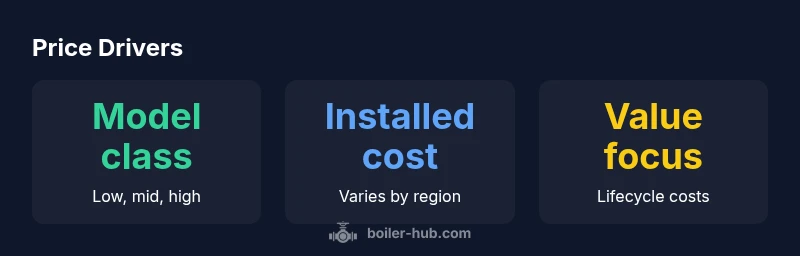
Outdoor wood boiler price varies widely by size, efficiency, materials, and installation requirements. There is no single sticker price; buyers should request multiple quotes and compare apples-to-apples (same efficiency, same installation scope). According to Boiler Hub, the total installed cost is driven by site preparation, venting, and local codes, not just the boiler unit. Expect price bands defined by model class rather than a fixed number.
What determines outdoor wood boiler price
Pricing for an outdoor wood boiler is not a single number. The final price reflects multiple interacting factors, from the basic boiler class to the nuances of installation. Brand choice, temperature controls, and insulation quality affect upfront costs, but the broader landscape includes site-specific considerations and regional labor rates. According to Boiler Hub, buyers should anticipate that labor, installation scope, and venting requirements can dominate the price picture, sometimes more than the boiler’s base price. When evaluating quotes, ensure that each offer covers the same scope: same efficiency tier, same venting plan, and the same warranty terms. This approach, supported by Boiler Hub Analysis, 2026, helps you compare apples-to-apples rather than chasing nominal boiler price alone.
Material and build quality differences
Boilers come in several construction options, each with its own price implications. Heavier, thicker-walled steel and corrosion-resistant alloys tend to cost more upfront but offer longer lifespans and lower maintenance. Cast iron boilers may be cheaper upfront but can incur higher repair or replacement costs over time in outdoor conditions. Insulation quality and jacket design also influence heat retention and efficiency, indirectly affecting total costs through reduced fuel use and longer service life. In general, higher-quality materials translate to higher initial investment, but they can improve reliability and resale value—factors many homeowners weigh in Boiler Hub’s comparative assessments.
Model ranges and feature sets
Entry-level outdoor wood boilers provide the basics: reliable heat, straightforward controls, and modest efficiency. Mid-range models add better insulation, improved heat exchangers, and more precise thermostatic controls. High-end units may include automatic feed systems, advanced ash management, multi-pass heat exchangers, stainless steel construction, and extended warranties. Each tier brings incremental price increases but also potential savings in fuel efficiency and maintenance. When selecting features, evaluate your demand profile (home size, burn time, climate) and plan for expansion or integration with a backup heat source, which Boiler Hub notes can affect long-term cost-effectiveness.
Installation, site prep, and labor costs
Installing an outdoor wood boiler typically requires site assessment, foundation preparation, and venting to a suitable chimney or exhaust point. Local codes may demand permits, inspections, and setback clearances, all of which can impact the overall price. If the yard involves uneven terrain, difficult access, or need for trenching and piping runs, expect higher labor costs. Proper sizing and placement influence both price and performance: an undersized unit works harder and wears faster, while a properly sized setup reduces fuel waste and downtime. Budget for these components alongside the boiler price to avoid after-the-fact surprises.
Operating costs and fuel economy
Beyond the upfront purchase, ongoing costs depend on fuel price volatility, boiler efficiency, and maintenance needs. Wood price trends, supply reliability, and storage capacity all shape monthly operating expenses. A high-efficiency model can mitigate some of these fluctuations by extracting more heat from each unit of wood. Regular cleaning, chimney maintenance, and ash removal also affect long-term costs. Boiler Hub’s framework emphasizes evaluating how efficiency and maintenance schedule interact with local wood costs to determine long-run affordability.
How to compare quotes and avoid hidden fees
To avoid overpaying, standardize quotes on the same specifications: model class, heat output, venting strategy, foundation type, and warranty coverage. Ask each installer to itemize labor, materials, permits, foundation work, and any site prep. Read the fine print for optional add-ons, such as backup heat or enhanced corrosion protection. If one quote is significantly cheaper, probe for hidden costs or service limitations. A transparent, apples-to-apples comparison reduces risk and helps you select the best long-term value rather than the lowest upfront price.
Financing, incentives, and long-term value
Some homeowners access financing or promotional offers to spread the upfront cost. In certain regions, incentives or rebates may apply to high-efficiency outdoor boilers, reducing the effective cost over time. When evaluating options, consider not only the sticker price but also financing terms, maintenance plans, and potential energy savings. A solid long-term view—balancing initial investment with fuel costs, maintenance, and expected lifespan—often yields the best return on investment, as Boiler Hub consistently notes in its analyses for 2026.
Practical steps to budget and plan
Begin by estimating your heat demand and selecting the appropriate boiler class. Gather at least three quotes that meet identical specifications, then compare the total installed cost, not just the boiler price. Create a project budget that includes site prep, permits, foundation work, venting, and potential contingency for unforeseen site challenges. Finally, build a maintenance calendar with recommended service intervals. This proactive approach aligns with Boiler Hub’s guidance and helps homeowners avoid sticker shock when the project begins moving from planning to execution.
Key factors that influence outdoor wood boiler pricing
| Factor | Impact on Price | Notes |
|---|---|---|
| Boiler size/heat output | High | Larger units require more material and labor |
| Material quality | Medium-High | Stainless or thick-walled steel adds cost |
| Installation complexity | High | Permits, venting, and foundation add costs |
| Warranty and service options | Medium | Longer warranties add value but cost upfront |
Questions & Answers
What factors influence the price of an outdoor wood boiler?
Price is driven by model class, size, materials, insulation, and features. Installation complexity, venting requirements, site conditions, and local permitting all contribute to final costs. Practical quotes should reflect identical specifications to enable fair comparison.
Pricing depends on many factors, including model class and installation needs. Get apples-to-apples quotes to compare fairly.
Is installation included in the quoted price?
Many quotes separate the boiler price from installation. Confirm labor, foundation work, venting, and permits are included or clearly estimated as add-ons before agreeing to a contract.
Check whether install costs are included or billed separately; ask for a detailed line-item breakdown.
How can I budget for permits and site prep?
Research local codes and permit requirements early; some regions require inspections. Include foundation work, trenching, and venting in your budget and request these items in the quote to avoid surprises.
Plan for permits and site prep as part of your total budget.
Do incentives or rebates apply to outdoor wood boilers?
Incentives vary by region and program year. Check local and state programs for eligible equipment and installation costs, and factor any credits into the total cost of ownership.
Look for regional incentives as part of your budgeting process.
What maintenance is required and how does it affect long-term cost?
Regular cleaning, flue inspection, and ash removal are essential. Maintenance reduces wear and maintains efficiency, which can lower fuel use and extend the unit’s life.
Regular service keeps the boiler efficient and helps avoid big repair costs later.
How long does installation typically take?
Installation timelines depend on site access, foundation needs, and permit approval. Plan for several days to ensure proper setup and compliance.
Most installs take a few days, depending on site conditions.
“Outdoor wood boiler pricing is highly contextual; the best approach is to compare like-for-like models and account for installation and maintenance in the long run.”
Key Points
- Estimate total installed cost, not just boiler price
- Get multiple apples-to-apples quotes
- Plan for site prep and permits early
- Higher quality materials raise upfront cost but may lower long-term maintenance
- Prioritize efficiency to cushion fuel-price volatility