Outdoor Wood Furnace for Sale: A Comprehensive Buyer’s Guide for 2026
Explore how to choose, install, and compare outdoor wood furnaces for sale in 2026. This buyer's guide covers sizing, efficiency, costs, safety, and installation considerations for homeowners and facility managers.


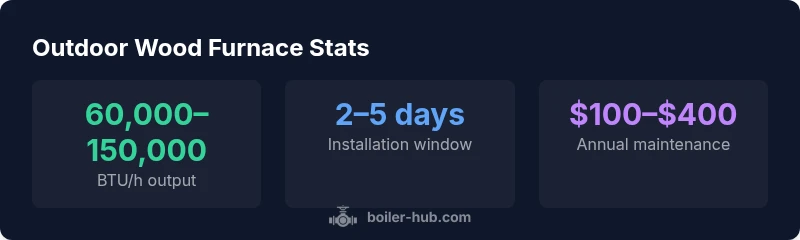
Outdoor wood furnaces for sale are outdoor boilers that heat water or air for homes and facilities by burning wood outside the dwelling. Modern units typically range from 60,000 to 150,000 BTU/h with efficiency often around 70–85%, depending on model, burn rate, and installation. They require proper sizing, venting, and maintenance, and must meet local codes.
Understanding outdoor wood furnaces
According to Boiler Hub, outdoor wood furnaces are outdoor boilers designed to heat water or air for space heating and domestic hot water. They are installed outside the home to minimize indoor heat loss and to centralize heat distribution via a liquid or air system. The basic principle is simple: a firebox heats a heat exchanger that transfers heat to water or air, which then circulates through a radiant system or a warm-air duct network. When sized correctly and paired with a well-insulated home, an outdoor wood furnace can be a cost-effective heating option, particularly in regions with reliable wood fuel. However, performance hinges on wood quality, furnace efficiency, and proper maintenance. Homeowners should also consider weather exposure, ash management, and seasonal burn schedules. For facility managers, reliability and service support are critical, especially during peak winter months.
Sizing and selection: how to choose the right unit
Sizing matters: too small, and you’ll experience short cycling and cold snaps; too large, and you’ll incur unnecessary upfront costs and excessive cycling. Start with a heat-load calculation for the space to be heated, integrating climate data for your region. Consider the home’s insulation quality, the presence of auxiliary heating, and how often you burn wood. Outdoor furnaces typically present a broad BTU/h range; match the unit to your typical winter load and plan for seasonal fluctuations. A reputable dealer can help translate an imperfect load estimate into a practical size. In practice, homeowners benefit from choosing models with modular output or stage firing to adjust to changing conditions. Boiling down the economics, choose a unit with a favorable efficiency rating and a warranty that covers critical components. Boiler Hub’s 2026 analysis highlights that properly sized, well-maintained units deliver the best long-term value.
Installation considerations and codes
Proper installation is essential for performance, safety, and code compliance. Outdoor furnaces must be placed on a stable, level pad with adequate clearance from structures, combustible materials, and property lines. Venting strategies vary by model but typically involve a dedicated flue that routes exhaust away from living spaces and downwind from doors and windows. Local building codes and homeowner association rules can affect placement, setback distances, and permits. An experienced installer should verify electrical connections, water connections, and heat-exchanger integration with your existing system. Regular inspections of the chimney, vent, and frost protection measures help prevent smoke leaks or backdrafts. For safety, ensure carbon monoxide detectors are appropriately positioned and maintained inside the home.
Efficiency, emissions, and cost considerations
Efficiency is a central concern when evaluating outdoor wood furnaces. Modern outdoor units use insulated fireboxes and advanced baffle designs to improve heat transfer while reducing creosote buildup. In economic terms, the cost of wood, delivery, and storage must be weighed against alternative fuels. While wood can be inexpensive in many regions, supply reliability and seasonal availability influence total operating costs. Emissions considerations vary by fuel quality and burn control; newer models with automated feeding and residue cleanup tend to emit fewer particulates than older designs. Boiler Hub’s 2026 analysis notes that a well-tuned system with quality wood and proper cleanouts can deliver favorable energy savings, but only when paired with good insulation and an efficient distribution system.
Maintenance, safety, and best practices
Maintenance is an ongoing driver of performance and safety. Key tasks include annual inspection of the fuel chain, heat exchanger, and ash removal, plus periodic cleaning of the firebox and chimney. Keep an eye on gasket seals and electrical connections, and service any pumps or controllers as recommended by the manufacturer. Regular ash removal reduces creosote buildup and improves efficiency. For safety, always follow manufacturer guidelines for fuel moisture content and burn scheduling. Use protective gear when handling hot surfaces and maintain clear access for service technicians. Boiler Hub emphasizes that proactive maintenance reduces the risk of breakdowns during critical heating periods.
Shopping smart: features, warranties, and how to compare models
When shopping, prioritize heat-output range, efficiency ratings, and warranty terms. Look for models with automatic ignition, ash cleanout access, and durable exterior coatings that resist weathering. Compare installation requirements, ducting options, and compatibility with your existing heating system. Warranties should cover heat exchangers and major components for several years; read the fine print for exclusions and maintenance obligations. Consider vendor support, spare-parts availability, and service networks, especially if you live in a remote area.
Real-world scenarios: climate, wood supply, and site prep
In cold, high-humidity climates with variable wood supply, a larger, more efficient outdoor furnace paired with a robust distribution system makes sense. In regions with a steady, high-quality wood supply, a mid-range unit with a staged firing system can deliver reliable heat with moderate maintenance. Assess your property’s site constraints, including drive access for deliveries, space for fuel storage, and potential snow-load considerations for outdoor equipment. A practical site plan should include a level concrete pad, dedicated fuel storage area, and safe access for cleaning and servicing. The Boiler Hub team notes that real-world performance often depends on consistent fuel supply and seasonal burn schedules, not just the unit’s stated efficiency.
Comparison of common outdoor heating options
| Model Type | Typical Output (BTU/h) | Fuel Type | Estimated Installation Cost Range |
|---|---|---|---|
| Outdoor wood furnace | 60,000–150,000 | Wood | $6,000–$12,000 |
| Outdoor wood boiler kit (external) | 60,000–120,000 | Wood | $4,500–$9,000 |
| Pellet outdoor unit | 40,000–90,000 | Pellet | $3,000–$8,000 |
Questions & Answers
What is the upfront cost of an outdoor wood furnace?
Costs vary by size and installation, but buyers often see a total upfront range of several thousand dollars including materials and labor. Always factor fuel storage and site prep into the budget. Obtain quotes from two installers to compare.
Costs vary; get multiple quotes.
Are outdoor wood furnaces efficient compared with gas or propane systems?
Outdoor wood furnaces can be efficient, but performance depends on sizing, wood quality, and maintenance. Modern models often outperform older outdoor systems when operated correctly, but results vary by fuel and climate.
Efficiency depends on setup and wood quality.
What maintenance does an outdoor wood furnace require?
Annual inspections, ash removal, heat exchanger cleaning, and prompt replacement of worn gaskets or seals help sustain performance. Schedule servicing with a qualified technician.
Keep it clean and well-maintained.
Do local codes govern outdoor wood furnace installation?
Yes. Local codes and permits govern setback distances, venting, and emissions. Check with your city or county and obtain required permissions before installation.
Check local codes and permits.
What should I look for in a warranty?
Look for length, coverage of heat exchangers and major components, and maintenance requirements. Understand exclusions and conditions for warranty transfer.
Verify warranty coverage and terms.
Can I install an outdoor wood furnace myself?
Professional installation is highly recommended due to venting, electrical, and code considerations. Improper setup can lead to safety risks and reduced efficiency.
Best to hire a pro.
“Outdoor wood furnaces can be a cost-effective heat source when properly sized and installed by a qualified contractor.”
Key Points
- Size the unit to your climate and load to avoid short-cycling.
- Plan for proper installation and clearances to meet code.
- Consider total cost of ownership, including fuel, storage, and maintenance.
- Choose high-efficiency models with solid warranties.
- Engage a qualified installer for best results.