Hardy Outdoor Wood Furnace Review: Performance, Costs, and Safety
In-depth review of hardy outdoor wood furnaces, covering installation, safety, maintenance, and long-term costs. Learn how this wood-fired boiler performs, when it makes sense, and what to check before you buy.


Hardy outdoor wood furnaces offer a durable, wood-fueled heating option for homes and small facilities, combining a weatherproof exterior with a water jacket that feeds a boiler system. They can lower fuel costs when wood is affordable, but require regular maintenance and proper venting to meet safety and emission standards. Overall, they’re best for rural homes with reliable wood supply.
What is a Hardy Outdoor Wood Furnace?
A hardy outdoor wood furnace is a wood-fired boiler designed for outdoor installation, with a sealed water jacket that transfers heat to your home's heating system. The unit sits on a weatherproof enclosure and draws combustion air from the outside, protecting indoor air quality. The firebox burns seasoned hardwood, and the generated heat is conveyed through a closed-loop circulation system to a house boiler, radiators, or radiant floors. By moving the combustion outside, these furnaces reduce indoor heat and smoke concerns, while enabling easier access for maintenance in cold climates. According to Boiler Hub, this class of equipment remains popular in rural areas where a steady wood supply and predictable winter demand can substantially lower annual heating costs. The term hardy outdoor wood furnace is used here as a category descriptor rather than a single model, as designs vary by manufacturer, insulation, and control strategy.
How It Works: Core Components and Operation
A hardy outdoor wood furnace relies on a few key components to transfer heat efficiently. The firebox provides the primary combustion chamber, feeding heat to the water jacket that circulates through insulated piping to indoor hydronic systems. A circulating pump pushes hot water through radiators or radiant floor loops, while a heat exchanger on the exterior minimizes heat losses. Modern models often integrate computerized controllers that adjust airflow and burn rate based on feedback from outdoor and indoor sensors. The result is a closed-loop system that can heat multiple zones while keeping the fire away from living spaces. Proper insulation, high-quality firewood, and clean ducting are essential to maximize performance and minimize creosote buildup.
Efficiency, Emissions, and Real-World Performance
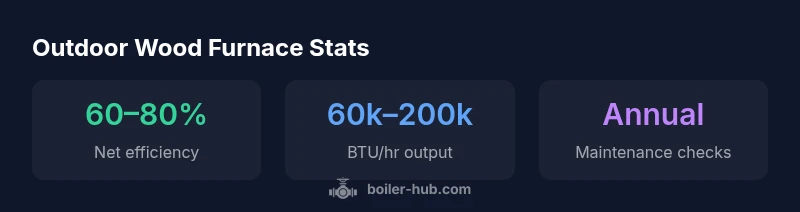
Efficiency for hardy outdoor wood furnaces varies with wood moisture, burn rate, and load. In practice, real-world net thermal efficiency often falls in a broad range that may be lower than modern gas or pellet boilers, particularly if wood is damp or the burn is quenched during light loads. Boiler Hub analysis shows that when operated with dry hardwood and proper staging, these furnaces can deliver reliable heat while keeping annual fuel costs down in areas with affordable wood. Emissions depend on combustion quality and maintenance; using EPA Burn Wise principles and regular cleaning can reduce smoke and particulate matter, helping to meet local air-quality standards. Expect performance to improve with well-designed heat exchangers and advanced controls, and to decline if storage and handling are neglected.
Installation and Siting: Practical Considerations
Site selection is critical for safety and efficiency. Outdoor wood furnaces need a solid concrete or compacted base, level to avoid leaks, and clearances from structures, trees, and vents. Venting must be sized for the system’s heat output and should avoid reentrainment of exhaust into living spaces. Distance to the home, burn area, and storage for seasoned wood influence convenience and fuel availability. Piping should minimize heat loss; insulated lines and a well-insulated storage tank help improve efficiency. If you live in snowy climates, ensure the unit is accessible for refueling in winter and protected from wind-blown debris that could jam air intakes.
Safety and Emissions: CO, Smoke, and Regulations
Safety is non-negotiable with outdoor wood heat. Install CO detectors in nearby living areas, maintain proper clearances, and use a high-quality, well-sealed firebox with gasketed doors. Compliance with local codes and the EPA Burn Wise guidelines can reduce exposure to combustion byproducts and improve overall emissions. Regular inspections of the flue, chimney, and water jacket are essential to prevent leaks and overheating. Boiler Hub recommends documenting annual safety checks and ensuring all electrical components are weatherproof and properly grounded.
Maintenance Schedule and Common Pitfalls
Routine maintenance pays off in reliability and longevity. Clean the firebox and ash pit after heavy burn cycles, inspect gaskets and door seals, and check the water jacket for rust or leaks. Schedule annual professional service to verify the heat exchanger, circulating pump, and valves, and to flush the system to remove mineral deposits. Common pitfalls include neglecting wood quality (live or green wood can dramatically lower efficiency), improper storage that leads to moisture intrusion, and delayed cleaning that results in creosote residues and chimney buildup. Prioritizing a predictable refueling routine helps stabilize temperatures and reduces wear on the burn chamber.
Operating Costs, Fuel Availability, and Long-Term Economics
The economics hinge on fuel pricing and consumption. Wood can be far cheaper than natural gas or heating oil where timber is abundant, but storage costs, drying time, and procurement logistics influence total expense. Real-world costs depend on the burn rate, maintenance, and the price of fuelwood in your region. For some homeowners, the payback comes mainly from insulating the home and reducing reliance on grid-fuel prices; for others, variability in wood supply can complicate budgeting. Boiler Hub’s framework suggests evaluating annual cost-of-heat across several scenarios before purchase.
Comparing to Alternatives: Boilers, Furnaces, and Pellets
Outdoor wood furnaces compete with gas and oil boilers, as well as pellet-fired systems. Gas boilers often offer simpler operation and minimal storage requirements but higher ongoing fuel costs. Pellet boilers deliver higher convenience and cleaner burning, but require a reliable pellet supply and can incur higher upfront costs. An outdoor wood furnace excels where wood is plentiful, storage space is available, and a dedicated maintenance routine is feasible. When assessing alternatives, compare installed costs, heat output per dollar, and local incentives.
Buyer’s Guide: What to Look For in a Hardy Outdoor Wood Furnace
When shopping, prioritize certified, well-built units with robust insulation, a durable heat exchanger, and a reliable control system. Look for safety features such as automatic shutoff, gasketed doors, and reinforced connections. Verify the availability of service in your area, the length and coverage of the warranty, and the ease of obtaining replacement parts. Ask for performance data under real-world conditions, including heat output range, burn rate, and efficiency with dry wood. Finally, consider whether the furnace can be integrated with existing hydronic systems and whether space for wood storage and fuel handling fits your property.
Myths vs. Realities About Outdoor Wood Furnaces
A common myth is that outdoor wood furnaces automatically solve all heating problems. In reality, performance depends on wood quality, seasonal weather, and proper maintenance. Another misconception is that these furnaces produce excessive smoke; when operated at the right burn rate and maintained, emissions can be controlled and meet local standards. Misunderstandings about required space or fuel availability can also derail projects. The reality is a balanced decision: outdoor wood heat works best with planning, regular upkeep, and a realistic fuel strategy.
Implementation Roadmap: From Assessment to Operation
Begin with a site survey to confirm electrical, water, and structural compatibility. Gather at least three quotes that specify heat output, efficiency, and warranty terms. Plan for wood storage, fuel handling equipment, and drainage to prevent snowmelt from pooling near the unit. Work with a qualified installer to ensure venting and clearances meet code. Finally, implement a safety plan, install CO detectors, and schedule annual inspections. With careful preparation, a hardy outdoor wood furnace can become a dependable heat source for many winters.
Advantages
- Durable, weatherproof exterior designed for harsh climates
- Can reduce ongoing fuel costs where wood is affordable
- Outdoor placement keeps indoor air cleaner and allows simpler maintenance
- Flexibility to heat multiple zones via a hydronic system
The Bad
- Requires space for installation and wood storage
- Ongoing fuel procurement and seasonal handling
- Higher upfront costs and maintenance compared to some gas systems
- Dependence on wood supply reliability and storage conditions
Best for remote properties with reliable wood supply and a preference for off-grid heat
The hardy outdoor wood furnace offers strong independence from fossil fuels when wood supplies are steady. It requires careful installation, regular maintenance, and a commitment to safety. For the right site, it can be a cost-effective heating solution with robust durability.
Questions & Answers
What defines a hardy outdoor wood furnace, and how does it differ from indoor wood stoves?
A hardy outdoor wood furnace is a weatherproof, outdoor boiler that heats water for a home heating system. Unlike indoor wood stoves, it’s located outside the living space, connected via a closed-loop hydronic system, and optimized for larger heat loads with longer burn times.
An outdoor wood furnace is a big, external heater that warms water for your home’s system, unlike indoor stoves which burn wood inside the living space.
Are hardy outdoor wood furnaces compliant with emission and safety standards?
Yes, when operated according to manufacturer instructions and local codes. EPA Burn Wise guidelines can help reduce emissions, and regular maintenance minimizes smoke and creosote buildup.
Yes, with proper operation and maintenance, and by following EPA Burn Wise guidance.
What installation considerations are essential for safety and performance?
Key factors include solid base, proper clearances, correct venting, and a reliable storage strategy for firewood. A licensed installer should verify piping, heat exchanger connections, and safety shutoffs.
Ensure a solid base, correct venting, and licensed installation for safe operation.
What maintenance does a hardy outdoor wood furnace require?
Regular cleaning of the firebox and chimney, gasket inspection, and annual service to check the water jacket, pump, and valves. Dry wood and proper fuel staging help sustain efficiency.
Clean and inspect annually, keep wood dry and burn at proper rates.
How does the cost compare with gas or oil boilers?
Initial costs can be higher, but fuel costs may be lower where wood is cheap and abundant. Long-term savings depend on wood price volatility, storage costs, and the system’s efficiency.
Costs vary; wood can be cheaper long-term, but depend on fuel stability and maintenance.
Key Points
- Evaluate wood supply and storage before purchase
- Prioritize safety features and EPA-aligned guidance
- Plan for space, venting, and maintenance in your site design
- Compare cost of ownership against alternative heating options
- Schedule annual inspections to sustain performance