Is a New Boiler a Good Investment? A Practical Guide for 2026
Boiler Hub analyzes whether upgrading to a new boiler pays off, weighing efficiency gains, upfront costs, maintenance, and payback periods for homes and facilities. Learn how to estimate value and compare options.


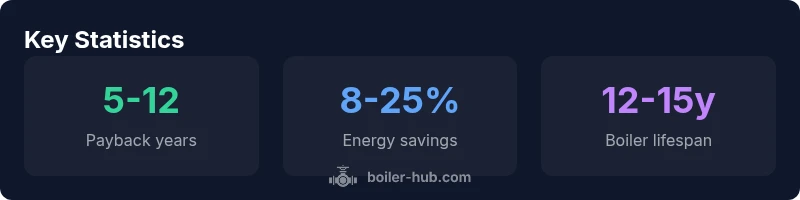
A new boiler can be a good investment when energy savings, reduced repair costs, and a longer warranty offset the upfront price within a payback period that typically falls in the 5–12 year range, depending on fuel, usage, and efficiencies. For many homes, this balance holds true if replacement avoids frequent breakdowns.
Is a new boiler a good investment? Context and scope
Is a new boiler a good investment? The short answer depends on how you measure value: upfront costs, energy savings, reliability, and the life-cycle cost. According to Boiler Hub, a new boiler tends to be worth it for homes with aging systems, frequent breakdowns, or high heating bills when energy prices are volatile. This article examines the factors that determine investment value, including efficiency ratings, payback estimates, and warranty terms. We will use real-world scenarios to illustrate how payback periods can vary by fuel type, home size, insulation, and climate. Our analysis from Boiler Hub Analysis, 2026 indicates that while some homes see a clear return, others may not, so a careful calculation is essential.
- The big value levers are efficiency, reliability, and the warranty that comes with the unit.
- For facilities, installation logistics, downtime, and long-term operating costs matter as much as the purchase price.
- By systematically evaluating options, homeowners and managers can identify when a replacement makes financial sense versus continuing with an aging boiler.
How efficiency drives the economics
Efficiency ratings, particularly AFUE (Annual Fuel Utilization Efficiency) for gas or oil boilers, directly influence operating costs. Condensing boilers reclaim heat from exhaust gases, boosting efficiency and reducing waste. Boiler Hub’s data shows that higher-efficiency models typically deliver larger energy savings over their lifetime, especially in buildings with moderate to high annual heating needs. Real-world factors—like thermostat strategy, insulation quality, and radiative losses—also affect actual savings. In practice, the incremental upfront cost of a high-efficiency boiler often pays back through lower fuel bills within the payoff window when combined with smart controls and regular maintenance. For facilities, the economics improve when paired with zone controls and preventive maintenance programs.
Calculating total cost of ownership
Total cost of ownership (TCO) considers upfront cost, installation, energy consumption, maintenance, and expected lifespan. To estimate TCO, start with the installed price, add permit fees and any required system upgrades, then project annual energy use with current fuel prices. Include annual maintenance, inspections, and potential repair costs over the boiler’s life. Maintenance costs tend to rise with age if joints, seals, or heat exchangers start to degrade. By building a simple spreadsheet that models year-by-year energy savings and service costs, you can compare options on a like-for-like basis and identify the point at which efficiency gains justify the expense.
Fuel choices and their impact
Fuel type largely drives overall cost and emissions. Gas condensing boilers are common in urban homes, while oil boilers remain a choice in rural areas with limited gas lines. In recent years, homeowners have shifted toward hybrid systems that combine a boiler with a heat pump for seasonal efficiency. Electricity prices and gas or oil price volatility can swing payback periods. When you evaluate a new boiler, consider not only the unit’s efficiency but also fuel stability, availability of service in your area, and the local incentives or rebates that can reduce upfront costs.
Real-world scenarios: homeowners vs facilities
For a homeowner with an aging gas boiler in a moderate climate, a high-efficiency condensing unit paired with smart controls can reduce annual fuel use by a sizable margin, shortening the typical payback window. In a larger facility with extensive hot-water needs, the decision hinges on downtime costs, maintenance history, and energy contracts. A tight capacity plan and weather-strategy can dramatically influence savings. Boiler Hub's 2026 analysis highlights that the more a system is out of spec—poor insulation, leaky ducts, or frequent breakdowns—the quicker the payback becomes after replacement. Conversely, well-insulated homes with moderate heating demands may see a slower payoff.
Warranty, reliability, and maintenance impact
Warranty terms guard replacement costs and provide a baseline for reliability expectations. A longer warranty often correlates with higher-quality components and better installation practices. Regular maintenance, annual service checks, venting analysis, and pressure testing help sustain efficiency. The cost of routine servicing should be weighed against potential downtime and emergency repairs if an old boiler fails during peak season. A well-maintained new boiler typically delivers fewer unexpected outages and more predictable energy bills.
Step-by-step evaluation checklist
- Confirm your current boiler’s age, efficiency rating, and repair history. 2) Gather quotes for several models with similar outputs and warranties. 3) Compare energy savings estimates from manufacturers with your region’s climate data. 4) Check available rebates and financing options that reduce upfront burden. 5) Build a 10–15 year financial projection including maintenance and fuel price assumptions. 6) Consider non-financial factors like indoor air quality, comfort, and future plans for home upgrades.
Common myths and practical tips
Myth: New boilers always save money immediately. Reality: payback depends on usage and installation quality. Myth: Higher upfront cost means worse long-term value. Reality: higher-efficiency units can pay back through energy savings and reliability. Tip: don’t buy based on sticker price alone—evaluate long-term costs, warranties, and service support.
Making the final decision: when to replace
If your current boiler is over 15 years old, requires frequent repairs, or your heating bills are consistently high, replacement often makes financial sense when coupled with improved comfort and reliability. For some homes, a staged replacement (boiler now, heat pump later) can spread out investment costs and maximize energy improvements. Use a rigorous TCO model, include incentives, and compare multiple quotes to determine the optimal move.
Comparison of common boiler investments
| Boiler Type | Estimated Upfront Cost (range) | Typical Energy Savings | Expected Lifespan |
|---|---|---|---|
| Gas condensing boiler | 3,000-6,000 | 8-20% | 12-15 years |
| Oil boiler | 3,500-7,000 | 6-15% | 12-14 years |
| Hybrid boiler/heat pump | 6,000-12,000 | 15-30% | 15-20 years |
Questions & Answers
What is the typical payback period for a new boiler?
Payback depends on energy savings and installation costs. Most homes see a payback within 5-12 years, with variation by fuel type and usage. Use a simple TCO model to refine.
Payback typically runs five to twelve years depending on fuel and usage.
Should I replace my old boiler before it fails?
If repairs exceed a threshold cost or efficiency is well below current standards, replacement is advisable to avoid downtime and rising fuel costs.
If repairs are costly or efficiency is poor, replacement is wise.
How do I calculate total cost of ownership?
Compute upfront cost, installation, annual energy use, maintenance, and expected lifespan. Compare options using a year-by-year projection.
Add up purchase, install, energy, and service costs over time.
Are there financing options that make replacement affordable?
Many utilities and lenders offer rebates, flexible financing, and energy-efficiency incentives that can lower the effective upfront cost.
Look for rebates and financing to ease the upfront burden.
Is a boiler replacement worth it if I plan to sell soon?
A modern, efficient boiler can boost resale value and attract buyers, but the payback may be slower if you plan to move quickly.
It can add value, but timing matters.
What maintenance does a new boiler require?
Annual servicing, venting checks, and pressure tests help sustain efficiency and avoid unexpected outages.
Schedule yearly service and follow the manufacturer guidance.
“A new boiler is rarely a luxury; it's an investment in reliability and efficiency that pays off when matched to your home's demand and local energy prices.”
Key Points
- Calculate payback using energy savings and upfront costs
- Prioritize high-efficiency models with solid warranties
- Account for total cost of ownership, not just price
- Factor maintenance and reliability into the decision