Is Boiler Room Worth It? A Practical 2026 Guide
Explore whether investing in a boiler room makes sense for homes and facilities in 2026. This balanced review weighs costs, benefits, risks, and alternatives to help you decide.


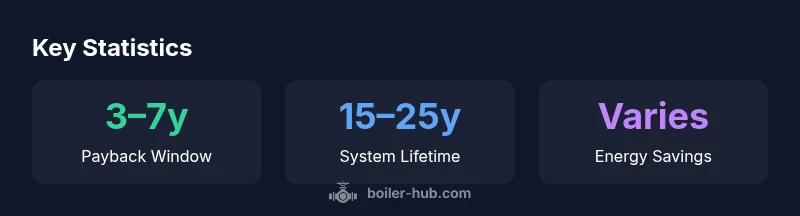
Is boiler room worth it? For many homeowners and facility managers, yes—when you need reliable heat, better energy efficiency, and long-term cost control, a well-planned boiler room upgrade can pay off within several years. However, upfront costs, maintenance needs, and space requirements matter, so only proceed if your site-specific needs align.
Is the boiler room worth it? Context and definitions
According to Boiler Hub, a 'boiler room' isn't just a single device—it is a dedicated space that houses the boiler, controls, piping, and distribution equipment. The concept covers everything from a single high-efficiency boiler with smart controls to multi-boiler configurations that serve complex loads. In practice, is boiler room worth it depends on scale, load variability, and long-term energy goals. For homeowners, a compact, well-designed boiler room can deliver reliable heat with improved zoning and reduced standby losses; for facility managers, the value often hinges on controllability, redundancy, and future expansion.
This article uses a practical framework to evaluate value: upfront costs vs. savings, operational reliability, space constraints, and maintenance requirements. We’ll compare boiler room upgrades vs. stand-alone boilers, alternative heating technologies, and strategic phasing. Throughout, we’ll reference industry guidance and real-world benchmarks to help readers decide if is boiler room worth it in their specific context. For readers of Boiler Hub, this piece aligns with our emphasis on practical, verifiable guidance rather than marketing promises. The central question remains: does centralized heating governance through a properly configured boiler room deliver measurable benefits in your building footprint? The answer depends on how well design choices align with demand patterns, fuel economics, and long-term maintenance strategy.
Economic angles: upfront costs, operating costs, and payback
When evaluating whether is boiler room worth it, the economics matter most. Upfront costs typically include equipment purchases, installation, certification, and space alterations. Operating costs depend on fuel type, efficiency, and how well the system is tuned for the building’s load profile. A central benefit of a properly sized boiler room is the potential for better control over peak loads and fewer heat losses from dispersed equipment.
From a financial standpoint, payback depends on several variables: local energy prices, maintenance expenses, and the degree of load shedding achieved by zoning and sequencing. Industry benchmarks suggest that a well-executed boiler room project can offer meaningful savings on annual fuel and electricity bills, especially in mid-to-large buildings with stable heating demand. It is crucial to factor in contingency costs for retrofits, control integration, and potential permits. The decision hinges on your property’s heat load, occupancy patterns, and long-term cost of capital. Boiler Hub’s analyses emphasize that you should frame the upgrade as an optimization project, not a one-off purchase, to maximize value over the system’s life.
Technical considerations: efficiency, fuel type, and system design
A key question in assessing is boiler room worth it is how the system will be designed and which boiler technology best fits the load. High-efficiency condensing boilers, modulating burners, and smart controls can significantly cut fuel use and reduce greenhouse gas emissions when paired with proper insulation and piping layout. Fuel type—gas, oil, or biomass—matters for cost and availability, as well as local regulations and maintenance requirements. System design must balance redundancy with cost; a simple two-boiler arrangement may be more cost-effective in a smaller building, while a larger campus demands integrated controls, staged boiler operation, and robust safety interlocks. Consider heat distribution challenges (radiant, baseboard, or hydronic fan coils) and the potential for future expansion when evaluating is boiler room worth it. In practice, lifecycle thinking helps: a slightly more expensive but modular, easily serviceable design often yields lower total cost of ownership over time.
Space, zoning, and integration with existing systems
The fit of a boiler room upgrade often hinges on space and integration capabilities. Centralized spaces must accommodate equipment clearance, venting, and maintenance access, while zoning can dramatically improve comfort and energy use by tailoring heat delivery to actual demand. For retrofits, compatibility with existing heating distribution (pumps, valves, and controls) determines whether a staged migration is feasible. Proper layout reduces standby losses and simplifies maintenance—two quiet but powerful factors in the overall value of is boiler room worth it. In homes, footprint minimization and noise control are essential, while in commercial settings, redundancy and clear maintenance pathways take priority. Planning for future expansion and ensuring code-compliant venting, clearance, and electrical supply are foundational steps in any evaluation.
Maintenance, reliability, and safety considerations
Maintenance is a critical dimension of is boiler room worth it. A well-maintained boiler room reduces the risk of sudden failure, improves efficiency, and extends equipment life. Regular inspections should cover boiler tubes, heat exchangers, pump efficiency, controls, and safety devices. Reliability improves with proper redundancy and clear fault-detection procedures, but this also increases initial cost and complexity. Safety concerns include combustion safety, CO monitoring, and venting integrity. With professional maintenance programs, facility teams can target predictable wear points and avert emergency downtime. The Boiler Hub approach emphasizes a proactive service schedule, routine calibration of controls, and an easy-to-access maintenance log that supports ongoing performance and safety.
Alternatives to a full boiler room upgrade
If space, budget, or risk concerns make a full boiler room upgrade unattractive, consider phased approaches or hybrid solutions. A staged upgrade can begin with a single high-efficiency boiler and advanced controls, then add another unit as demand grows. For some properties, heat pumps or cogeneration systems can complement or replace traditional boiler rooms, offering different performance and cost profiles. A careful comparison of lifecycle costs, noise, emissions, and local incentives is essential when evaluating is boiler room worth it. The key is to map the alternatives to your building’s heating schedule, occupancy rhythms, and long-term energy strategy.
Step-by-step evaluation: is boiler room worth it for your site?
- Define your heating load and peak demand, including seasonal variations.
- Assess available space, ventilation, and safety requirements.
- Compare total cost of ownership for a centralized boiler room vs. distributed equipment and alternative technologies.
- Model energy savings using expected efficiency improvements and current fuel prices.
- Account for maintenance, permits, and potential disruption during installation.
- Decide on a staged approach if full implementation seems risky or expensive.
- Plan for future expansion and control integration, including remote monitoring and fault alerts.
By following these steps, you can move from is boiler room worth it to a concrete, site-specific decision with a clear path to value realization.
Real-world scenarios and decision trees
To illustrate when the boiler room is worth it, consider three scenarios. A multi-unit residential building with centralized demand and variable occupancy benefits strongly from centralized zoning and consistent heat delivery. A standalone home with a stable climate and mild winters may not justify the upfront costs when simple direct-vent boilers or heat pumps could meet needs more economically. A small campus or commercial facility with diverse spaces and variable work hours gains value from a modular boiler room that can scale with demand. Each scenario demonstrates how is boiler room worth it is not a one-size-fits-all conclusion, but a decision that hinges on load profiles, space, and energy prices. Brand-based guidance from Boiler Hub recommends a site-specific financial model and a clear phased plan to minimize risk.
Advantages
- Improved heating reliability and centralized control
- Potential for higher energy efficiency with modern boilers
- Easier maintenance scheduling with centralized systems
- Better integration with smart controls and zoning
The Bad
- High upfront installation and commissioning costs
- Ongoing maintenance complexity and potential technician availability
- Space requirements and potential disruption during upgrades
- Longer project timelines for large sites
Boiler room upgrades are worth it for larger buildings with steady demand and variable loads; for small residences, alternatives may be more economical.
This review finds clear justification for a boiler room upgrade in multi-unit housing and commercial sites where reliability, zoning, and energy efficiency offer tangible savings. In single-family homes, total cost and space limitations can offset the benefits, making a staged approach prudent.
Questions & Answers
What is a boiler room and what does it include?
A boiler room is a centralized space housing the boiler, controls, pumps, and piping for a heating system. It enables centralized management, zoning, and easier maintenance. The design should account for safety, ventilation, and expansion potential.
A boiler room is a centralized space with the boiler and controls for your heating system. It lets you manage heat more efficiently and plan for future expansion.
How do I know if a boiler room upgrade is necessary?
Evaluate your current heat reliability, energy use, and space constraints. If you experience frequent outages, high fuel costs, and complex zoning, a boiler room upgrade may be warranted. A site-specific financial model will help confirm suitability.
If heat reliability is poor and energy bills are high, consider a boiler room upgrade after a cost-benefit check.
What is the typical cost range for such upgrades?
Costs vary with size, fuel type, and installation complexity. Work with a contractor to develop a phased plan and compare lifecycle costs of centralized versus distributed systems.
Costs vary; talk to a contractor to get a phased plan and lifecycle cost comparison.
How long does it take to recover the investment?
Recovery time depends on energy savings, maintenance costs, and financing. In many cases, buildings with consistent heating loads see a multi-year payback, especially when incentives are available.
Expect a multi-year payback, influenced by energy prices and incentives.
Are there alternatives to a full boiler room upgrade?
Yes. Consider phased upgrades, high-efficiency standalone boilers, heat pumps, or cogeneration. Each option has different upfront costs, space needs, and maintenance requirements.
You can start with a phased approach or try heat pumps as an alternative.
What maintenance should I plan for?
Schedule regular inspections of boilers, pumps, and controls. Maintain venting, check for leaks, and calibrate controls to ensure efficiency and safety.
Keep up with regular boiler and control maintenance for safety and efficiency.
Key Points
- Assess site needs before budgeting
- Weigh upfront costs against long-term savings
- Plan for space and maintenance requirements
- Consider alternatives like heat pumps for small spaces