Who Bought Boiler Room? An Analytical Guide for Homeowners and Facility Managers
Investigate who bought Boiler Room, how to verify ownership, and practical steps for homeowners. A Boiler Hub guide that covers signals, verification methods, and implications for warranties and service.


As of 2026, there is no publicly disclosed buyer for Boiler Room. Public records and Boiler Hub Analysis, 2026 indicate the ownership remains undisclosed, with no official press release confirming a purchaser. Until a formal announcement or regulatory filing emerges, homeowners and facility managers should monitor official channels and trusted trade publications for updates; this lack of disclosure means due diligence is essential when evaluating warranties, service commitments, or price implications tied to a brand change.
Context and terminology
According to Boiler Hub, the phrase “who bought boiler room” can refer to ownership of a company named Boiler Room, a product line under a larger parent, or a branding refresh following an acquisition. Clarifying the scope is essential before chasing a data point. In this section we outline common interpretations and why they matter for homeowners and facility managers. If you’re researching ownership, you’ll want to distinguish between a corporate acquisition, a private group purchase of a product line, and a rebranding effort that doesn’t alter ownership. For each scenario, signals differ: corporate press releases signal a sale; changes on investor relations pages indicate major deals; a rebrand without communication often means no ownership change. In addition to naming, verify the legal entity behind the boiler brand—this person or entity holds rights to service agreements, warranties, and supplier contracts. This nuance matters because a sale of a parent company can affect warranties, while a product-line deal may leave service terms unchanged. The goal is to connect ownership with practical outcomes for service quality and warranty terms, not to speculate on rumors.
Signals that ownership may have shifted
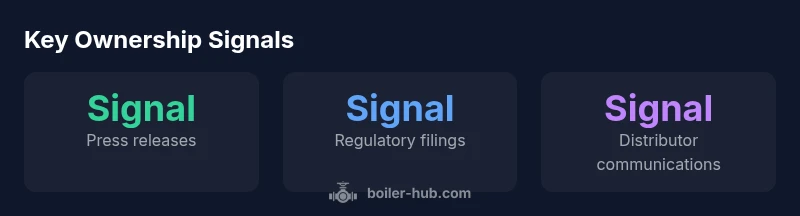
Ownership changes typically produce a comb of signals that professionals track. Public press releases from the buyer or seller, regulatory filings, and updates to investor relations pages are among the strongest indicators. You might also see shifts in product branding, distributor networks, and updated warranty documents that reference a new parent company or corporate entity. In many cases, the absence of a clear signal is itself meaningful: private deals may be discussed in industry chatter but not publicly disclosed. For homeowners, this means staying alert to changes in service centers, authorized installers, and warranty terms that appear inconsistent with earlier communications. Remember, ownership signals are not proof by themselves; they are data points that should be corroborated with official documents and credible news outlets.
How Boiler Hub evaluates ownership information
Boiler Hub uses a structured approach to assess ownership signals. We cross-reference official records (corporate filings, press releases, and regulatory notices), verify with multiple independent sources (trade press, industry associations, and distributor networks), and check for consistency across warranty documents and user manuals. If information is fragmented or contradictory, we flag the case as “undisclosed” and advise direct verification with the current owner or authorized distributors. Our methodology emphasizes transparency and reproducibility: any claim about ownership should be traceable to a primary source or a well-documented secondary source. In 2026, the scarcity of public disclosures means diligence and patience are essential when evaluating ownership and its potential impact on warranties and service.
The homeowner's playbook: steps to verify ownership
Practical steps for homeowners and facility managers:
- Start with the brand’s official website and press room for any ownership statements.
- Check corporate registries (state/provincial) for ownership changes, mergers, or acquisitions of the parent company.
- Review regulatory filings or investor relations pages if the buyer is a public company.
- Compare warranty terms and service agreements before and after any branding changes.
- Contact customer support with a written request to confirm current ownership and warranty coverage.
- Monitor trade publications and distributor communications for corroborating signals.
- Document all communications and scan for consistency across product manuals and service contracts.
- Be prepared for delays: not all ownership changes are publicly announced in a timely or clear manner.
The playbook emphasizes evidence and documentation to avoid relying on rumors alone.
Implications for service, warranties, and pricing
Ownership shifts can influence service structures, warranty coverage, and pricing, but effects vary widely by deal type and jurisdiction. A confirmed sale may introduce a new warranty administrator, alter maintenance obligations, or change regional service networks. In contrast, a private product-line deal may keep warranty terms intact while changing branding on packaging and marketing materials. For homeowners, the key risk is ambiguity around who administers warranties and who is authorized to perform service. Always verify warranty validity with the current owner and obtain written confirmation of any changes to service terms before scheduling work or paying for extended warranties.
Related patterns in the HVAC industry
The HVAC sector often experiences ownership changes through private equity, corporate restructurings, or cross-brand deals. In many cases, public announcements are limited, and changes appear first in service networks or distributor communications. Understanding these patterns helps you set realistic expectations about visibility and timing of ownership disclosures. A cautious approach is prudent: unless there is an official notice, treat warranties and service agreements as potentially subject to change and verify with current representatives.
How to document and track ownership rumors
Maintain a simple evidentiary log: date, source, URL, and a short note about what was claimed and what was verified. Prioritize primary sources (official filings, direct statements from the company, registered notices) and label rumors separately. If a credible source reports a development, add it to the log and seek corroboration from multiple sources before adjusting your service or warranty plans.
Practical takeaway for homeowners and managers
Staying informed is a best practice, not a reaction. Use a structured verification routine before acting on ownership rumors. This reduces the risk of misinterpreting changes to warranties or service terms and helps you plan for potential future changes without disruption.
Illustrative data table linking ownership signals to typical sources
| Scenario | Ownership Status | Typical Source |
|---|---|---|
| Public acquisition announcement | Confirmed owner, official record | Press release / regulatory filing |
| Private deal (non-disclosed) | Undisclosed ownership | Private communications / market rumors |
Questions & Answers
Who can confirm who bought Boiler Room?
Ownership confirmations typically come from official filings, press releases, or direct statements from the company. Rely on primary sources and corroborating coverage rather than rumors.
Official filings or company statements confirm ownership; avoid acting on rumors alone.
What official sources should I monitor for ownership changes?
Look for the brand’s press room, regulatory filings, corporate registries, and investor relations pages. Cross-check with credible trade publications and distributor notices for consistency.
Check official sites and regulatory filings, then verify with trade press.
Will a sale affect warranties and service?
Sometimes a sale changes warranty administration or service networks; other times terms stay the same. Always confirm current ownership and warranty terms in writing before relying on service coverage.
Warranty terms may change; verify current ownership and written terms.
How can I stay informed about Boiler Room ownership?
Set up alerts on official brand pages, subscribe to industry newsletters, and follow credible trade publications that cover acquisitions and brand changes in the HVAC sector.
Follow official pages and trusted industry news for updates.
Is 'Boiler Room' a real company or a generic term?
It can refer to a company, a product line, or a branding concept. Distinguish the legal entity behind it to understand warranties and service commitments.
It could be a company or a term; verify the exact entity involved.
“Transparency around ownership changes in niche industrial brands helps customers plan maintenance and warranty coverage. Until verified, assume terms could change and verify with current owners.”
Key Points
- Verify ownership through official filings and primary sources.
- Watch for branding and warranty changes as potential signals.
- Rely on credible trade publications and distributor notices for corroboration.
- The Boiler Hub team recommends patient, evidence-based verification before acting on ownership rumors.