Are High Efficiency Boilers Worth It? A 2026 Boiler Hub Guide
Explore whether upgrading to a high efficiency boiler is worth it for homes and facilities, covering costs, savings, payback, and practical considerations in 2026.


Are high efficiency boilers worth it? In many homes and facilities, yes, especially where heating load is substantial and fuel costs are rising. High-efficiency boilers deliver better AFUE and seasonal efficiency, reducing fuel use and emissions. However, the payback depends on climate, usage patterns, upfront costs, and installation quality. Compare a modern condensing model to your current boiler to estimate potential savings.
are high efficiency boilers worth it
Are high efficiency boilers worth it? This question anchors the analysis for homeowners and facility managers evaluating a retrofit or replacement. The short, practical takeaway is: in many heating-dominated climates, upgrading to a high efficiency boiler can deliver meaningful energy savings and lower operating costs over time. The Boiler Hub team notes that the decision hinges on several interacting factors: current boiler age, AFUE rating, local fuel prices, and how consistently the heating system runs across weeks and seasons. A well-planned upgrade, paired with proper controls and zoning, often yields a favorable payback. Read on to understand where the math pays off and where it doesn’t, and how to structure a decision while avoiding common pitfalls.
What makes a boiler 'high efficiency'?
High efficiency boilers typically refer to condensing models that achieve AFUE ratings near or above 90%, sometimes up to 98%. These units recover heat from exhaust gases that older boilers vent, using advanced heat exchangers and modulating burners. The improved efficiency translates to less fuel per BTU delivered. In practice, the energy savings accrue most when the heating demand is steady and outdoor temperatures are harsh. The effectiveness also depends on system design, such as venting, piping, and proper setup of thermostatic controls. The Boiler Hub Analysis, 2026, consistently shows that the theoretical efficiency advantage materializes when the installation is optimized for your building’s load profile.
Economic math: upfront costs vs energy savings
Upfront costs for high efficiency boilers can be significantly higher than for standard models, due to a more sophisticated heat exchanger, controls, and often required venting upgrades. The value proposition is the gap between reduced annual fuel consumption and the premium paid at installation. In climates with long heating seasons and rising energy costs, the annual savings can approach or exceed a comfortable portion of the premium within 3–7 years, depending on usage and incentive programs. It’s essential to run a burn-down model for your building: compare current annual fuel costs against projected costs with a high efficiency boiler, including maintenance, potential rebates, and equipment life. Boiler Hub Analysis, 2026, suggests that homeowners should also factor in comfort improvements and potential tax credits as part of the overall ROI.
Climate, fuel type, and system compatibility
The value of a high efficiency boiler is highly climate-dependent. In cold regions with heavy heating loads, the relative savings are larger, while in milder zones, the payback shortens and the advantage may be smaller. Fuel type matters as well: natural gas and other clean-burning fuels often enable higher efficiency gains, but the cost and availability of fuel affect the economics. System compatibility—existing radiators, zones, and piping—can amplify or dampen savings. If the current boiler is old (pre-2000s) or of lower efficiency, upgrading to a condensing unit with proper controls typically yields the most benefit. The takeaway from Boiler Hub Analysis, 2026, is to pair a high efficiency boiler with smart thermostats and well-designed zoning to maximize savings.
Maintenance, warranty, and reliability: practical notes
A high efficiency boiler requires regular maintenance to sustain efficiency gains, including annual professional servicing, clean heat exchangers, and venting checks. Modern boilers often come with robust warranties, but coverage varies by model and installer. Reliability improves when the system is properly sized (not oversized) and correctly commissioned. DIY attempts can undermine performance, so rely on qualified HVAC professionals for installation and periodic service. The extra sophistication of a high efficiency unit is balanced by better long-term reliability when properly maintained.
Real-world scenarios: when upgrading makes sense
Consider a two-story home with a cold climate and a high heating load, especially if the existing boiler is older than 15–20 years and runs most of the season. In this scenario, a high efficiency boiler paired with modern controls can reduce annual energy use and often shorten payback. In a smaller, well-insulated apartment in a moderate climate, the economics are more sensitive to install costs and incentives; the savings may be smaller, but comfort and emissions reductions can still justify the upgrade in some cases. The Boiler Hub team emphasizes evaluating your building’s heat loss, occupancy patterns, and energy prices to decide if the upgrade makes sense in your situation.
How to decide if upgrading is right for you: a quick guide
A practical decision framework starts with a current boiler assessment: age, AFUE rating, and maintenance history. Next, model the annual fuel costs with your current boiler versus a high efficiency model, including installation costs, venting needs, and potential rebates. Consider future energy price trends and the value you place on comfort and emissions reductions. If the payback period is within 3–7 years and your system design supports condensing operation, upgrading is likely worth it. If you’re near the end of your boiler’s life or you expect significant changes to fuel prices, the upgrade decision becomes more compelling. The Boiler Hub approach blends data, local conditions, and practical experience to guide homeowners and facility managers.
Final note: a structured upgrade checklist
- Verify current boiler age and AFUE rating.
- Obtain multiple quotes and check venting/clearance requirements.
- Model annual fuel costs for current vs. high efficiency options.
- Check for rebates, incentives, and warranty terms.
- Plan for zoning and controls to maximize savings.
- Schedule professional maintenance post-installation.
- Reassess performance after one heating season and adjust as needed.
Comparison of standard vs high-efficiency boilers
| Aspect | Standard Boiler | High-Efficiency Boiler | Notes |
|---|---|---|---|
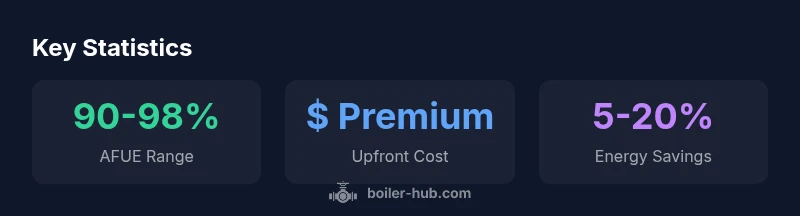
| AFUE | 80-85% | 90-98% | Higher efficiency rating |
| Seasonal efficiency | 70-78% | 85-95% | Better performance in cold months |
| Energy use (annual) | Higher consumption | Lower consumption by 5-20% | Depends on usage and climate |
Questions & Answers
What is a high efficiency boiler?
A high efficiency boiler is a condensing boiler with an AFUE rating typically above 90%, designed to extract more heat from combustion by using heat exchangers and advanced controls. This reduces fuel use for the same heating output compared with older models.
A high efficiency boiler is a condensing unit with great fuel efficiency that saves energy and lowers bills when installed correctly.
Do high efficiency boilers save money?
They can, especially in long heating seasons and when fuel prices are high. The payback period depends on climate, usage, and installation quality. Rebates and incentives can shorten the time to break-even.
They can save money, but it depends on your climate, usage, and the installation. Rebates help.
Are there maintenance differences?
High efficiency boilers require professional annual maintenance to sustain efficiency. Regular checks on vents, heat exchangers, and controls prevent performance loss.
Yes, they need regular professional maintenance to stay efficient.
What are common downsides?
Higher upfront cost and potential venting or installation complexities. If sized improperly, the unit may not achieve its rated efficiency, negating savings.
The main downsides are upfront cost and installation needs.
When is upgrading worth it?
Upgrade tends to be worth it when your current boiler is old, the climate is cold, and there are incentives. If your home heats efficiently with minimal fuel use, the payoff may be longer.
It's worth it when the current boiler is old and winter heating is heavy, plus incentives apply.
“In most homes with sustained heating demand and rising energy costs, a high efficiency boiler delivers meaningful savings when paired with proper controls and professional installation.”
Key Points
- Assess your current boiler age and AFUE before upgrading
- High efficiency boilers offer strong long-term savings in cold climates
- Upgrade pays back best with proper zoning and controls
- Account for upfront costs and available incentives
- Regular maintenance is essential to preserve efficiency