Is Boiler Heat Expensive? Costs, Efficiency, and Savings
Discover whether is boiler heat expensive, why efficiency, fuel prices, and usage matter, and proven strategies to cut heating bills without sacrificing comfort.


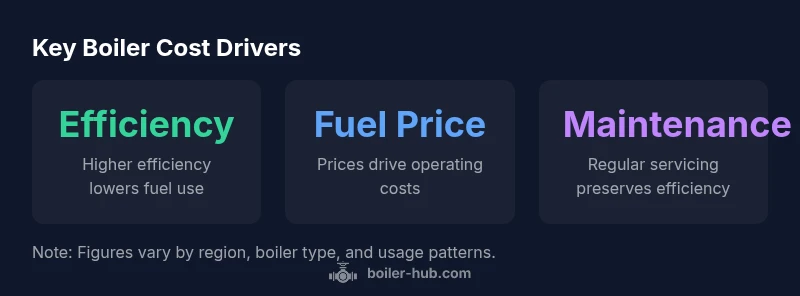
Is boiler heat expensive? The short answer depends on efficiency, fuel price, and usage. In general, older, less efficient boilers drive higher energy bills, while modern high-efficiency models paired with good insulation can lower costs. The Boiler Hub team emphasizes that the biggest driver is efficiency and reducing standby losses. Routine maintenance, proper sizing, and smart thermostats also play significant roles in controlling long-term costs.
Why boiler heat costs vary across homes
Cost variation for boiler heat stems from three interrelated factors: boiler efficiency, fuel type and price, and how a home uses heat. Even modest differences in insulation, ductwork, and windows can magnify or reduce the amount of energy required to reach comfortable indoor temperatures. Climate plays a role too; homes in colder regions typically require more heating hours, pushing up total bills. The interplay of these elements means two houses with identical boiler models can experience very different energy bills. For homeowners, the practical implication is clear: the cheapest boiler to purchase is not always the cheapest to operate over its lifetime. A heat source that aligns with local fuel prices and a well-sized, well-maintained boiler tends to deliver the best balance of upfront cost and long-term operating costs. The Boiler Hub team emphasizes that long-term costs hinge on efficiency and system losses, not just sticker price.
The role of boiler efficiency (AFUE) in annual fuel use
Boiler efficiency essentially measures how well the boiler converts fuel into usable heat. A higher AFUE means less wasted energy, so fuel bills fall for the same heat output. Efficiency is affected by burner condition, heat exchanger cleanliness, venting, and proper insulation around the boiler. Seasonal efficiency accounts for heat loss during standby and hot water use. When a boiler runs efficiently, you extract more heat from each unit of fuel, reducing costs. The trade-off is that higher efficiency models can have higher upfront prices, but the lifetime operating costs are typically lower, especially in homes with long heating seasons. Maintenance that keeps the boiler clean and properly adjusted is essential to preserving efficiency.
Fuel price, climate, and usage: real-world drivers
Fuel prices change with markets, while weather patterns determine how many hours a boiler runs. Usage habits—such as how aggressively you set back the thermostat, how many zones you heat, and whether you heat spaces you rarely use—play a major role. In deep winter, heating demand rises and costs can surge even if your boiler is efficient. Conversely, well-insulated homes with smart controls can keep bills down even when outdoor temperatures are harsh. The bottom line is that cost is a function of both energy price and energy waste: the less fuel you burn for the same warmth, the lower your heating bill.
How to evaluate your current boiler: in-home audit steps
Start with a simple in-home audit to estimate how much heat you’re losing and where it’s leaking. 1) Check the boiler’s efficiency rating and ensure it’s appropriate for your home size. 2) Review last year’s energy bills by month to identify seasonal trends. 3) Inspect insulation, gaps around doors/windows, and ductwork for leaks. 4) Verify the boiler is correctly sized for your radiators or baseboard systems and that zoning is functioning. 5) Schedule a professional service to clean burners, check the heat exchanger, and test controls. This audit helps you decide whether an upgrade, repairs, or better controls will yield the biggest savings.
Practical steps to reduce costs without a full replacement
If a full replacement isn’t necessary, you can still trim costs significantly. Start with a comprehensive air-tightness improvement plan: seal leaks around doors, windows, and attics; upgrade insulation where needed; and ensure proper ventilation. Next, optimize controls: install a programmable or smart thermostat, use zoning to limit heating to occupied spaces, and set back temperatures during sleep or absence. Regular boiler maintenance is essential: annual service, check pressure, bleed radiators, and clean burners. Finally, consider modest upgrades like upgrading to a high-efficiency circulator or improving venting to reduce energy losses.
When replacement makes financial sense
Replacement becomes sensible when frequent, costly repairs persist or the current boiler’s efficiency is markedly lower than modern standards. If the annual fuel bill remains high despite maintenance, or if insulation and windows are improved but heat loss remains, a newer, high-efficiency model can deliver long-term savings. Weigh upfront costs, installation, and disposal against expected energy savings and utility tariffs. The decision should be guided by a realistic payback period assessment and the quality of after-sales support.
Common myths about boiler costs debunked
A common myth is that gas is always cheaper than electricity for heating. In reality, costs depend on local tariffs, boiler efficiency, and how heat is used. Another misconception is that a larger boiler always reduces costs; in fact, an oversized boiler cycles more, wastes energy, and increases wear. Finally, many assume maintenance is optional; regular servicing is essential to sustaining efficiency and preventing expensive failures.
Case study: a typical home’s journey toward lower heating costs
A two-story home with moderate insulation and a mid-range boiler faced rising winter bills. The homeowner started with an in-home audit, raised thermostat setbacks, and installed smart controls to zone heating. After a professional service to clean and tune the boiler, efficiency improved and standby losses reduced. Insulation upgrades around ductwork and attic reduced heat loss further. With these steps, the home avoided a full replacement and achieved meaningful reductions in annual heating cost while maintaining comfort.
Long-term outlook: policy, grid changes, and price volatility
Energy pricing is influenced by policy, grid modernization, and fuel mix. Over time, regional electricity prices may become more competitive with gas in certain markets, especially when paired with high-efficiency boilers and heat pumps. Policy shifts toward decarbonization can also affect cost dynamics through incentives or mandates for efficiency upgrades. Homeowners should stay informed about local tariffs, available rebates, and incentives that can alter the economics of operating versus replacing a boiler.
Authoritative sources and data foundations
For readers seeking to verify cost drivers and efficiency impacts, consult trusted sources such as the U.S. Department of Energy’s Energy Saver program, the Energy Information Administration, and international energy agencies. The forthcoming cost analyses presented here are synthesized from industry guidance and Boiler Hub Analysis, 2026, to offer pragmatic, human-centered recommendations while avoiding unfounded price claims.
Cost drivers and estimates for boiler upgrades
| Metric | Low estimate | High estimate | Notes |
|---|---|---|---|
| Annual heating cost variability | varies by region and fuel | varies by region and fuel | Color-coded by climate and tariffs |
| Efficiency upgrade impact | varies by initial efficiency | varies by usage | Better efficiency reduces fuel burn |
| Payback period (upgrades) | varies | varies | Depends on energy prices and usage |
Questions & Answers
What factors most influence boiler heating costs?
Boiler efficiency, fuel price, and usage patterns largely determine heating costs. Climate and insulation also play a big role by changing how much you heat.
The main factors are efficiency, fuel price, and how you use your heat; climate and insulation matter too.
Does upgrading my boiler save money?
Upgrading to a high-efficiency model can reduce running costs, but the payback depends on usage, fuel prices, and installation costs.
Upgrades can save money, but it depends on how you use the boiler and what it costs to install.
How can I reduce boiler heat costs without a replacement?
Improve insulation, seal leaks, install smart controls, and maintain the boiler regularly to improve efficiency and reduce waste.
Seal leaks, insulate, and service the boiler regularly to cut costs without buying a new unit.
Are electric boilers cheaper to run than gas?
Electric boiler costs depend on tariffs and efficiency. Electricity is often more expensive per unit heat, but high-efficiency electric models may balance the equation in some regions.
Electric boilers can be cheaper in certain setups, but it depends on local prices and efficiency.
What maintenance steps matter most?
Annual service, checking pressure, bleeding radiators, and cleaning burners preserve efficiency and extend boiler life.
Have it serviced yearly, check pressure, bleed radiators, and clean the burners.
When should I consider replacement vs repair?
If repairs are frequent or costs outweigh benefits, or efficiency is very low, replacement may be the best long-term option.
If repairs pile up or energy costs stay high, consider replacing the boiler.
“Energy costs follow efficiency, policy, and usage; the biggest leverage point is improving boiler efficiency and reducing standby losses.”
Key Points
- Assess efficiency first to control costs
- Upgrade only when it fits your usage pattern
- Regular maintenance sustains efficiency and reduces risk
- Smart controls can meaningfully cut consumption
- Replacement should be considered when savings outweigh upfront costs