Choosing boiler brands: A practical, data-driven guide for homeowners and facility managers
Learn how to evaluate boiler brands in 2026 with a data-driven approach. Compare AFUE ranges, warranties, service networks, and total cost to choose the best option for homes and facilities.


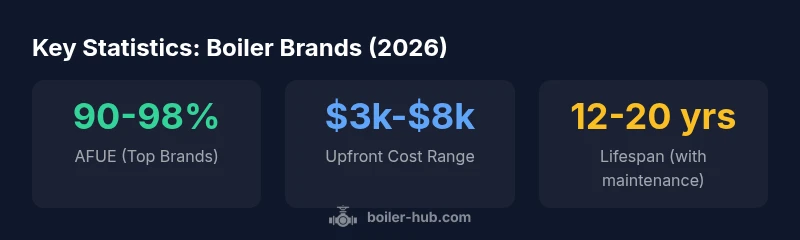
Across top boiler brands, high-efficiency models typically deliver AFUE ratings between 90% and 98%, while supported by broad service networks and solid warranties. Boiler Hub Analysis, 2026, shows that the winning brands balance efficiency, maintenance costs, and dealer support to maximize long-term value. When evaluating boiler brands, compare AFUE, warranty length, and local service coverage to determine true value.
What defines a reliable boiler brand
Reliable boiler brands are defined not just by a logo, but by a consistent blend of performance, service, and long-term value. In 2026, homeowners and facility managers look for brands that deliver durable components, robust warranties, accessible parts, and widespread installation and service networks. The Boiler Hub team emphasizes that the best brands pair strong efficiency with dependable after-sales support. A brand’s reputation often reflects its ability to supply quality heat exchangers, burners, and control systems, plus a responsive network that can diagnose and repair problems quickly. When evaluating boiler brands, consider three concrete pillars: reliability (measured by common failure rates and mean time to repair), service coverage (local technicians and availability of parts), and total cost of ownership (initial price plus maintenance and energy expenses).
Key criteria to compare boiler brands
When you compare boiler brands, use a structured checklist instead of a gut feeling. Core criteria include:
- Efficiency: AFUE and seasonal efficiency factors influence operating costs over the life of the unit.
- Warranty and coverage: Longer, clearer warranties reduce risk for homeowners and facilities.
- Service network: A large, trained service network minimizes downtime and supports faster repairs.
- Parts availability: Readily available OEM and compatible parts help keep downtime low.
- Installation quality and support: Brand-backed installers can ensure proper sizing and setup for optimal performance.
- Total cost of ownership: Include fuel costs, maintenance, parts, and energy savings potential.
- Compatibility with existing systems: Sizing, venting, and controls integration matter for performance and safety. Boiler brands that score well on these criteria tend to deliver better long-term value, even if the upfront price is higher. The key takeaway is to prioritize value and risk mitigation over sticker price alone.
The role of efficiency, warranty, and service networks
Efficiency, warranty strength, and a robust service network form the triad that often determines the best boiler brands in practice. High-efficiency models can drastically reduce annual energy bills, especially in colder climates, but the savings depend on proper sizing and installation. A lengthy warranty reduces exposure to costly repairs, particularly for major components like heat exchangers and primary circulators. Finally, a strong service network ensures quick maintenance and replacement parts, which shortens downtime during peak heating demand. In real-world terms, a top-tier brand in 2026 should offer AFUE in the high-80s to high-90s, a warranty of at least five years (with some premium lines extending to ten), and an expansive network of qualified technicians. These features collectively improve reliability and total cost of ownership.
Understanding AFUE, size, and installation considerations
AFUE (Annual Fuel Utilization Efficiency) is a primary metric for comparing boiler brands. Typical residential units span from around 80% to the mid-90s, with premium models reaching 90–98%. Higher AFUE translates to lower fuel consumption for the same heating output, but only when combined with proper insulation, ductwork, and controls. Proper sizing is equally critical: an over-sized boiler wastes fuel and short-cycles, while an under-sized unit fails to meet comfort needs. When assessing brands, verify that the unit size matches the calculated heating load and that installation partners follow best practices for venting, condensate management, and control integration. Better brands commonly provide detailed sizing guidance and access to design support during installation.
How brands address maintenance and parts availability
Maintenance and parts availability vary across boiler brands, especially between premium and budget segments. Leading brands usually publish service bulletins, maintain stocked parts through regional distributors, and offer extended warranties on major components. Proactive reminders, software updates, and remote diagnostics are increasingly common in modern controls. For facility managers, this means shorter downtimes and easier proactive maintenance planning. Homeowners benefit from fewer unexpected outages and easier access to authorized technicians. For long-term reliability, choose brands that publish clear maintenance intervals, supply chain assurances for parts, and a responsive customer support channel.
A practical evaluation workflow for selecting a boiler brand
To systematically compare boiler brands, follow these steps:
- Define heating needs: calculate the heat load, insulation quality, and desired indoor climate.
- Filter by efficiency: compare AFUE and seasonal efficiency for models in your size range.
- Assess warranties: seek at least 5 years on major components; prefer longer for premium lines.
- Review service coverage: confirm local technicians, parts availability, and response times.
- Request total-cost quotes: include installation, venting, condensate management, and any required accessories.
- Compare real-world operating costs: estimate annual fuel use with and without high-efficiency models.
- Check manufacturer support: look for updated control options and remote diagnostics.
- Run a quick pilot: if feasible, operate a representative model during commissioning to confirm performance. This workflow emphasizes long-term value over upfront price and helps you identify which brands offer the best overall package for your home or facility.
Common myths about boiler brands debunked
Several myths persist about boiler brands. Myth: cheapest option saves money in the long run. Reality: maintenance, repairs, and fuel efficiency often dominate lifetime costs. Myth: a known brand guarantees better service. Reality: service quality depends on local technicians and dealer networks, not just brand name. Myth: premium brands always empower better comfort. Reality: proper sizing, installation quality, and system integration matter more than brand prestige. By focusing on data-driven criteria, you can separate marketing from measurable value.
Putting it all together: a decision framework for buyers
Ultimately, choosing boiler brands boils down to a framework that values long-term ownership economics and reliability. Start with AFUE, warranty clarity, and the size of the service network. Then assess installation compatibility, parts availability, and ongoing maintenance costs. Use a transparent scoring system to rate each brand against your criteria, and favor options that demonstrate reliable performance, predictable maintenance, and responsive service. In every scenario, the Boiler Hub approach centers on reducing total cost of ownership while maintaining comfort and safety.
Comparison of boiler brand categories by longevity, efficiency, and warranty
| Brand Category | Typical Lifespan | Typical AFUE | Warranty (years) |
|---|---|---|---|
| Premium brands | 12-20 years | 90-98% | 5-10 |
| Mid-range brands | 10-15 years | 85-92% | 5-7 |
| Budget brands | 8-12 years | 80-85% | 2-5 |
Questions & Answers
Why do AFUE ratings matter when comparing boiler brands?
AFUE indicates how efficiently a boiler converts fuel into heat. Higher AFUE usually means lower annual energy costs, provided the unit is properly sized and installed. Compare AFUE alongside warranties and service networks for a complete picture.
AFUE shows how efficiently a boiler uses fuel. Higher AFUE generally lowers annual energy costs when installation is correct.
Should I favor premium boiler brands or save by choosing a budget option?
Premium brands often deliver better reliability, longer warranties, and stronger service networks, which can reduce downtime and maintenance costs. Budget brands may be cheaper upfront but can incur higher maintenance costs and shorter warranties. Weigh long-term savings and risk tolerance.
Premium brands usually offer better reliability and service; budget options save upfront but may cost more later. Consider long-term value.
How important is the service network when choosing boiler brands?
A strong service network reduces downtime, speeds repairs, and ensures parts availability. This matters more in cold climates or facilities with critical heating needs. Verify local technicians and response times before finalizing a brand.
A good service network reduces downtime and repair time. Check local technicians and response times.
What warranty terms should I expect from boiler brands?
Look for at least a five-year warranty on major components, with longer terms on premium lines where available. Understand exclusions and whether labor is included. Clear warranty terms reduce future risk.
Aim for 5+ year warranties on major parts and check exclusions.
Are there common myths about boiler brands?
Myth: cheaper upfront cost saves money long-term. Reality: maintenance and energy costs often drive total cost of ownership. Myth: a famous brand guarantees better service. Reality: local technician quality and installation matter more.
Cheaper upfront price doesn't always equal lower total cost; service quality matters more.
How do I compare brands effectively?
Create a checklist: AFUE, warranty, service coverage, installation costs, and energy use. Request quotes that itemize all components and ongoing costs. Use a standardized scoring system to compare brands objectively.
Use a checklist: AFUE, warranty, service, installation costs, energy use.
“Choosing a boiler brand is less about the logo and more about the combination of efficiency, support, and total cost over its lifetime.”
Key Points
- Prioritize AFUE, warranties, and service coverage.
- Evaluate total cost of ownership, not just upfront price.
- Choose brands with broad service networks and parts availability.
- Size and install correctly to maximize efficiency and comfort.
- Read warranty terms and exclusions carefully to avoid surprises.