Is a combi boiler cheaper to run than a system boiler? A practical, analytical comparison
A detailed, data-informed comparison of running costs between combi and system boilers. Learn which setup tends to be cheaper in typical homes, what drives costs, and how to choose based on hot-water demand, efficiency, and installation considerations.


Why size and usage patterns drive running costs
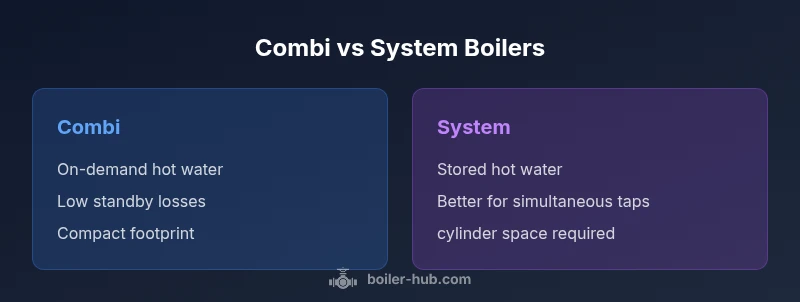
Choosing between a combi boiler and a system boiler is not about a single number; it’s about how your household uses hot water and space heating. A combi boiler heats water on demand, so it avoids storing hot water in a cylinder. This can reduce standby heat losses and may lower running costs for homes with lower to moderate hot-water use. A system boiler, by contrast, heats and stores hot water in a cylinder, which allows multiple taps to be served simultaneously without waiting for recovery. If your household has frequent high demand (for example, simultaneous showers, dishwasher, and washing machine), a properly sized system boiler can deliver reliable comfort with potentially lower peak pressures on the boiler. The Boiler Hub team notes that the cost advantage swings on demand patterns and system sizing more than on a fixed rule of thumb. According to Boiler Hub, the long‑term running costs depend on how often you draw hot water and how efficiently your boiler heats water.
How efficiency and boiler controls impact running costs
Efficiency ratings matter when calculating running costs, but controls such as weather compensation, smart thermostats, and load-sensing features can shift a boiler from roughly efficient to highly efficient in daily use. A combi boiler with modern modulation and good burner efficiency reduces wasted energy during standby and hot-water production. A system boiler benefits from高 thermal efficiency when accompanied by a well-insulated cylinder and well‑insulated piping. The key is to compare the annual fuel utilization efficiency (AFUE) or SAP ratings, and to ensure controls are configured to minimize overheating and standby losses. In real terms, even a high‑efficiency system boiler can be more expensive to run if the cylinder is oversized relative to demand or if it experiences heat losses from poor insulation.
Installation costs and how they affect the price of running a boiler
Initial installation costs differ: combi boilers typically have lower upfront costs due to simpler plumbing and no cylinder, while system boilers require a hot-water cylinder and potentially more extensive pipework. Long-term running costs are influenced by maintenance and part replacement; cylinders in system setups introduce additional components that may require periodic servicing. The total cost of ownership should weigh both upfront and ongoing energy use. Boiler Hub analysis suggests that a thorough sizing assessment and professional installation are essential to avoid oversized systems that waste energy and raise running costs over time.