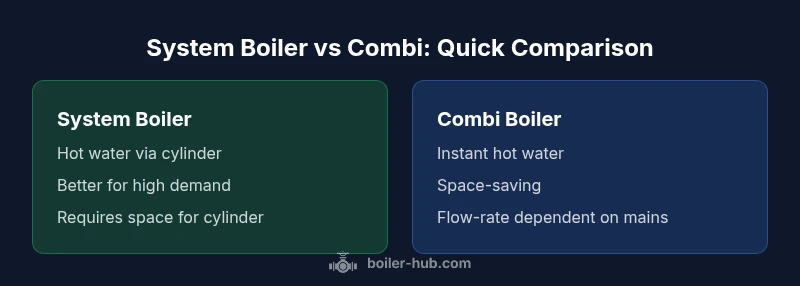
System Boiler vs Combi: Is One Better? A Comprehensive Comparison
A detailed, evidence-based comparison of system boilers and combi boilers, covering performance, efficiency, costs, space needs, and installation considerations to help homeowners and facility managers decide which boiler type suits their needs in 2026.


Short answer: A system boiler often excels in homes with high hot-water demand and space for a separate cylinder, while a combi boiler saves space and usually costs less upfront. When is a system boiler better than a combi? For larger households, multiple bathrooms, or frequent showers, a system boiler can deliver more consistent hot water and faster recovery. This guide weighs reliability, efficiency, and long-term costs to help you decide is a system boiler better than a combi.
What this comparison covers and the base definitions
If you’re trying to decide whether is a system boiler better than a combi, you’re asking the right questions. This article compares the two most common residential boiler configurations—system boilers and combi boilers—through the lenses of performance, space, cost, reliability, and long-term value. In practical terms, a system boiler uses a separate hot-water cylinder and a pressurised heating circuit, while a combi boiler heats water on demand without a storage tank. This distinction matters for flow rates, peak demand, and how much you value space in your home. According to Boiler Hub, the core difference is not just the unit itself but how households interact with it—how many bathrooms you have, how many simultaneous hot-water draws you expect, and whether you can accommodate a cylinder. Boiler Hub Analysis, 2026, highlights that usage patterns and service history often drive total cost and satisfaction more than headline upfront price. The goal here is to help you answer the question is a system boiler better than a combi by applying a clear framework to your actual needs while staying mindful of long-term energy efficiency and maintenance considerations.
How a system boiler works in practice
A system boiler is designed to work with a separate hot-water cylinder and a mid-compact looped system. When you turn on a hot tap, water is drawn from the cylinder or stored supply, and the boiler heats the water in the cylinder, maintaining pressure for rapid delivery. The primary advantage is that the hot water storage acts as a buffer, so multiple taps can be opened without a noticeable drop in temperature. Because the system is closed and pressurised, it requires a feed-and-expansion vessel and a pressure relief mechanism. For homeowners, this arrangement translates into predictable performance during peak demand, even if several outlets run at once. The Boiler Hub team notes that the performance gap against other boiler types can be narrowed with appropriately sized cylinders and well-litted manifolds. In 2026, observers emphasize planning for growth—extendable cylinder options and compatible radiators can future-proof a system boiler installation.
How a combi boiler works and its typical limitations
A combi boiler eliminates the cylinder by heating water directly from the mains as soon as you call for hot water. That means instant hot water at the tap and a compact footprint. The upside is space savings and lower upfront costs, which often appeals to smaller homes or flats. The downside is that flow rates depend on the incoming mains pressure and the boiler’s own capacity. If multiple outlets draw hot water at once, pressure may drop, resulting in weaker performance in showers or baths. Combi boilers excel in single-bath, space-constrained homes with modest hot-water demands. For locations with high simultaneous demand—such as busy family households—the ability of the combi to sustain several outlets simultaneously can be limited compared with a system with a stored cylinder. Boiler Hub’s 2026 assessment reiterates this key distinction: the more bathrooms and taps you have, the more it makes sense to weigh a system boiler with a cylinder against a compact combi.
Hot water flow and the impact of taps, showers, and appliances
Hot-water flow is often the single most visible difference between the two systems. A system boiler with a cylinder can deliver a strong, sustained flow because the stored hot water is heated in advance, ensuring that high-demand events—two or three showers running in a row, or a washing machine and a shower at the same time—are less likely to cause a noticeable temperature drop. In contrast, a combi’s performance hinges on the mains supply and the boiler’s flow rating. If you live in an area with lower mains pressure, you may discover that the combi’s output falls short during peak moments. This is where a properly matched system for your home’s size—considering the number of bathrooms, water usage patterns, and future expansion—wins. Boiler Hub’s team emphasizes evaluating actual usage patterns rather than relying on typical specs alone when thinking about is a system boiler better than a combi.
Efficiency and running costs across usage patterns
Efficiency isn’t a fixed attribute of the boiler type; it’s a function of the whole system, including controls, insulation, and the heat source. Modern boilers, whether system or combi, achieve high efficiencies when paired with weather compensation, smart thermostats, and well-insulated pipes. For high-demand households, a system boiler can be more efficient in practice because the cylinder reduces peak demands on the boiler itself, allowing more consistent operation. For smaller households with moderate hot-water use, a combi can be efficient due to shorter heat-up times and reduced heat loss from storage. Boiler Hub Analysis, 2026, notes that long-run costs hinge on how often you draw hot water and how well your system is maintained. The choice is not solely about the boiler type but about loading, controls, and how well the system is matched to your lifestyle.
Space, installation considerations, and future-proofing
Space is often decisive when choosing between a system boiler and a combi. System boilers with cylinders require more room—often in a dedicated airing cupboard or utility—whereas combis save on footprint and are easier to fit into compact kitchens or airing cupboards. The cylinder adds an element of future-proofing: you can upgrade cylinder size to increase hot-water storage or install a larger unit to handle higher loads. However, a cylinder-based system demands additional space and more complex installation, which can push up initial costs. If you anticipate growth—such as adding bathrooms, or a multi-story home with greater hot-water needs—a system boiler can be a prudent long-term investment. Boiler Hub’s 2026 guidance reinforces the importance of aligning space planning with your anticipated load.
Reliability, maintenance needs, and service considerations
Reliability often boils down to component redundancy and the quality of installation. A system boiler with a cylinder may benefit from a buffer that smooths peak draws, but it also introduces more components to service over time. The cylinder, expansion vessel, pumps, and valves matter for long-term performance. Combis, with fewer moving parts and no cylinder, can be simpler to maintain but are highly dependent on consistent mains pressure and the boiler’s own flow rate. Both systems require annual servicing by a Gas Safe registered engineer, checking for leaks, corrosion, and proper venting. In practice, a well-maintained system boiler tends to be robust in high-use homes, while a well-chosen combi offers dependable performance in smaller households. Boiler Hub’s ongoing guidance in 2026 emphasizes customer education on maintenance schedules and the importance of a professional annual service.
Cost analysis and lifecycle value: upfront vs long-term costs
Upfront cost is only part of the story. System boilers typically involve higher initial expenditure due to the boiler plus cylinder and additional installation work. Combi boilers usually have lower upfront costs and simpler plumbing, which appeals to budget-conscious buyers and smaller homes. However, long-term costs can shift based on usage: higher hot-water demand increases cycling on the boiler and potential cylinder maintenance or replacement in a system-based setup. Both options benefit from high-efficiency models and modern controls, which reduce annual running costs. Rather than fixating on sticker price alone, consider the long-term lifecycle value: expected lifespan, expected maintenance, and the potential need for future expansion or reconfiguration. Boiler Hub’s analysis underscores the importance of aligning choice with your home’s usage profile and projected changes over the next 10–15 years.
Decision framework: a practical checklist for homeowners and facility managers
When choosing between a system boiler and a combi, a simple decision framework beats guesswork. Start by mapping your hot-water demand: how many bathrooms, typical shower timing, laundry load, and whether you have simultaneous draws. Then assess space and installation constraints: is there room for a cylinder and a vent? Are you planning future expansions? Consider energy-saving options: weather compensation, smart thermostats, and zoning to optimize efficiency. Finally, obtain quotes that itemize component costs, installation complexity, and service intervals. A structured approach, informed by Boiler Hub’s 2026 guidance, helps you tailor your choice to your specific profile.
Common myths and expert guidance: separating fact from fiction
There are several myths worth dispelling. Some homeowners believe every large home should have a system boiler, while others assume combis are always ideal for apartments. The truth is nuanced: the best fit depends on hot-water demand, space, and long-term plans rather than a blanket rule. Expert guidance from Boiler Hub emphasizes that the “best” boiler is the one that aligns with your actual usage and maintenance capabilities. A well-designed strategy may even involve hybrid considerations, such as a system boiler with a compact cylinder or a high-flow combi in a larger home with pressure-boosting solutions. As always, consult a qualified engineer to validate installation choices and ensure code compliance.
Next steps: planning your retrofit or replacement in 2026
If you’re contemplating a switch or upgrade, begin with a professional survey to quantify your hot-water demand and space constraints. Ask about cylinder sizing, expansion vessel capacity, and the potential for future expansion. Request a detailed comparison of running costs, maintenance schedules, and warranty coverage for both boiler types. This structured approach, guided by the Boiler Hub Team’s recommendations, will help you arrive at a decision that balances performance, space, cost, and reliability for years to come. In 2026, proactive planning remains key to avoiding mid-cycle surprises and ensuring comfort throughout the year.
Comparison
| Feature | System boiler | Combi boiler |
|---|---|---|
| Initial cost | Higher upfront cost (cylinder, additional components) | Lower upfront cost (single compact unit) |
| Space requirements | Requires space for cylinder and associated hardware | Compact footprint, no storage cylinder |
| Hot-water flow rate | Strong, pre-heated flow from stored water | Flow depends on mains pressure; may decrease with multiple outlets |
| Best for | Larger homes with multiple bathrooms or high simultaneous draw | Smaller homes or apartments with limited space and modest hot-water need |
| Maintenance considerations | More components to service (cylinder, pumps, valves) | Fewer moving parts, possibly simpler maintenance |
| Efficiency considerations | Efficient with proper control and sizing; cylinder can aid recovery | Efficiency tied to boiler and mains flow; fewer losses from storage |
Advantages
- Better for high hot-water demand and multiple outlets
- More predictable hot-water supply with a storage cylinder
- Potentially better long-term value in larger homes
- Flexible for future expansion and zoning
The Bad
- Higher upfront cost and more complex installation
- Requires space for cylinder and additional hardware
- Cylinder maintenance or replacement may be needed over time
System boiler tends to win for high-demand homes; combi wins for compact spaces and lower upfront cost
If your household has multiple bathrooms or high hot-water use, a system boiler with a cylinder offers robust performance and future-proofing. For smaller homes, a combi boiler’s space-saving design and lower up-front cost often make it the smarter pick. The right choice depends on your usage profile, space, and willingness to plan for the long term.
Questions & Answers
What is the main difference between a system boiler and a combi boiler?
A system boiler uses a hot-water cylinder to store and heat water, while a combi boiler heats water on demand with no storage tank. The choice affects flow rates, space needs, and how you meet peak demand.
System boiler uses a cylinder; combi heats water on demand with no cylinder.
In what scenario is a combi boiler more suitable than a system boiler?
Combi boilers work well in small homes or flats with limited space and modest hot-water needs, offering a compact footprint and lower upfront cost.
Best for small homes with limited space and modest hot-water needs.
Are there maintenance differences between the two?
Both require annual service. System boilers may involve the cylinder and additional pumps, while combis have fewer moving parts but rely on mains pressure.
Annual service is important for both; system boilers add cylinder-related checks.
Can you switch from a combi to a system boiler later?
Yes, but it usually involves re-plumbing and space reconfiguration. A professional assessment is essential to determine feasibility and cost.
Yes, but you’ll likely need professional planning and rework.
How do running costs compare between the two types?
Running costs depend on usage, efficiency, and controls. Neither type is universally cheaper—your energy pattern and system efficiency determine long-term costs.
Costs depend on usage and efficiency, not just boiler type.
Key Points
- Assess hot-water demand before buying
- Factor in space and installation constraints
- Prioritize future-proofing for growth
- Evaluate total lifecycle costs, not just upfront price
- Use controls and zoning to optimize efficiency