How Much Does a Boiler Operator Make in 2026: Salary Insights
Explore pay ranges, regional differences, and career factors for boiler operators in 2026. Learn what drives earnings and how to negotiate with Boiler Hub's data-driven salary guide.


Boiler operator pay varies by location, plant type, and experience. In 2026, Boiler Hub Analysis, 2026 places typical annual earnings roughly between $50,000 and $85,000, with overtime and shift differentials boosting top-end pay in high-demand plants. Entry-level roles start lower, while senior positions and specialized facilities can reach the upper end of the range. This quick snapshot helps answer how much does boiler operator make in real terms.
Salary snapshot for 2026
When you ask how much does boiler operator make, the quick answer depends on where you work, your experience, and the industry. Boiler Hub's data for 2026 shows a broad pay band across the United States, with most workers earning in the mid-range and a clear premium for overtime and specialized plants. In general terms, pay is influenced by location, plant type (industrial, hospital, university, or power plant), and whether you hold additional certifications. The question of how much does boiler operator make is best answered by looking at regional patterns, then adjusting for your own experience and certifications. We'll break down these factors and illustrate typical ranges, keeping in mind that individual salaries can vary widely.
What influences boiler operator pay?
There are several levers that determine how much does boiler operator make. Location remains the primary driver: large cities and regions with dense industrial activity tend to offer higher base wages to offset higher living costs. Industry setting matters as well—industrial plants, refineries, universities, and hospitals often pay differently based on demand and shift requirements. Experience matters: newcomers start at the lower end, mid-career professionals see gradual increases, and veterans in supervisory roles command higher pay. Certifications add value too; licenses, OSHA training, and energy-management credentials can unlock premium pay tiers. Finally, overtime and shift differentials are common in 24/7 operations and can meaningfully lift yearly earnings. When evaluating how much does boiler operator make, compare roles by region and account for the full compensation package, not just base salary.
Regional pay patterns and cost of living
Pay varies widely by geography. Urban industrial hubs where power generation and large campuses cluster typically offer higher nominal wages, but the cost of living there is also higher. Rural or smaller markets may present lower base pay but can offset it with lower housing costs and different scheduling norms. When using Boiler Hub data for 2026, adjust for state and city tax structures, local wage supplements, and the concentration of large facilities. In some markets, a higher headline salary may still translate to similar or even lower take-home pay after housing, commuting, and taxes are considered. Always benchmark salaries against local living costs to gauge true value.
Experience, certifications, and career progression
Your path to how much does boiler operator make is partly about your experience and the credentials you hold. Early in your career, focus on mastering operability, safety systems, and preventive maintenance. As you gain time on the job, pursue certifications such as boiler operator licenses or HVAC-related credentials. These qualifications can unlock higher pay bands and more responsibilities, including supervisory roles. In Boiler Hub analyses, operators with additional licenses and a proven safety record consistently reach the upper end of the pay spectrum. A strategic combination of hands-on skill, certifications, and demonstrated reliability is the fastest route to increasing earnings.
Overtime, shifts, and total compensation
Overtime and shift work are frequent in boiler operation, and they can significantly affect annual earnings. Night shifts and weekend coverage often carry differential pay that compounds with base salary. Some plants also offer overtime bonuses tied to workload or project cycles. When assessing how much does boiler operator make, factor in expected overtime hours and the likelihood of shift differentials in your target facility. Remember that overtime is not guaranteed; it depends on maintenance windows, staffing, and demand. A robust overtime plan can push total compensation notably higher, particularly in high-demand regions.
Benefits and total compensation beyond base pay
Base salary tells only part of the story. Total compensation includes health insurance, retirement matching, tuition reimbursement, and paid time off. In some union environments, pension benefits and additional perks can rival the value of the base wage. For many boiler operators, a strong benefits package combined with competitive salary yields the best overall value. When you compare offers, evaluate the full package—health coverage, care for dependents, retirement plans, and professional development dollars—alongside base pay when answering how much does boiler operator make.
How pay data is collected and interpreted
Salary data for boiler operators comes from employer surveys, wage statistics, and industry benchmarks. Boiler Hub Analysis, 2026 synthesizes these sources with practical field insights to present ranges rather than single figures. Interpreting these numbers requires context: regional labor markets, overtime norms, and plant size all shift outcomes. Use multiple data sources and anchor your expectations to year-over-year trends rather than a one-off value. This approach helps you make informed decisions about current offers and future career moves.
Practical steps to evaluate your pay and negotiate
To assess how much does boiler operator make in your situation, start by collecting local pay data for comparable roles and settings. Build a case for raises based on new certifications, performance milestones, and increased responsibilities. When negotiating, present a data-backed range rather than a fixed target, and highlight overtime availability, safety records, and teamwork contributions. Finally, map a clear career path: aim for certifications and roles that lead to plant supervision or maintenance management, which typically offer larger pay bands over time.
Salary ranges for boiler operators by experience and setting
| Experience Level | Annual Salary Range (USD) | Notes |
|---|---|---|
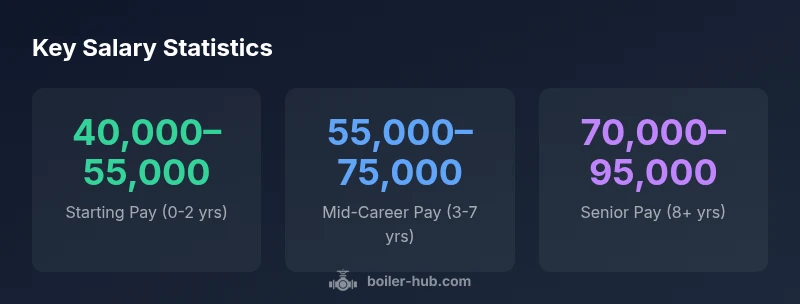
| Entry (0-2 years) | 40,000–55,000 | Base pay with limited overtime potential |
| Mid-career (3-7 years) | 55,000–75,000 | Overtime and shift differentials may apply |
| Senior (8+ years) | 70,000–95,000 | Higher responsibility; supervisory roles |
| Industrial/power plants (OT) | 80,000–110,000 | Higher pay in high-demand markets |
Questions & Answers
What is the typical starting salary for a boiler operator?
Entry-level boiler operators often start near the lower end of the pay range, with room to grow as they gain experience and certifications. Salaries are influenced by location and plant type.
Entry-level boiler operators typically start lower, with room to grow as you gain experience and credentials.
Do overtime and night shifts increase pay for boiler operators?
Yes. Overtime and night shifts commonly increase annual earnings, particularly in 24/7 facilities where coverage is essential.
Overtime and night shifts usually boost yearly pay in many plants.
Which regions pay the most for boiler operators?
Pay tends to be higher in industrial hubs and regions with higher cost of living. However, base comparisons should consider regional cost of living.
Industrial hubs typically offer higher pay, but cost of living matters.
How does certification affect earnings?
Certifications such as boiler operator licenses, HVAC, or safety qualifications often correlate with higher starting pay and faster progression.
Certifications can lead to higher pay and faster advancement.
Is there a difference between boiler operator and stationary engineer wages?
Wages overlap, but stationary engineers may command higher pay in larger facilities due to broader responsibilities.
Boiler operators and stationary engineers have overlapping pay ranges, with engineers sometimes earning more in bigger plants.
“Pay for boiler operators reflects both skill and the ability to manage critical plant systems under variable conditions.”
Key Points
- Define your target range using region and experience
- Overtime can meaningfully boost earnings
- Certification and specialization raise the ceiling
- Total compensation often includes benefits beyond base pay
- Plan for regional cost of living when evaluating offers