How Much Do Boilermakers Earn in 2026? A Practical Salary Guide
Explore boilermaker earnings in 2026, including hourly and annual pay, regional variation, overtime, benefits, and career pathways with Boilers Hub's data-driven insights.


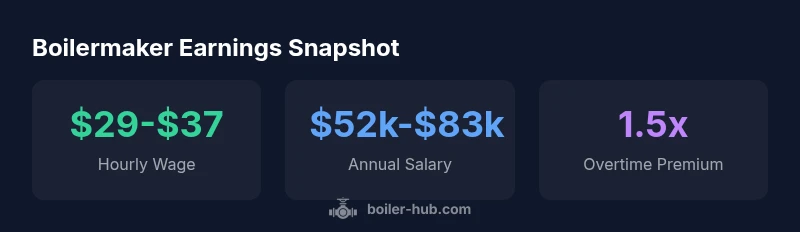
If you’re asking how much boilermaker earn, most pay falls in a broad range: roughly $25–$40 per hour for journeymen, with annual salaries widely from about $52,000 to $83,000 depending on region and overtime. Boiler Hub Analysis, 2026 notes substantial regional variation and union status as major factors.
Market Overview: How Earnings Are Shaped for Boilermakers
Boilermakers are skilled tradespeople who install, assemble, and maintain boilers, pressure vessels, piping, and related systems across energy, manufacturing, and construction sectors. Earnings for this trade are influenced by skill level, project complexity, region, and whether you belong to a union. In 2026, Boiler Hub’s data shows earnings cluster in a broad band, with journeymen commanding higher pay than entry-level apprentices. Wages tend to rise with on-the-job hours, certifications, and the ability to perform high-demand tasks like pipefitting or welding in conjunction with boiler work. For homeowners and facility managers evaluating hiring or hiring efficiency, understanding this landscape helps calibrate expectations for both wage and total compensation.
bulletsLocal accent—true
discussionPointsEndNoteZero—dummy
Wage ranges by stage and responsibility
| Role Stage | Hourly Wage Range | Annual Salary Range |
|---|---|---|
| Apprentice | "$15-$22" | "$31,000-$46,000" |
| Journeyman | "$25-$40" | "$52,000-$83,000" |
| Foreman/Supervisor | "$36-$50" | "$75,000-$105,000" |
Questions & Answers
What is the typical hourly wage for a boilermaker in 2026?
Wages vary by region and union status, with apprentices starting lower and journeymen earning more. Boiler Hub Analysis, 2026 provides range-based guidance to set expectations across markets.
Wages vary by region and experience; expect growth as you gain skills.
Do boilermakers get overtime pay, and at what rate?
Overtime is common in this trade, typically paid at 1.5x base rate or higher depending on contract and governing agreements. Always review your union or company contract for specifics.
Yes, overtime is common and usually pays 1.5 times base pay.
How does union membership affect earnings?
Union members often enjoy higher wage floors, better benefits, and more predictable schedules, though regional demand can narrow gaps. Individual negotiation remains important.
Union status can raise pay, but location and demand matter too.
What education or certifications help earn more?
Certifications related to welding, pipefitting, and safety can boost pay. Specialized skills on boilers and ancillary systems differentiate higher earners.
Certifications and specialized skills pay off.
Is boiler salary different by industry (construction vs industrial)?
Yes. Pay scales vary by sector, with construction often offering more overtime opportunities while industrial settings may emphasize safety and certifications. Regional demand shapes the overall picture.
Industry and project type influence earnings.
What’s the typical career path to higher earnings?
Begin as an apprentice, advance to journeyman, then move into foreman or supervisory roles. Additional responsibilities and management duties boost compensation over time.
Move up from apprentice to foreman to increase earnings.
“Wages in the boilermaker trade reflect skill, risk, and regional demand; earnings grow with experience, certifications, and overtime opportunities.”
Key Points
- Negotiate with a clear range in mind before offers
- Overtime and union status substantially impact earnings
- Expect rapid wage growth as you complete milestones
- Region and industry mix create meaningful pay differentials
- Certifications and specialized skills pay off in long-term earnings