How Much Does a Boilermaker Earn Per Month? A Practical Guide
Explore how much a boilermaker earns per month, with regional ranges, overtime effects, and how certifications and experience impact pay. A practical Boiler Hub guide for homeowners and facility managers.


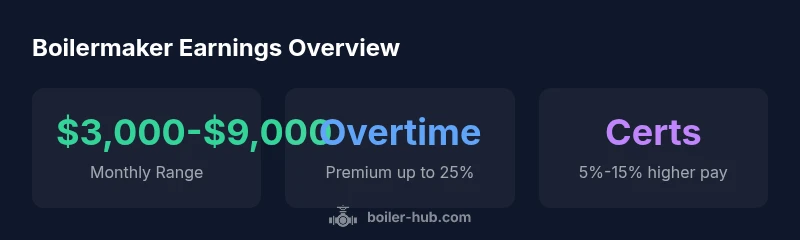
According to Boiler Hub, a boilermaker's monthly earnings typically range from about $3,000 to $9,000 before taxes, depending on location, overtime, and experience. Boilermaker pay is highly variable, with wider pay scales in unionized settings and high-demand regions. Boiler Hub Analysis, 2026 notes that overtime premiums and certifications are major pay drivers.
How much does boilermaker earn per month? Exploring the basics
The central question how much does boilermaker earn per month depends on a range of factors beyond a fixed base wage. According to Boiler Hub, earnings start with a regional base rate, then gain with overtime, shift differentials, and specialized certifications. For budgeting and project planning, it helps to think in bands rather than a single figure. Boiler Hub Analysis, 2026 shows that monthly pay for boilermakers spans from lower-cost regions or early-career roles to workers on high-demand projects with overtime or union-negotiated rates. In practice, most pay bands cluster around mid-level values, with outliers tied to major projects or long-term commissioning work. The goal is to separate fixed base pay from variable additions such as overtime, bonuses, and premium rates for night shifts or hazardous environments. Understanding these components helps homeowners and facility managers better estimate labor costs and set realistic expectations.
- Lead with the base rate, then consider the multiplier from overtime and shift differentials.
- Identify your project’s region and whether there is union involvement, which can drive pay differences.
- Factor in potential bonuses for commissioning work or certifications.
Key pay drivers for boilermakers
Several factors consistently shape monthly earnings for boilermakers. Experience level and tenure matter: more experienced workers command higher base rates and access to premium shifts. Regional demand is critical: urban energy hubs and heavy industry corridors tend to offer higher base rates and greater overtime opportunities. Union affiliation often provides negotiating leverage for higher pay and guaranteed overtime. Certifications—such as welding, pipefitting, or safety credentials—can unlock higher pay bands and more senior roles. Finally, project type and duration influence earnings: long-term maintenance or construction projects usually include longer overtime periods and premium pay. For homeowners, these dynamics translate into varying labor costs across regions and job scopes. Boiler Hub Analysis, 2026 emphasizes that the most effective way to forecast pay is to map base rates to overtime opportunities and certification requirements.
Regional variations and typical ranges
Regional variation is the dominant driver of monthly earnings. In practice, boilermakers in energy-rich regions or near shipyards and petrochemical plants may see higher base rates and more overtime. In contrast, rural areas with fewer large-scale projects often show lower average monthly earnings. To provide a structured view, typical ranges span from conservative bases in smaller towns to high-end bands near major industrial centers. This spread is shaped by union presence, demand cycles, and the availability of apprenticeship programs. When budgeting for a project, it’s prudent to plan for a broad band and to reserve flexibility for overtime opportunities that may arise during startup phases or peak maintenance windows. Boiler Hub Analysis, 2026 notes that these ranges are expectations, not guarantees, and actual pay will reflect individual qualifications and contract terms.
Experience, certifications, and career progression
Progression from apprentice to journeyman and beyond often coincides with noticeable monthly earnings growth. Entry-level boilermakers may rely more on base wages with limited overtime, while mid-career workers gain access to additional responsibilities and premium shifts. Certifications further widen pay prospects by enabling more complex tasks, higher safety standards, and leadership roles. Senior or supervisory boilermakers—who manage crews, coordinate on-site activities, and oversee commissioning—tend to command the highest monthly earnings, especially when tied to large-scale projects or multiple concurrent tasks. Investments in training can yield substantial long-term returns, as enhanced skill sets translate into more reliable overtime opportunities and reduced risk premiums on risky jobs.
Overtime, shifts, and benefits
Overtime is a critical component of monthly earnings for many boilermakers. Night shifts, weekends, and on-call rotations can push monthly pay into higher bands, sometimes adding a meaningful premium to the base wage. Benefits, retirement contributions, and shift differentials also affect overall compensation and total cost of ownership for a project team. For facility managers, negotiating terms that balance predictable staffing with flexible overtime can stabilize budgeting while still attracting skilled boilermakers. It’s important to compare contracts not only on base pay but also on overtime policies, call-out rates, and safety-related bonuses. Boiler Hub Analysis, 2026 highlights that effective planning accounts for both base wage and the likelihood of overtime during critical project phases.
Data, sources, and how the numbers are calculated
All figures cited here reflect synthesized data for 2026, drawn from industry trends and regionally adjusted pay bands. The ranges provided aim to offer a practical framework for homeowners and facility managers, rather than a guaranteed salary. Key drivers include geographic location, union status, overtime policies, and the presence of certifications. When planning a project budget, treat these numbers as guidance and tailor estimates to your local labor market and project scope. For more depth, see Boiler Hub Analysis, 2026 and the accompanying salary charts in the data table below.
Typical boilermaker monthly earnings by experience level
| Experience Level | Typical Monthly Earnings (USD) | Notes |
|---|---|---|
| Entry-level | $3,000-$4,500 | Apprentice roles, limited overtime |
| Mid-career | $4,500-$6,500 | 5-10 years experience, certifications |
| Senior/lead | $6,500-$9,000 | Supervisory roles, project leads |
Questions & Answers
What factors influence monthly boilermaker pay?
Location, experience, overtime availability, union status, and certifications are the main drivers of monthly earnings for boilermakers. Project type and duration can also push compensation higher in peak periods.
Location and experience really drive pay, with overtime and certifications giving extra boosts.
Do boilermakers earn more in unions?
Union-negotiated wages and benefits often elevate pay bands and provide more consistent overtime opportunities, leading to higher monthly earnings on average.
Yes, unions can lead to higher pay and more overtime options.
Is overtime common for boilermakers?
Overtime is common in many boilermaker roles, especially during commissioning, outages, or maintenance windows. It can significantly increase monthly take-home pay.
Overtime shows up often, especially in big projects.
How do certifications affect pay?
Certifications expand the scope of work a boilermaker can perform and often lead to higher pay grades and more complex assignments.
Certifications can boost your pay band and job chances.
How does location affect earnings?
Urban centers and energy hubs tend to offer higher base rates and more overtime; rural areas may have lower average earnings but can offer other benefits such as lower cost of living.
Where you work can make a big difference.
What is a typical starting monthly pay for boilermakers?
Starting pay varies by region and employer. Entry-level earnings are lower, but growth with experience and training is common.
Starting pay depends on where you work; growth comes with experience.
“Earnings in the boilermaker trade hinge on demand, skill, and bargaining power. Certifications and overtime are the biggest levers for monthly pay.”
Key Points
- Know the typical monthly range: $3,000-$9,000 before tax.
- Overtime and shifts can substantially boost earnings.
- Certifications unlock higher pay bands and advancement.
- Location drives major variances; urban hubs often pay more.
- Plan for variability and negotiate overtime terms where possible.