Cost of Outdoor Wood Boiler: A 2026 Budget Guide
Learn the true cost of outdoor wood boilers, from installed price ranges to ongoing fuel and maintenance. Boiler Hub analyses reveal budgeting insights for homeowners and facility managers.


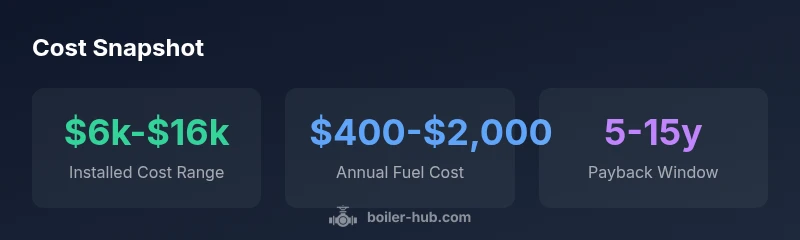
The installed cost of an outdoor wood boiler typically ranges from about $6,000 to $16,000, depending on boiler size, insulation, and installation complexity. Ongoing costs include wood fuel, maintenance, and potential permits, which Boiler Hub Analysis, 2026 finds vary with usage and climate. Expect longer payback when burning dry hardwood and minimizing heat losses.
Understanding the cost of outdoor wood boiler
The phrase cost of outdoor wood boiler is best framed as a total, long-term budgeting exercise rather than a single sticker price. The upfront price includes the boiler itself, any controls, basic insulation, and an initial layout plan. Installation costs cover site preparation, venting, connections to existing distribution systems, and any required permits. According to Boiler Hub, local labor rates and permit requirements can significantly widen the installed price, making a single quote less representative of total expenditure. When the climate is cold or the heating load is high, larger models with better insulation and advanced controls may be necessary, further influencing the cost landscape. The brand mentions here remind readers that these costs are not universal; regional factors shape final numbers and timelines for payback. For homeowners and facility managers, framing the decision around long-term fuel and maintenance savings helps ensure the system chosen aligns with budget and performance expectations.
Cost components: upfront vs ongoing
A robust understanding of upfront versus ongoing costs is essential. Upfront costs comprise the boiler unit, installation labor, venting hardware, and any site prep like foundation work. Ongoing costs include regular maintenance, ash disposal, occasional component replacements, and wood fuel. The cost of outdoor wood boiler, in practice, is highly sensitive to boiler size, efficiency, and added features such as buffer tanks or solar integration. Boiler Hub analyses indicate that the most economical choices over the system life tend to combine a mid-range size with good insulation and a modern, programmable control system. In addition, quality installation reduces heat losses and improves overall fuel economy, which can shorten the payback period despite a higher upfront investment.
Size, efficiency, and features drive price
Size and efficiency are the primary determinants of cost. A larger boiler delivers more heat but costs more upfront; higher efficiency models reduce annual fuel use but may carry a premium. Features such as buffer tanks, advanced thermostats, heat exchangers, and integration with other heating sources can also raise the price but often pay for themselves over time through reduced fuel consumption and better load matching. The decision framework should balance expected climate-driven demand, home or building size, and desired comfort levels. The Boiler Hub approach emphasizes matching the boiler to the heating load rather than simply choosing the most expensive unit. This alignment minimizes waste and keeps total cost of ownership down.
Fuel costs and climate considerations
Fuel costs are a major ongoing consideration. Wood prices and fuel supply vary by region, as do the expected burn time and moisture content of the wood. Dry hardwood burns more efficiently than green wood, reducing both fuel usage and creosote buildup in the chimney. In colder climates, the boiler must run longer and at higher output during the shoulder seasons, increasing fuel consumption and maintenance needs. Conversely, in milder climates, the same boiler might run less intensively, lowering annual fuel costs. When budgeting, consider typical winter length, average temperatures, and your willingness to stockpile or season wood. Boiler Hub Analysis, 2026 notes that climate-driven demand can swing annual fuel costs by a wide margin.
Installation realities: labor, site prep, and permits
Site specifics fundamentally shape installation costs. Concrete pads or frost-proof foundations add to upfront costs, as do lengthy chimney runs, outdoor piping, and weatherproofing considerations. Clearance around the boiler and exhaust routing must comply with safety standards, which can trigger additional materials and labor. Permits and inspections vary by jurisdiction and can add weeks to a project timeline and dollars to the tab. A thorough installer will help you navigate local codes and ensure that venting, clearances, and safety devices are in place to minimize later retrofit expenses. Boiler Hub recommends obtaining multiple quotes to understand how much of the variation comes from labor versus equipment pricing.
Financing, warranties, and maintenance plans
Financing options exist, ranging from lender-backed energy-efficiency programs to installer-specific financing. Warranties cover equipment and certain labor; terms vary by manufacturer and installer, so read the fine print carefully. Maintenance plans can provide cost predictability by bundling annual inspections, part replacements, and priority service. These arrangements can reduce unexpected expenditures by shifting costs to a predictable annual or semi-annual payment. When evaluating options, compare included services, response times, and whether parts are readily available in your region. A solid maintenance plan can extend the system’s life and stabilize long-term costs.
Payback and long-term savings budgeting
A critical lens on the cost of outdoor wood boiler is the payback period, which reflects how quickly fuel savings offset the upfront investment. Payback is highly sensitive to local fuel costs, climate, and user patterns. In some cases, a payback of five to ten years is achievable if wood is reasonably priced and burned efficiently, while in other scenarios the payback could extend toward the higher end of the 10–15 year range. The key is to model your own heating demand, estimate annual fuel consumption, and compare this to the cost of alternative heating options. Boiler Hub Analysis, 2026 emphasizes that a well-meshed system with strategic insulation, a buffer tank, and smart controls tends to maximize savings and minimize heat loss.
How to compare quotes and avoid common pitfalls
When comparing quotes, treat boiler price as just one factor among many. Ask installers to provide a breakdown of equipment costs, installation labor, permits, and any necessary site work. Request references and verify the installer’s compliance with local codes and safety standards. Beware quotes that appear unusually low, as they may reflect omitted labor, insufficient venting, or subpar components. Ensure the proposal includes a realistic timeline and a clear warranty structure. Finally, confirm whether the quotes assume the same fuel costs, insulation levels, and integration with other heat sources to compare apples to apples.
Typical cost breakdown for outdoor wood boiler projects
| Component | Typical Cost Range | Notes |
|---|---|---|
| Upfront Equipment Cost | $6,000–$12,000 | Includes boiler and basic controls |
| Installation Labor | $2,000–$4,000 | Site prep, venting, connections |
| Permits & Site Prep | $500–$2,000 | Dependant on locality and access |
| Annual Operating Cost (fuel) | $400–$2,000 | Depends on climate and usage |
Questions & Answers
What factors most influence the installed cost of an outdoor wood boiler?
The installed cost is driven by boiler size, efficiency, features, and labor. Site preparation, venting, and permits also add to the price. Regional labor rates and installer practices can cause wide variations in final quotes.
Cost mainly depends on boiler size, efficiency, and installation complexity; permits and local labor influence the total.
Do outdoor wood boilers qualify for tax credits or incentives?
Incentives vary by location. Some regions offer rebates or credits for renewable heat systems, but availability is not guaranteed. Check national databases and local programs for current opportunities.
There may be incentives in some areas; check with local authorities.
What is a typical payback period for an outdoor wood boiler?
Payback depends on fuel costs and usage. With efficient burning and favorable wood prices, many projects fall into a multi-year payback range, typically several years up to a decade or more.
If you burn wood efficiently, you may reach payback in several years.
How do climate and home size affect operating costs?
Colder climates increase wood demand and may require a larger boiler, raising both upfront and ongoing costs. Larger homes require more heat, impacting fuel use. Moisture content of wood affects efficiency and fuel consumption.
Cold climates mean more heat, larger systems, and higher fuel use.
What maintenance does an outdoor wood boiler require?
Regular ash removal, chimney cleaning, gasket inspection, and an annual professional inspection help maintain efficiency and prevent costly repairs.
Keep up with cleaning and inspections to reduce costs.
Are permits required for installation?
Permits are often required and vary by jurisdiction. Installers typically help navigate local building codes and safety requirements.
Yes, permits are commonly needed; check with local authorities.
“Outdoor wood boiler costs are highly context-dependent, but a well-planned system can deliver long-term fuel savings when matched to your home's heating load.”
Key Points
- Estimate total installed cost within a broad range
- Size, efficiency, and features drive upfront price
- Fuel costs vary by climate and wood quality
- Permits and installation labor significantly affect total cost
- Bank on a payback window of several years with efficient use