Can You Get a Free Boiler from the Government? A Practical Guide
Discover whether government programs offer free boiler replacements, how to qualify, and practical steps. Learn about ECO, BUS, and local schemes with Boiler Hub insights to navigate funding options and save energy.


Can you get a free boiler from the government? Not universally. Government-backed schemes sometimes cover part of the cost for eligible homes through energy-efficiency programs funded via supplier obligations or grants. Whether you qualify depends on energy rating, income, location, and whether your boiler is unsafe or failing. There is no blanket free boiler program, but relief may be available for certain households.
Can you get a free boiler from the government
Can you get a free boiler from the government? Not universally, but there are targeted programs that may cover part of the cost for eligible homes. The landscape is complex and changes with energy policy; for homeowners and facility managers, the key is to separate myth from reality. According to Boiler Hub, there is no single nationwide grant that hands out free boilers to every applicant. Instead, approved schemes are usually means-tested, region-specific, and tied to broader goals like improving home energy efficiency and reducing fuel poverty. If you currently rely on an old or inefficient boiler, exploring these options could be worthwhile. You will often hear about 'free boilers' in marketing, but the reality is that many programs provide partial subsidies or low-interest loans rather than a full free replacement. As you plan, keep in mind that a successful application typically requires proof of need, a home energy assessment, and documentation of household income where applicable.
How government-funded schemes work for boilers
Government-funded schemes generally operate through a mix of energy-company obligations and local authority programs. Programs under the Energy Company Obligation (ECO) framework, for example, channel subsidies toward energy efficiency improvements, which can include boiler upgrades in certain cases. The Boiler Upgrade Scheme (BUS) has presented opportunities for low-carbon heating installations, though boiler options under BUS are selective and subject to eligibility checks. Local authorities may supplement national programs with their own grants or loans, especially in areas with higher fuel poverty rates. The common thread is that funds are not handed out as a blanket grant; applicants must demonstrate energy need, structural viability, and, often, income or vulnerability criteria. In practice, an application typically requires an energy assessment, homeowner identity verification, and confirmation of dwelling details. Boiler Hub’s guidance emphasizes consulting official program portals early to align expectations with current rules and available funding.
Who qualifies for government boiler support
Qualification criteria vary by program and region, but several core themes recur. Households with low income or vulnerability status, and properties with poor energy ratings (for example, those receiving energy efficiency or fuel-poverty designations) are more likely to access support. Some programs require a home energy assessment or a deemed need based on fuel costs, boiler efficiency, or health considerations. Eligibility can be affected by property type (e.g., rented vs owner-occupied), location, and the presence of existing heating infrastructure. Boiler Hub analysis indicates that while eligibility is broad, it remains highly targeted to improve energy efficiency and reduce energy bills. Prepare to supply documentation such as proof of identity, address, income (where requested), and recent energy bills to expedite assessment.
How to apply and what to expect
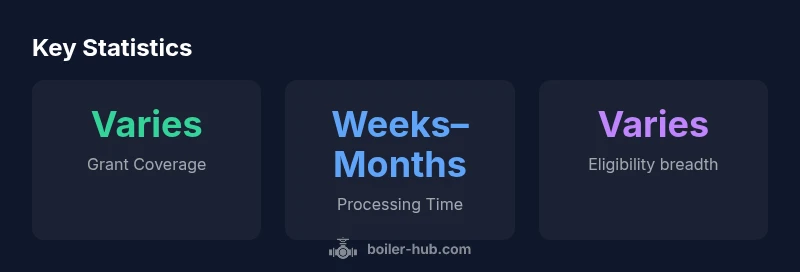
Applying typically starts with your energy supplier or local authority. You may need to complete an application form, authorize an energy assessment, and provide consent for data checks to verify eligibility. After submission, a technician or program administrator may visit the property to confirm heating needs and structural suitability before any funding decision is made. Processing times vary, often taking several weeks and potentially longer during peak demand periods. It’s useful to track your application status and keep a dedicated file of documents. Boiler Hub recommends documenting every communication and saving copies of all assessments and quotes to avoid delays when coordinating with installers and funders.
Alternatives if you don't qualify
If you don’t meet government criteria, there are still viable options to reduce boiler costs. Some energy suppliers offer discretionary rebates or installment plans tied to energy-efficiency improvements. Local councils may have hardship funds or affordable financing schemes for heating upgrades. Manufacturer or installer promotions can provide reduced-price installation packages, and some lenders offer low-interest loans specifically for energy upgrades. While these routes may not be fully funded by the government, they can lower upfront costs and improve long-term energy savings. Boiler Hub advises weighing the total cost of ownership, including maintenance, fuel use, and potential subsidies, to determine the most cost-effective path.
Practical tips to maximize your chances
To boost your likelihood of success, start with a firm energy audit and a prepared justification for replacement based on safety and efficiency. Gather proof of eligibility (income, housing type, energy bills) and request quotes from multiple accredited installers to compare costs and timelines. If you’re in a shared building or rental arrangement, engage with the landlord or management company early to explore joint funding opportunities. Keep a calendar of application deadlines and follow up promptly after submissions. Also, stay informed about policy changes; government funding cycles can shift with annual budgets, so periodic re-checks are essential.
What Boiler Hub recommends
The Boiler Hub team recommends a pragmatic approach: treat any government funding as a potential add-on rather than a guaranteed grant. Start with an official energy-assessment path, verify eligibility criteria, and pursue multiple funding avenues in parallel. If you are unsure about the best route, seek professional guidance from accredited installers and energy advisers who can help align your project with current programs. Remember that improving energy efficiency often yields long-term savings even when a full grant isn’t available.
Overview of government and local schemes that can help cover boiler replacement costs
| Program | What it covers | Typical eligibility | How to apply |
|---|---|---|---|
| ECO (Energy Company Obligation) | Subsidies for energy efficiency improvements; can include boiler replacement | Low-income households, fuel-poor, or vulnerable groups | Apply via your energy supplier or local authority |
| Boiler Upgrade Scheme (BUS) | Grants for low-carbon heating installations; primarily for heat pumps, boiler options under certain setups | Households in England and Wales; eligibility via standard checks | Submit application on official BUS portal; provider will arrange installation |
| Local authority schemes | Grants/loans for boiler upgrades and energy improvements | Residents in select councils; income thresholds may apply | Contact local council's energy team or housing department |
Questions & Answers
Is there a nationwide free boiler program?
No. There isn't a universal free boiler program; some schemes provide partial subsidies for eligible households.
There isn't a nationwide free boiler program, but some schemes may help with costs.
How can I check if I'm eligible?
Start with your energy supplier and local authority; review ECO and BUS criteria; Boiler Hub resources can guide you.
Check with your energy supplier and local authorities about schemes.
What documents do I need to apply?
Proof of identity and address, income documents if required, recent energy bill, and any installation assessment.
You'll typically need ID, address proof, and a recent energy bill.
How long does the process take?
Processing times vary from a few weeks to several months, depending on the program and demand.
Processing can take weeks or months depending on the program.
What if I don't qualify for government schemes?
Look for local authority programs, manufacturer rebates, or affordable financing options through lenders or energy suppliers.
There may be local programs or financing options available.
“Government-backed schemes can help with boiler replacements, but there is no universal free boiler program. Eligibility hinges on energy efficiency needs, household income, and location.”
Key Points
- Verify eligibility using Boiler Hub resources and official guidance.
- Coverage varies by program and region.
- Apply through your energy supplier or local authority.
- Prepare documents early to speed the process.
- If you don’t qualify, explore local programs and financing options.