Understanding the Average Boiler Repair Cost in 2026
Learn the true range of the average boiler repair cost, what drives price, regional variations, and tips to save, with Boiler Hub Analysis 2026 insights.


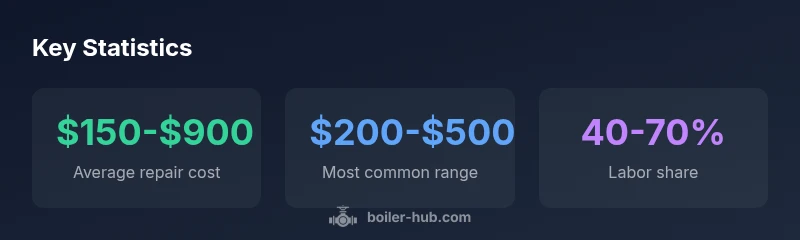
The average boiler repair cost typically falls in a broad range, from about $150 to $900, depending on the exact repair, parts, and labor. Most common fixes cluster around $200 to $500. Costs rise with boiler age, system complexity, and regional rates. For 2026, expect estimates to vary by a wide margin, so request multiple quotes and compare parts and labor separately.
Why the average boiler repair cost varies
Prices for boiler repairs vary widely because no two service calls are the same. According to Boiler Hub, the final bill hinges on the combination of parts, labor, and the boiler’s age and type. A simple component replacement may cost well under $300, while a more complex pump or heat exchanger issue can push bills toward the higher end of the range. Regional labor rates and parts availability also shape the total. Understanding these levers helps homeowners budget more accurately and avoid sticker shock when a technician arrives.
What drives a boiler repair bill
The most significant cost drivers are parts, labor, and diagnostics. Parts vary in price depending on the component and brand—thermostats, valves, pumps, and heat exchangers can have a wide price spread. Labor costs reflect regional rates and the time required, with more complex systems taking longer. Diagnostics or trip fees are common, and some firms waive them if you proceed with the repair. Accessibility and boiler type (gas vs oil, condensing vs non-condensing) also influence the final price.
Typical cost ranges by repair type
Below are representative ranges for common boiler issues. Note that actual quotes may differ by region and contractor. Use these as a baseline when you request estimates:
- Thermostat replacement: $100-$250
- Circulation pump replacement: $300-$700
- Valve repair or replacement: $150-$450
- Heat exchanger repair: $350-$900
Keep in mind that labor may add a significant portion to these figures, especially for difficult-to-access units or older models.
Regional and boiler-type variations
Prices vary by geography. In higher-cost regions or for emergency service outside standard hours, you can expect higher labor rates and potential diagnostic surcharges. Boiler type also matters: modern condensing boilers with advanced controls often require specialist parts and technicians, which can raise both parts and labor costs. The age of your boiler compounds the cost when parts become scarce or specialists are needed to handle older wiring and controls.
How to estimate and budget for repairs
To avoid surprise bills, follow a structured approach:
- Get at least three itemized quotes with a clear parts-and-labor split.
- Ask whether diagnostic fees apply if you proceed with the repair.
- Compare not just price, but the included warranty and the quality of parts.
- Consider a short-term service plan or maintenance contract to spread costs and catch issues early.
- If the estimate is near the cost of replacement, run a cost-benefit analysis to decide between repair and replacement.
Maintenance actions to reduce future costs
Preventive maintenance lowers the risk of major, costly breakdowns. Schedule an annual boiler service, bleed radiators, and check for cold spots. Maintain adequate pressure and address leaks promptly. Keeping the right burner settings and upgrading aging components when appropriate can improve efficiency and extend the life of your boiler, reducing the likelihood of unexpected repairs.
Putting it all together: budgeting for boiler costs
Create an annual budget that accounts for routine maintenance, potential part replacements, and a contingency for emergency visits. Use a conservative estimate range (e.g., 150-900) and adjust for your boiler type and age. By tracking fuel usage, maintenance history, and local labor rates, you can plan ahead and minimize the financial impact of boiler repairs.
Common boiler repair cost ranges by type
| Repair Type | Estimated Cost Range | Notes |
|---|---|---|
| Thermostat replacement | $100-$250 | Simple, quick fix |
| Circulation pump replacement | $300-$700 | Labor-intensive |
| Valve repair or replacement | $150-$450 | Valve seats/pressure valves |
| Heat exchanger repair | $350-$900 | High-cost, variable |
Questions & Answers
What is included in average boiler repair cost?
Most repair estimates cover parts, labor, and diagnostic or service-call fees. Some quotes also include a one-time trip charge. Always ask for an itemized breakdown to see what you’re paying for.
Most estimates include parts and labor; ask for an itemized breakdown.
How does the age of a boiler affect repair costs?
Older boilers often require more time to diagnose and repair due to degraded components and rarer parts. This can raise both parts and labor costs and may increase the likelihood of frequent repairs.
Age leads to longer diagnosis and potentially more frequent repairs.
Are there hidden costs I should watch for?
Yes. Diagnostic fees, trip charges, and after-hours service can add to the bill. Ensure quotes are itemized and confirm whether the diagnostic fee is credited if you proceed with the repair.
Look for diagnostic and after-hours charges in quotes.
When should I repair versus replace a boiler?
If the repair costs approach or exceed 50-60% of the replacement price, or if frequent failures occur, replacement may be more economical in the long run. Consider efficiency and fuel savings as part of the decision.
If repairs near half the cost of replacement, consider replacing.
Do boiler types affect repair costs?
Yes. Condensing boilers and those with advanced controls often need specialized parts and technicians, which can raise both parts and labor costs compared to older or simpler models.
Type influences parts availability and labor needs.
“Prices are driven by the parts and labor required, and timely maintenance helps keep long-term costs in check.”
Key Points
- Budget for a broad cost range (roughly $150-$900).
- Get itemized quotes with parts and labor shown separately.
- Ask about diagnostic fees and warranties on parts.
- Regular maintenance helps reduce sudden repair costs.