Where is the boiler reset button? A practical guide for homeowners and pros
Learn where to find the boiler reset button, how to reset safely, and when to call a professional. This Boiler Hub guide covers practical steps, essential safety checks, and common mistakes to avoid.


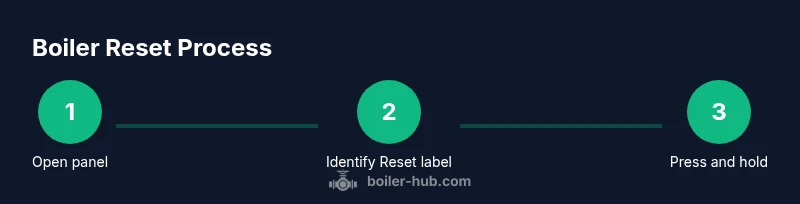
Locate the reset button on the boiler’s front panel or control box—look for a label that says Reset. Press and hold it for about 5–10 seconds with power on. If you can’t locate it or the boiler shuts down again, consult the manual or contact support. This guide shares the safe, step-by-step process and what to check before resetting.
What the boiler reset button does and when to use it
If you're asking where is the boiler reset button, you're not alone. The reset button is a safety feature on many gas and oil boilers that clears a fault code and restarts the burner after a protective shutdown. It is typically used after ignition fails, a flame-sensor fault, or a blower error. Resetting is not a repair; it’s a diagnostic step to see if the fault was temporary or persistent. Always treat a reset as part of a broader check: fuel supply, venting, safety switches, and thermostat status. This Boiler Hub guide outlines locating the button, applying the reset correctly, and recognizing when professional help is needed. Throughout, remember that a reset should be attempted only when you’re comfortable with basic boiler safety and current conditions indicate a non-emergency fault. The question, where is the boiler reset button, is answered here with practical actions you can take.
What the boiler reset button does and when to use it
What the boiler reset button does and when to use it If you're asking where is the boiler reset button, you're not alone. The reset button is a safety feature on many gas and oil boilers that clears a fault code and restarts the burner after a protective shutdown. It is typically used after ignition fails, a flame-sensor fault, or a blower error. Resetting is not a repair; it’s a diagnostic step to see if the fault was temporary or persistent. Resetting a boiler should be part of a broader check: fuel supply, venting, safety switches, and thermostat status. This Boiler Hub guide outlines locating the button, applying the reset correctly, and recognizing when professional help is needed. Remember that a reset should be attempted only when you’re comfortable with basic boiler safety and conditions indicate a non-emergency fault.
What the boiler reset button does and when to use it
Tools & Materials
- Boiler model manual(Essential for button location and model-specific steps)
- Flashlight(Helps view recessed buttons and inside panels)
- Pin or paperclip(To press recessed reset buttons if needed)
- Screwdriver set (small Phillips/flat)(To open access panels if required)
- insulated gloves(Protect hands from hot surfaces)
- non-contact voltage tester(Optional for verifying power safely)
- notebook/logbook(Record codes and steps for service)
Steps
Estimated time: 20-30 minutes
- 1
Open access panel and locate the control area
Use a flashlight to inspect the front and inside the service panel. Find the area around the burner, ignition module, and safety switches where a Reset button is commonly located. This step ensures you know exactly where to press and prevents accidental contact with high-voltage components.
Tip: If you can't see the button, consult the model manual before forcing panels open. - 2
Confirm the boiler is in a safe state to reset
Verify there are no gas odors, hissing sounds, or signs of a leak. Ensure the immediate area is ventilated and that no combustible materials are nearby. This check reduces risk if the fault is gas-related.
Tip: If you smell gas, do not reset—evacuate and call emergency services. - 3
Identify the Reset button or switch
Look for a labeled Reset button, sometimes recessed. It may require a pin or paperclip to press. If there are multiple buttons, check the label that mentions safety or burner control.
Tip: Take a photo of the label for future reference. - 4
Ensure the power is on for a reset cycle
Most boiler resets require power to be on. Check the main boiler switch or breaker and set it to On. Do not attempt a reset with the power off, as that can fail to reset the control board.
Tip: If you’re unsure about the wiring, skip this step and consult the manual. - 5
Press and hold the Reset button
Press and hold the Reset button for about 5–10 seconds, or until you hear a click or see a status indicator change. Releasing the button should prompt a reset sequence or a new diagnostic code.
Tip: Some models require a longer press—check the manual if in doubt. - 6
Observe the boiler’s response
Watch the burner relight or the indicator lights cycle. This indicates the control board accepted the reset. If the burner won’t light, listen for unusual noises or check the venting.
Tip: If the boiler cycles repeatedly, stop and proceed to professional service. - 7
Wait for a safe operating check
Allow 1–3 minutes for the boiler to complete its post-reset sequence and stabilize temperature and pressure. Do not touch or adjust components during this phase.
Tip: Keep a log of any available alarm codes. - 8
If needed, perform a second reset after a pause
If the boiler goes into lockout again, wait 30 seconds to 1 minute and repeat the reset procedure once. Do not perform repeat resets in rapid succession.
Tip: Frequent resets can mask underlying problems; seek professional help if it recurs. - 9
Close panels and restore service
When the unit shows normal operation, resecure any panels and return controls to their normal settings. Check that the room is clear and temperatures are stabilizing.
Tip: Document the event and code for future reference.
Questions & Answers
What if my boiler has no labeled Reset button?
Some boilers use a computerized reboot sequence or a recessed switch. If you cannot find a Reset button, consult the manual or contact the manufacturer. Do not attempt unlisted resets as this may damage the control board.
If you can't find a Reset button, check the manual or contact the manufacturer for model-specific reboot instructions.
Is resetting a boiler dangerous?
Resetting a boiler is generally safe if you follow basic safety steps: ensure ventilation, avoid disassembly of sealed components, and shut off power if advised by the manual. If you smell gas or see active flame issues, stop and call for professional help.
Resetting is usually safe when you follow safety basics; if you smell gas or see a flame issue, stop and call for help.
Will a reset fix a gas leak or a broken part?
No. A reset clears a fault code but does not repair a faulty component. If a gas leak or mechanical issue is suspected, evacuate if necessary and contact a licensed technician.
A reset isn't a fix for gas leaks or broken parts; call a pro if you suspect a leak or mechanical fault.
How long should I wait after resetting before calling a professional?
If the boiler restarts normally and runs for a short period without repeating fault codes, you may monitor for a while. If the fault recurs within the same day or emerges as new codes, schedule a professional service.
If the fault comes back quickly or new codes appear, call a technician.
Can repeated resets harm the boiler?
Repeated resets without diagnosing the root cause can mask serious issues like ignition or flame-sensor faults. If you see repeated lockouts, stop resetting and seek professional assessment.
Repeated resets can hide bigger issues; get a professional check if it keeps happening.
Should I reset after every power outage?
Not necessarily. Some systems require a reset after a power restoration to clear fault states. If the boiler restarts and runs normally, you may not need an extra reset. If you’re unsure, consult the manual or a technician.
Only reset if the manual instructs you to after a power restore; otherwise, monitor the boiler first.
Watch Video
Key Points
- Know the exact location of the Reset button for your boiler model.
- Reset is a diagnostic step, not a repair; check safety first.
- Power on, follow model-specific steps, and observe post-reset behavior.
- Document fault codes and steps for future service.
- Escalate to a professional if the fault repeats or involves gas or flame safety.