Oil Boiler Reset Button: How to Reset and Troubleshoot Safely
Safe, practical guidance to reset the oil boiler reset button, with steps and safety tips for homeowners and facility managers. Learn when to reset, how to do it correctly, and maintenance to reduce nuisance trips.


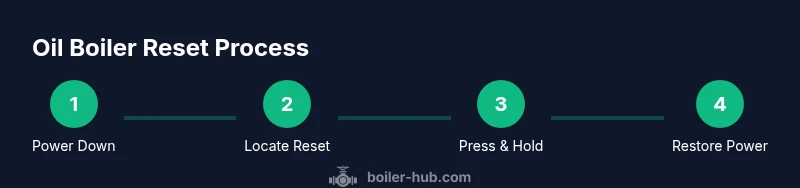
Resetting the oil boiler reset button can restore heat after a minor fault if safety prerequisites are met. Locate the reset button on the burner, press and hold briefly, then restart the boiler. If trips recur, consult Boiler Hub Team for a professional assessment.
Understanding the oil boiler reset button
The oil boiler reset button is a safety device designed to shut down fuel delivery when the burner detects an abnormal fault or flame irregularity. It is not a substitute for routine maintenance, but it can help reset the system after a minor hiccup. According to Boiler Hub, the reset button is typically located on the burner assembly or control panel and is often red or yellow for visibility. Understanding its purpose helps homeowners differentiate a safe, quick reset from a larger system fault requiring professional service. When you press the reset button, you are signaling the boiler to attempt a fresh ignition once fault conditions have cleared. This button is part of a safety interlock system designed to prevent unsafe combustion and reduce the risk of fire or gas exposure. Never reset if there’s a persistent odor of oil, a strong gas smell, or a CO alarm sounding.
For oil-fired systems, the reset button is usually integrated with the burner control module. It may require a momentary press or a short press-and-hold, depending on the model. If you cannot locate it, check the user manual or equipment label; many manufacturers print reset guidance right on the panel. Remember: failures to reset correctly can signal deeper issues with flame detection, oil supply, or venting. If you’re unsure, pause and seek professional help instead of guesswork.
Safety first: precautions before resetting
Before touching any reset button, ensure the area is safe. Turn off electrical power to the boiler at the service switch or disconnect the circuit, and wait 60 seconds to dissipate stored energy. Do not reset if you smell gas or hear a continuous hiss; leave the area and call the gas supplier or emergency services. Have a working carbon monoxide detector nearby and keep a flashlight handy in case the room is dim. Wear non-conductive gloves to reduce the risk of electric shock, and never bypass safety devices. If your boiler has a visible oil leak or you suspect a fuel line issue, stop and call a licensed technician. The reset button should be approached as a diagnostic step, not a cure for ongoing performance problems.
Boiler safety protocols emphasize securing power before any inspection. If you’re working in a cramped space or outdoors in cold weather, ensure you’ve warmed the area to prevent condensation or ice buildup around controls. Keep children and pets away from the work zone. If you’re uncertain about what you’re feeling or seeing, contact a professional for a hands-on assessment rather than risking a hazardous restart.
Common causes of nuisance resets and checks
Nuisance resets on an oil boiler often stem from controllable, non-emergency issues. Air in the oil line or a clogged nozzle can cause flame instability, leading the control system to trigger the reset. Dirty or corroded sensors, such as the flame sensor or pressure switch, may misread conditions and initiate a fault. Incomplete venting or improper chimney draft can also provoke intermittent flame failure. Low oil pressure or contaminated fuel can degrade combustion. Electrical faults in the burner module, faulty wiring, or a worn-out transformer may cause sporadic trips. Addressing the root cause—rather than repeatedly resetting—helps maintain safe, reliable operation. If you notice repeated resets within a short period, record fault codes or status indicators and contact a technician with the data to speed diagnosis.
To keep the problem from recurring, schedule regular servicing that includes burner alignment, nozzle replacement, sensor cleaning, and vent inspection. Boiler Hub analysis shows that consistent maintenance reduces nuisance trips and extends boiler life, especially for older systems. Always verify that the oil supply is clean and free of water, which can cause flame instability and poor combustion.
How the reset button interacts with fault codes and safety devices
The reset button is usually paired with fault-detection logic within the burner control module. When a fault is detected—such as flame failure, overheat condition, or fuel supply interruption—the system may display a fault code or flash an indicator light. The reset button attempts to clear the fault condition and reinitiate startup once conditions are safe. If the fault recurs after a reset, it indicates an unresolved issue that requires deeper inspection. Some boilers require a two-step sequence: reset to clear the fault, then a manual ignition check or purge to reestablish stable combustion. Always consult the model’s manual for the exact sequence, because mis-timing a reset can leave the boiler in an unsafe state. If you see persistent high-limit trips, weak flame, or erratic burner behavior after a reset, stop and contact a licensed technician.
Remember: the reset button is not designed to fix systemic problems like degraded oil quality, failed flame sensors, or blocked venting. In these cases, resetting may delay necessary repairs and create safety risks.
When to call a professional
If the reset button trips repeatedly, do not keep trying in rapid succession. Repeated resets can mask serious faults and increase the risk of fuel spill or carbon monoxide exposure. Call a qualified technician when you notice any gas leaks, strong odors, CO detector alarms, or abnormal boiler sounds after reset. A pro can perform a safe diagnostic, verify oil pressure, flame quality, venting, and electrical connections, and replace worn components as needed. For homeowners, documenting the fault codes, dates, and observed conditions helps the technician diagnose the root cause faster. The Boiler Hub team emphasizes that some faults require specialized equipment and training, and attempting extensive repairs without credentials can void warranties or create dangerous conditions.
If your area is prone to power outages, consider installing a surge-protected supply and ensuring the boiler’s safety devices are tested during routine maintenance. Always follow local regulations and manufacturer instructions when dealing with oil-fired equipment.
Maintenance tips to reduce future resets
Regular maintenance is the best defense against nuisance resets. Schedule annual service for burner cleaning, nozzle replacement, and sensor calibration. Check oil lines for leaks, ensure the filter is clean, and verify proper oil pressure. Confirm venting and chimney integrity, and inspect the combustion air supply. Replace worn gaskets and seals to maintain proper seal integrity and prevent air ingress. Keeping a log of service dates, fault codes, and performance observations helps identify patterns and prevent unexpected shutdowns. Boiler Hub recommends proactive maintenance as a cornerstone of safe, efficient heating.
Summary: what homeowners should remember about the oil boiler reset button
The oil boiler reset button is a protective feature, not a cure for all boiler problems. Always prioritize safety: power down before any inspection, don’t reset if you smell gas or CO is detected, and seek professional help for repeated trips. Use maintenance as a preventive tool, and maintain a clear plan for when to reset and when to call a pro. By understanding the role of the reset button and adhering to best practices, homeowners and facility managers can keep their oil-fired heating reliable and safe.
Tools & Materials
- Service power shutoff or breaker(Essential to cut power before inspecting controls)
- Owner's manual for your boiler model(Locate exact reset button location and procedure)
- Non-conductive gloves(Protect hands when touching electrical components)
- Flashlight or work light(Provide visibility in tight boiler cabinet)
- Flathead or Phillips screwdriver (if needed)(Some models require panel screws to access controls)
- Digital multimeter (optional)(Helpful for checking electrical continuity or voltage (only if trained))
Steps
Estimated time: 25-40 minutes
- 1
Power down and locate reset button
Turn off the boiler’s power at the service switch or breaker. Wait 60 seconds to clear stored energy. Open the burner cabinet and locate the reset button, which is usually red or yellow and labeled.
Tip: Consult the manual to confirm exact button location for your model. - 2
Prepare for reset
Ensure there are no gas smells or water/oil leaks. Have your CO detector active and a flashlight ready. If you smell gas, do not proceed—evacuate and call the utility.
Tip: Never attempt a reset if your area smells strongly of fuel. - 3
Press and hold the reset button
Press and hold the reset button for 3-5 seconds, then release. Some models require a quick press; others need a held press. This action signals the control module to attempt a fresh ignition.
Tip: If the button doesn’t respond, the module may be locked out due to a hard fault. - 4
Restore power and try ignition
Turn power back on and set the boiler to demand heat as you watch for ignition. Listen for a stable flame and check the display or status lights for normal operation.
Tip: If there is no ignition, do not repeatedly press reset; this can indicate a bigger issue. - 5
Check for fault indicators
Review any fault codes or indicator lights. If the boiler starts but trips again, note the exact fault code and power cycle the unit if advised in the manual.
Tip: Document codes and date/time to aid a technician. - 6
Test and monitor
Run the boiler for 20-30 minutes in heating mode. Listen for abnormal noises, verify heat output, and monitor for stability. If faults recur, discontinue attempts and contact a pro.
Tip: Keep a log of performance for the next service visit.
Questions & Answers
What is the oil boiler reset button and what does it do?
The oil boiler reset button is a safety feature that helps clear minor faults and restart the burner after conditions are safe. It is not a substitute for professional service if faults persist.
The reset button helps restart the burner after a safe condition is confirmed, but persistent faults need professional service.
Can pressing the reset button be dangerous?
Yes, if there is a gas smell, CO presence, or obvious fuel leak, resetting could be dangerous. Always ensure no hazards exist before attempting a reset.
Only reset if there are no gas or CO hazards; otherwise, call for help first.
What should I do if the boiler won’t reset or keeps tripping?
If resetting doesn’t resolve the issue, shut down power and call a licensed technician. Repeated trips can indicate fuel supply problems, sensor faults, or venting blockages.
If it keeps tripping, stop resetting and contact a professional for a thorough check.
How often should I perform a reset as part of maintenance?
Resetting is not a routine maintenance task. Use it only when the system clearly faults and passes safety checks. Regular maintenance should be scheduled annually.
Only reset when needed for a fault; keep to annual professional maintenance.
What fault codes are common after a reset?
Common indicators include flame sensor faults, pressure switch issues, or ignition problems. Refer to the user manual for exact codes and recommended actions.
Watch for common fault codes and follow the manual or contact a pro.
Is it safe to reset after smelling fuel or CO?
No. A fuel odor or CO alarm requires immediate evacuation and professional inspection. Do not reset in this scenario.
Do not reset if you smell fuel or CO; evacuate and call emergency services.
Do I need a professional for a suspected oil line issue?
Yes. Leaks, kinks, or air in the line require a qualified technician to avoid spills and ensure safe combustion.
Oil-line problems should be handled by a pro to prevent hazards.
Can yearly maintenance prevent reset-related issues?
Regular maintenance by a licensed technician reduces the likelihood of nuisance resets by keeping sensors, fuel delivery, and venting in good condition.
Annual service helps avoid unexpected resets.
Watch Video
Key Points
- Power down before inspecting controls.
- Reset is a diagnostic step, not a repair.
- Repeated resets require professional assessment.
- Maintenance reduces nuisance trips and improves safety.