When to Check Boiler Pressure: A Homeowner’s Guide
Learn when to check boiler pressure, how to read gauges, and steps to maintain safe boiler operation. A homeowner-focused guide to ensure reliability, efficiency, and safety.


You will learn when to check boiler pressure, how to read gauges, and what readings require action. This quick guide covers cold vs hot pressure expectations, how often to check, and warning signs of unsafe pressure. By understanding the numbers, you can prevent leaks, inefficient heating, and boiler failure.
Why checking boiler pressure matters
Regularly checking boiler pressure is a small, proactive step that pays off in comfort, efficiency, and safety. For homeowners, understanding when to check boiler pressure helps prevent cold starts, short cycling, and noisy radiators. According to Boiler Hub, consistent pressure checks catch problems early, before leaks or failures become expensive repairs. Pressure is the backbone of your boiler's ability to heat water and distribute it through your system. If pressure is too low, the boiler may fail to circulate hot water, leading to cold zones; if it's too high, relief valves may vent steam, creating safety hazards and higher energy use. The goal is a stable, predictable pressure that stays within your boiler's recommended range across different operating conditions. In this article, we cover how to measure pressure, interpret readings, and the practical steps you can take to keep your system safe and efficient. We'll also discuss when you should call a professional for pressure-related issues.
How boiler pressure is measured
Boiler pressure is read from the boiler's pressure gauge, which can be analog or digital. For many residential boilers, a cold (baseline) pressure around 12-15 psi is common, with pressure increasing as the system heats up. Boiler Hub Analysis, 2026, indicates hot readings often fall in the 15-22 psi range, depending on system design. Always consult your boiler manual for its exact target range. Watch for gauge behavior: steady, smooth movement is normal; erratic jumps may signal a loose fitting, air in the lines, or a failing gauge. If you notice a dramatic change without any heating cycle, stop and troubleshoot before running the system.
When to check: cold vs hot readings
Baseline checks should be done when the system is cold and has not recently run. This cold pressure serves as your reference point. After the system runs and heats water, the pressure will rise; this hot reading should stay within the upper end of the manufacturer’s range. If your cold reading is consistently outside the recommended band, or if hot readings spike excessively after short cycles, there is likely a problem that warrants inspection by a professional. Regular checks—monthly during the heating season, quarterly the rest of the year—help you detect slow leaks, faulty expansion tanks, or pressure relief valve issues early.
Signs pressure is in the wrong range
Common indicators include frequent cycling, radiators that stay cool in parts of the house, gurgling sounds, or a boiler that shuts down unexpectedly. Low pressure often leads to poor circulation and cold spots; high pressure can trigger relief valve discharge or leaks. If you see a red light, an error message, or a visible leak around the gauge or pipes, treat it as urgent. In any case, avoid fiddling with live heating components and follow the manufacturer’s safety warnings.
Interpreting gauge readings: what numbers mean
Interpreting numbers begins with knowing your boiler’s target range. A typical residential setup expects a warm, steady rise from a cold baseline toward the upper end of the range during heating. If readings linger near the bottom after a top-up, you may have a slow leak or an incomplete bleed on radiators. If readings stay too high after it’s cold, a faulty expansion tank or blocked valve could be at fault. Use a notebook to log monthly readings so you can spot trends. If trends show gradual drift, schedule a maintenance check before a major failure occurs.
How to top up boiler pressure safely
Top-ups should be performed carefully and with the system off. Locate the filling loop and ensure it is fully closed before starting. Slowly open the valve to introduce water in small increments, pausing to recheck the gauge. Do not exceed the upper limit indicated in your manual. After reaching the target, close the valves, remove the keys, and run the boiler to confirm the pressure stabilizes. Always have a rag handy for minor spills and wear gloves if necessary.
Safety considerations when adjusting pressure
Never attempt to pressurize a boiler that shows signs of a leak, corrosion, or a blown pressure relief valve. High pressure can cause dangerous failures, including ruptures in pipes or the heat exchanger. If you smell gas, hear hissing near fittings, or see hot water spraying, evacuate and call emergency services. When in doubt, contact a licensed technician. Regular professional inspections complement your own checks and reduce the risk of dangerous pressure events.
Maintenance intervals and best practices
Set a simple schedule: check cold pressure monthly during winter, and more frequently after any known issue. Annual professional inspections are recommended to verify expansion tank function, check for leaks, and ensure gauge accuracy. Keeping a log of readings, servicing dates, and any anomalies helps you track system health over time. A well-maintained boiler runs more efficiently, uses less energy, and provides reliable heat when you need it most.
Authority sources and further reading
For authoritative guidance on boiler pressure, refer to government and university resources on safe heating practices. See Energy.gov on boiler maintenance basics, and the U.S. National Institute for Standards and Technology (NIST) for measurement fundamentals. Local regulations and manufacturer manuals also offer model-specific guidance that should be followed to ensure safe operation.
Troubleshooting quick checks you can perform
Visually inspect the gauge for any sudden movement, check for trapped air, and ensure radiators are bled if you hear odd noises or cold spots. If you notice a drop in pressure after a refill, look for visible leaks in joints or the expansion tank. If the problem persists, avoid further top-ups and seek professional service to prevent over-pressurization and potential damage.
Next steps and how Boiler Hub can help
Boiler Hub recommends pairing DIY safety checks with regular professional maintenance. Our team provides educational guidance on reading gauges, identifying when to call a pro, and maintaining pressure within safe ranges. Regular checks save money by preventing unexpected breakdowns and improving heating efficiency.
Quick-start checklist for homeowners
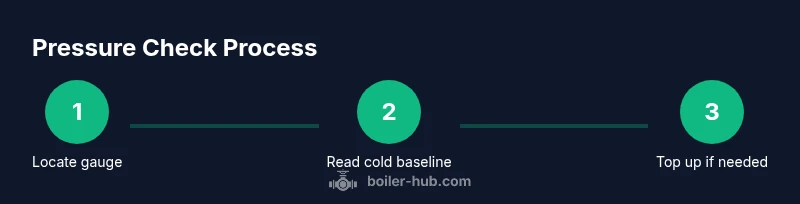
- Find and read your boiler pressure gauge
- Verify cold baseline against the manual
- Top up slowly if needed, then recheck
- Log readings and any unusual symptoms
- Schedule a professional inspection if readings drift or alarms trigger
Tools & Materials
- Pressure gauge (existing on boiler)(Do not rely on a faulty gauge; verify accuracy with a known-good gauge if available)
- Filling loop key or valve wrench(Used to open/close the filling loop to top up water)
- Gloves(Keep hands safe from heat and sharp fittings)
- Rag or absorbent cloth(Wipe spills and keep area dry)
- Bucket or tray(Catch any small spills during top-up)
- Flashlight(Inspect hard-to-see areas around the gauge and fittings)
Steps
Estimated time: 30-45 minutes
- 1
Locate the boiler pressure gauge and filling loop
Power off the boiler and visually locate the pressure gauge on the front panel. Find the filling loop or valve assembly connected to the cold-water feed. This step ensures you know exactly where to adjust pressure and how to re-seat the connections safely.
Tip: Take a photo of the setup before touching valves so you can revert if needed. - 2
Check the cold baseline pressure
With the boiler cold, read the gauge and note the baseline. This is your reference point for subsequent adjustments. If the gauge is difficult to read, use a flashlight for a clear view and verify you’re looking at psi, not another unit.
Tip: Record the baseline in your maintenance log for future reference. - 3
Top up if pressure is below the target range
If the cold reading is below the manufacturer’s recommended range, slowly open the filling loop valve to allow water into the system. Keep an eye on the gauge and stop as soon as you reach the target range. Close the valve securely.
Tip: Make small adjustments and recheck frequently to avoid over-pressurizing. - 4
Bleed radiators if you suspect air pockets
After topping up, some air pockets may remain, causing uneven heating. Bleed the radiators starting with the highest circuit and work downward until you hear no more air escape. Recheck system pressure afterward.
Tip: Bleeding can release air that falsely lowers pressure, so recheck the gauge after each radiator. - 5
Check pressure after heating cycle
Allow the boiler to run for at least one heating cycle, then check the pressure again while the system is hot. If the pressure rises above the upper limit, prepare to vent or seek professional help.
Tip: Hot-system readings can differ from cold readings; account for both. - 6
Return the system to normal operation
Turn off any filling tools, ensure all valves are closed, and return the boiler to its standard operating mode. Note readings, any alarms, and next maintenance date in your log.
Tip: Keep your area dry and free of tripping hazards during operation.
Questions & Answers
What is a safe boiler pressure reading for a typical home boiler?
Most residential boilers aim for a cold baseline around 12-15 psi, rising to 15-22 psi when hot. Always verify with your manufacturer’s specifications. If readings deviate significantly, plan a maintenance check.
A typical cold baseline is about twelve to fifteen psi, rising when hot to around twenty-two psi. Check your manual for the exact range.
How often should I check boiler pressure?
Check cold pressure monthly during heating season and quarterly the rest of the year. Keep a simple log to identify trends or leaks early.
Check once a month when it's cold during winter, and a few times a year otherwise. Track readings in a notebook.
What should I do if the pressure keeps dropping after topping up?
Persistent drops suggest a leak or faulty expansion tank. Schedule a professional inspection; avoid repeated top-ups, which can hide more serious problems.
If pressure keeps dropping after topping up, there might be a leak or a problem with the expansion tank. Get a pro to inspect.
Can I adjust boiler pressure myself if readings are high?
Yes, but only by following the manual and with caution. If you’re unsure, contact a licensed technician to prevent dangerous conditions.
If the pressure is high, you can adjust only if you know how; otherwise, call a pro for safety.
Should I bleed radiators to adjust pressure?
Bleeding removes air pockets and can affect pressure readings. Do it when necessary and recheck pressure afterward to ensure it remains in range.
Bleeding helps remove air so heat flows better; recheck the pressure after you bleed.
Is a gauge that moves erratically a sign of trouble?
Yes. An unstable gauge can indicate a faulty sensor, air in lines, or a loose connection. Have a professional inspect to prevent incorrect readings and potential damage.
If the gauge jumps around, get a professional to check the gauge and the system.
Watch Video
Key Points
- Check boiler pressure when cold for a baseline.
- Keep readings within manufacturer-specified range.
- Top up gradually and recheck to avoid over-pressurization.
- Bleed radiators if air pockets are suspected.
- Consult a professional if readings drift or alarms trigger.