What to Do If Your Boiler Turns Off: A Troubleshooting Guide
Urgent, practical troubleshooting for when your boiler turns off. Learn quick fixes, diagnostic flow, step-by-step repairs, safety tips, and when to call a professional—brought to you by Boiler Hub.


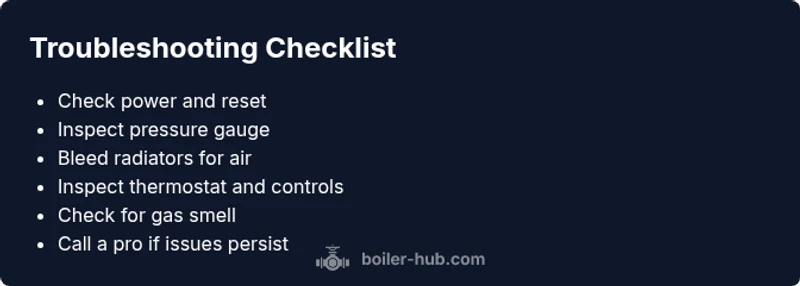
Most often, a boiler turns off due to a power issue or a safety cut-off. Start with quick, safe checks: confirm the boiler is receiving power, reset the unit, and check the pressure and thermostat settings. If it still won’t stay on after these easy steps, turn off the power and contact a professional.
Immediate steps if your boiler turns off
When a boiler unexpectedly shuts down, the first priority is safety. Do not ignore unusual smells or noises. If you detect a gas odor, evacuate immediately and call emergency services. If no gas issue is present, begin with basic checks: ensure the boiler is plugged in or connected to a live outlet, verify the circuit breaker hasn’t tripped, and confirm the main power switch for the boiler is ON. Then perform a gentle reset per the manufacturer’s instructions. While these steps sound simple, they address the most common causes of a shutdown and often restore heat quickly. Boiling down the problem to power, reset, pressure, and thermostat often buys time while you assess more complex faults.
Tip: Never bypass safety interlocks or wire rewiring; if in doubt, pause and seek professional guidance from Boiler Hub.
Common causes of boiler turning off
Boilers turn off for a handful of reasons, and knowing the common culprits helps you triage quickly. The top offenders are power supply issues (outlets, breakers, or fuses), thermostat or programmer faults, low water pressure or airlocks, overheating safety shutoffs, and, less commonly, gas supply or ignition faults. Each cause has a different fix path, from simple resets to professional service. By understanding the typical failure modes, you can determine whether a fix is safe to attempt or if it requires expert intervention. Boiler Hub’s assessment emphasizes starting with the easiest checks first and escalating only as needed.
Note: If you see error codes on the display, refer to the manual or Boiler Hub guidelines for specific meanings and recommended actions.
Safety first: gas, electrical, and venting considerations
Safety must drive every troubleshooting step. A gas smell or hissing noise indicates immediate danger—leave the area and call emergency services. Electrical issues require caution: never touch live wires, avoid removing panels beyond what the manual permits, and never bypass fuses. Venting problems can cause backdrafts or carbon monoxide buildup; ensure flues and vents are clear and unobstructed. If you’re uncertain about vent integrity, gas supply, or electrical safety, pause and contact a qualified heating engineer. Always work with the boiler powered off when you’re inspecting electrical components or attempting a reset.
Pro tip: Keep a clear, well-lit workspace around the boiler and store the manual in a known location for quick reference.
How to check the boiler controls and thermostat
Inspect the display for fault codes and consult the manual to translate them into actionable steps. Verify that the thermostat settings are correct for the current heating demand and zone. If your boiler has a reset option, perform a controlled reset rather than a simple switch-off. After resetting, recheck the indicators and listen for ignition cues. If the code reappears or the boiler won’t stay on, you may be dealing with a faulty thermostat, timer, or control board.
Tip: Document any codes you see and the steps you took; this helps a technician diagnose the issue faster.
Diagnosing pressure and water level issues
Low pressure or air in the system can trigger a shutdown. Check the boiler’s pressure gauge—most residential boilers operate within a safe range printed on the gauge. If the pressure is too low, add water using the filling loop per the manual, then recheck. Bleed radiators to remove trapped air that can cause inconsistent heating. If pressure fluctuates rapidly or cannot be maintained, there may be a leak or a faulty pressure valve that requires professional attention.
Pro tip: Always recheck pressure after bleeding radiators to ensure the system remains stable.
When to reset and the proper reset procedure
A reset can clear minor faults that cause a temporary shutdown. Follow the manufacturer’s reset procedure exactly; some boilers require a pressed button sequence, others a power cycle. Do not perform repeated resets in quick succession, as this can mask underlying faults and cause safety interlocks to engage. If the fault recurs after a reset, it’s a sign you should contact a professional for a deeper diagnostic.
Warning: If the boiler doesn’t recover after a reset, stop and seek help. Recurrent resets can indicate a failing component that could be hazardous.
Scheduling maintenance and professional service
Regular maintenance reduces the chance of unexpected shutdowns. Boiler Hub recommends annual servicing, including inspection of heat exchanger, burners, pump, pressure relief valve, and electrical connections. If your boiler is older or has frequent shutdowns, a professional assessment can determine whether components are wearing out or if efficiency can be improved with maintenance or replacement parts.
Pro tip: Keep a maintenance log with dates of servicing and any parts replaced to help technicians diagnose recurring issues.
Preventive measures to avoid future shutdowns
Prevention is better than cure. Implement simple routines: test the boiler’s operation at the start of each heating season, keep the area around the boiler clear, and check for leaks or corrosion periodically. Replace worn gaskets and seals, and schedule a professional diagnostic if you notice unusual noises, cold spots in radiators, or fluctuating pressure. Investing in proactive service can save energy, extend boiler life, and prevent emergencies.
Note: A few minutes of monthly checks can catch issues before they become outages.
What to do if you smell gas or see a leak
Gas leaks require immediate action. If you detect the odor of gas, evacuate the premises, avoid using electrical switches or phones inside the building, and call your gas supplier or emergency services from a safe location. Do not attempt to diagnose gas-related faults yourself. After you are cleared by professionals, have a licensed engineer inspect the system to identify the source and restore safe operation.
Caution: Gas safety overrides all other troubleshooting steps. Do not delay professional evaluation.
Steps
Estimated time: 45-75 minutes
- 1
Verify power and safety
Ensure the boiler is plugged in and receiving power. Check the electrical outlet, reset button, and the circuit breaker. If you notice a gas odor, evacuate and call emergency services.
Tip: Never bypass safety interlocks or open live electrical components. - 2
Check fault codes and reset
Look at the boiler display for fault codes. Consult the manual or Boiler Hub guidance to translate codes into fixes. Perform a controlled reset if advised.
Tip: Note any error codes before resetting to aid diagnosis. - 3
Check pressure and re-pressurize
Read the pressure gauge. If pressure is low, follow the manual to repressurize the system using the filling loop, then recheck the gauge.
Tip: Do not overfill; stop when within the safe range. - 4
Bleed radiators and remove air
If radiators feel cold at the top, bleed them to release trapped air. This can improve flow and prevent shutdowns due to airlocks.
Tip: Use a cloth to catch water and avoid scalding. - 5
Assess gas supply and venting
Ensure the gas valve is open and the vent/duct is clear. Do not tamper with gas lines. If you suspect a leak, call professionals immediately.
Tip: Gas issues require professional intervention—do not DIY repairs. - 6
Test after fixes and plan maintenance
Turn the system back on and test heat output. If it stays on, monitor for any reoccurrence and schedule maintenance to prevent future outages.
Tip: Keep a log of troubleshooting steps and results.
Diagnosis: Boiler turns off unexpectedly or won’t stay on after heating cycle
Possible Causes
- highPower issue or tripped circuit breaker
- mediumFaulty thermostat or programmer
- mediumLow water pressure or airlock
- mediumOverheating safety cut-off
- lowGas supply/ignition fault
Fixes
- easyCheck mains outlet, reset boiler using the manufacturer’s instructions, and confirm the circuit breaker hasn’t tripped
- easyInspect thermostat settings and reset timer/programmer if applicable
- mediumRe-pressurize system if the pressure gauge is low and bleed radiators to remove air
- mediumCheck for overheating indicators and ensure vents are clear; if persists, service may be required
- hardIf gas supply or ignition fault is suspected, contact a Gas Safe engineer immediately
Questions & Answers
What should I do first when my boiler turns off?
Start with safety checks: ensure there is no gas odor, verify power, and check the display for fault codes. Then follow a quick reset and pressure check to determine if you can safely continue.
First, check safety, power, and fault codes, then reset and check pressure.
Is it safe to reset my boiler myself?
Resetting is generally safe if you follow the manual and there is no gas smell. If the boiler still shuts down after reset, avoid repeated resets and call a pro.
Yes, but only if there is no gas smell and you follow the manual.
Can low water pressure cause a boiler to turn off?
Yes. Most boilers shut off if pressure falls below safe levels. Repressurize according to manual and recheck gauge.
Low pressure can trigger a shutdown; repressurize per manual.
What should I do if I smell gas?
If you smell gas, do not operate switches; evacuate and call emergency services. Then call your gas supplier and a qualified engineer.
Leave immediately and call emergency services.
When should I call a professional?
If the boiler fails to reset, codes persist, you suspect gas or water leaks, or overheating persists, call a boiler professional.
If it won’t reset or you suspect gas, call a professional.
Can thermostat issues cause the boiler to shut off unexpectedly?
Yes. Faulty thermostat, timer, or programmer can signal the boiler to shut down. Replace or recalibrate as needed.
Thermostats can cause shutdown; fix or replace.
Watch Video
Key Points
- Check power before anything else.
- Verify pressure and thermostat early.
- Bleed radiators to fix airlocks.
- Don’t reset repeatedly—address root causes.
- Schedule annual professional maintenance.