What to Do If Boiler Pressure Is in Red: An Urgent Troubleshooting Guide
Urgent steps for red boiler pressure. Learn safety actions, quick checks, a diagnostic flow, and a step-by-step fix to restore safe operation. Brand guidance from Boiler Hub.


Red boiler pressure typically means the system is over-pressurized or the expansion tank is failing. Quick fix: turn off the boiler and let it cool, then isolate the boiler by closing the feed valve. If the gauge remains well above normal after cooling, do not restart the boiler; drain a small amount per the manual and contact a professional if it stays high.
Why red pressure matters
Red boiler pressure is more than a warning—it signals a real risk of damage, leaks, or a dangerous release of steam. When the pressure gauge climbs into the red zone, the boiler is operating outside its safe design limits. In many homes, this can occur after a rapid temperature rise, a faulty expansion tank, or an aging pressure relief valve. The Boiler Hub team emphasizes that acting calmly and quickly is essential to prevent injuries or costly repairs. Always treat a red reading as a sign to pause heating, shut down the boiler, and assess the situation with safety as the top priority. In this guide, we walk through the most common causes and the safest initial responses to the issue.
This is a domestic troubleshooting scenario homeowners and facility managers can approach with a clear sequence: ensure personal safety, disengage power, and verify that you’re looking at the correct pressure gauge. Remember, if you smell gas, hear hissing, or detect water leaks, evacuate and call emergency services. Boiling hot surfaces and pressurized systems can cause severe burns or scalding. According to Boiler Hub, quick, calm decisions minimize risk and buy you time to pursue proper fixes.
If the red reading recurs after initial repairs, you should treat it as a persistent fault and seek professional service. Boiler Hub analysis shows recurring red-pressure events are often related to expansion tank failures or worn valves, not a one-off spike.
Why red pressure matters
Red boiler pressure is more than a warning—it signals a real risk of damage, leaks, or a dangerous release of steam. When the pressure gauge climbs into the red zone, the boiler is operating outside its safe design limits. In many homes, this can occur after a rapid temperature rise, a faulty expansion tank, or an aging pressure relief valve. The Boiler Hub team emphasizes that acting calmly and quickly is essential to prevent injuries or costly repairs. Always treat a red reading as a sign to pause heating, shut down the boiler, and assess the situation with safety as the top priority. In this guide, we walk through the most common causes and the safest initial responses to the issue.
This is a domestic troubleshooting scenario homeowners and facility managers can approach with a clear sequence: ensure personal safety, disengage power, and verify that you’re looking at the correct pressure gauge. Remember, if you smell gas, hear hissing, or detect water leaks, evacuate and call emergency services. Boiling hot surfaces and pressurized systems can cause severe burns or scalding. According to Boiler Hub, quick, calm decisions minimize risk and buy you time to pursue proper fixes.
If the red reading recurs after initial repairs, you should treat it as a persistent fault and seek professional service. Boiler Hub analysis shows recurring red-pressure events are often related to expansion tank failures or worn valves, not a one-off spike.
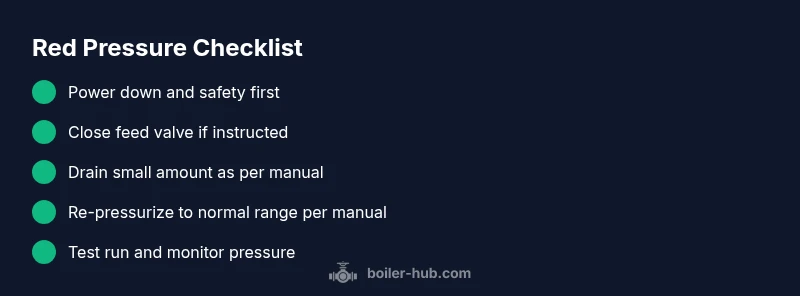
Steps
Estimated time: 30-60 minutes
- 1
Power down and cool safely
Switch off the boiler at the main control or breaker. Allow the unit to cool completely before touching exterior fittings. Wear protective gloves and safety glasses to guard against hot surfaces or steam.
Tip: Never attempt to open pressure fittings while the system is hot. - 2
Isolate the boiler from mains and close the feed valve
If your system has an isolation valve, close it to stop fresh water from entering. This reduces the risk of further pressurization while you assess the situation.
Tip: Label the valve so others know it’s isolated. - 3
Check the gauge and look for obvious leaks
Take note of the gauge reading once cooled. Inspect visible joints, the expansion tank, and the relief valve for signs of leakage or corrosion.
Tip: If you see steam or water leaking from the relief valve, do not reset the valve. - 4
Drain a small amount if instructed by the manual
If the manual allows, drain a measured amount of water to reduce pressure. Do this slowly and stop if you encounter resistance.
Tip: Only drain via designated drain valves or taps; do not loosen random fittings. - 5
Repressurize within the manufacturer’s range
Reconnect the feed valve and carefully re-pressurize to the normal operating range as specified by your boiler’s manual. Do not exceed the limit.
Tip: Use the correct tools and avoid overtightening joints. - 6
Test run and monitor pressure
Restore power and run the boiler for a short cycle while monitoring the gauge. If pressure returns to red, switch off and call a professional promptly.
Tip: Record gauge readings and button the system's behavior for reference.
Diagnosis: Boiler pressure gauge reads in the red zone after the boiler heats up
Possible Causes
- highExpansion tank failure or loss of air charge
- mediumOverfilled boiler, excessive water in system
- lowFaulty or stuck pressure relief valve
Fixes
- easyTurn off boiler and let it cool, then close the feed valve to stop more liquid from entering the system
- easyBleed or drain a small amount of water as per the manual to bring pressure toward the normal range
- hardInspect or replace expansion tank and pressure relief valve if faulty; call a professional for replacement
Questions & Answers
Is red boiler pressure always dangerous?
Yes. A red reading indicates over-pressurization, which can cause leaks or damage. It requires immediate safety steps and assessment.
Yes, red pressure is dangerous and should be treated as an urgent safety issue.
Can I re-pressurize the boiler myself?
You can re-pressurize following the manufacturer’s instructions and only if you are confident in the procedure. If in doubt, call a professional.
You can re-pressurize only if you follow the manual and feel safe; otherwise, seek a pro.
What should normal pressure be for most boilers?
Normal pressure is defined by your boiler’s manual and can vary by model. Look for the recommended range printed on a label or in the setup guide.
Normal pressure varies by model; check the manual or label for the exact range.
What indicates expansion tank failure?
Signs include persistent high pressure, waterlogging, or physical signs of tank damage. A professional should confirm and replace if needed.
If the expansion tank is waterlogged or damaged, pressure will stay high and needs professional replacement.
When should I call a professional?
If red pressure recurs after initial fixes, if you smell gas, or if you’re unsure about safety, call a licensed boiler technician.
Call a professional if pressure stays high after basic steps or you’re unsure of safety.
Are there safety steps I must follow first?
Yes. Always shut off power, avoid restarts until pressure is normal, and evacuate if you smell gas or detect leaks.
Always shut off the boiler and evacuate if you smell gas or leak; safety first.
Does boiling water affect pressure?
Heating increases system pressure; the pressure should settle back when cool. If it remains high, system faults are likely present.
Heat raises pressure; if it stays high after cooling, you likely have a fault.
Watch Video
Key Points
- Shut down and cool the boiler if pressure hits red.
- Isolate the boiler to prevent further pressurization.
- Drain or repressurize only per the manual; call a pro if red pressure returns.
- Regular maintenance prevents recurring red-pressure events.