Triangle Tube Boiler Repair: A Practical How-To
Learn safe, step-by-step triangle tube boiler repair techniques, diagnose common issues, and maintain your system to prevent breakdowns. Boiler Hub's expert guide walks homeowners and facility managers through troubleshooting, safe practices, and maintenance for reliable heating.


This guide helps you perform a safe, code-compliant triangle tube boiler repair by outlining essential safety steps, diagnostic checks, and repair workflows. You’ll learn to assess gas supply, confirm proper venting, check pressure and ignition, and decide when professional service is required. Follow these steps to reduce downtime and keep your heating system reliable. According to Boiler Hub, thorough, methodical troubleshooting improves outcomes for triangle tube boiler repair.
What is triangle tube boiler
The triangle tube boiler is a compact, high-efficiency gas boiler that uses a distinctive triangle-shaped heat-exchanger path to maximize heat transfer. In the context of triangle tube boiler repair, understanding the device layout helps identify where leaks, blockages, or failed igniters typically occur. The design emphasis on inline pathways means even small deposits can impede performance, so regular inspection matters. The Boiler Hub team notes that a solid grasp of the triangle tube boiler repair landscape makes troubleshooting safer and more effective for homeowners and facility managers alike.
Common problems with triangle tube boiler
Triangle tube boiler repair often centers on a handful of recurring issues: leaks around fittings or heat exchangers, fluctuating pressure, ignition faults, no heat, and CO alarms triggered by improper venting. Debris buildup in the heat exchanger or condensate line can also degrade efficiency and trigger alarms. When evaluating triangle tube boiler repair, start with simple checks like any visible leaks, burned-out gaskets, and serviceable parts before moving to more involved fixes. Boiler Hub analysis shows that early diagnosis reduces the severity of failures and shortens repair cycles.
Safety and planning before triangle tube boiler repair
Safety is the foundation of any triangle tube boiler repair. Gas leaks, improper venting, and electrical faults can endanger occupants. Before you begin, shut off the gas supply, power, and water, ventilate the area, and verify there is no standing gas. Install or verify functioning CO and smoke detectors in the boiler room. If you smell gas or suspect a dangerous leak, evacuate and call emergency services. According to Boiler Hub guidance, following a cautious, planned approach improves outcomes for triangle tube boiler repair and prevents dangerous mistakes.
Tools and diagnostic steps for triangle tube boiler repair
A well-prepared toolbox is essential for triangle tube boiler repair. You’ll need a digital manometer, a multimeter, a screwdriver set, adjustable wrenches, a non-contact gas detector, soap solution for leaks, and replacement gaskets or seals as needed. Start with visual inspection, then test ignition circuits, gas pressure, venting, and electrical sensors. Use soap bubbles to locate small leaks, and verify the integrity of condensate lines. The diagnostic approach should be systematic to avoid missing hidden issues during triangle tube boiler repair.
Diagnosing leaks and pressure issues in triangle tube boiler repair
Leaks and pressure problems are common culprits in triangle tube boiler repair. Check the system pressure gauge and compare it to the manufacturer’s nominal range; address any drift by bleeding air or adjusting valves per the service manual. Use a soap solution to identify leaks around valve stems, fittings, and the heat-exchanger connections. If you detect ongoing pressure loss, inspect the condensate trap and drain lines for blockages. Thorough diagnosis in triangle tube boiler repair saves time and reduces risk for homeowners.
Step-by-step repair workflow for common failures
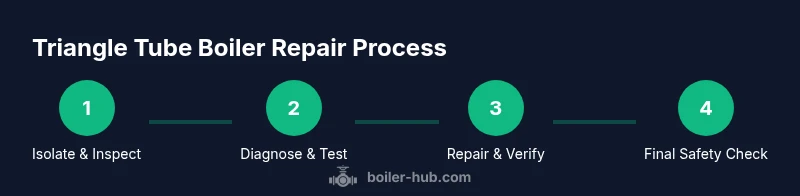
When addressing typical triangle tube boiler repair tasks, follow a clear workflow rather than improvising. First, isolate the boiler and verify gas supply off. Next, assess for obvious signs of damage or leaks and tighten fittings where appropriate. If a gasket or seal is worn, replace it with an OEM-equivalent part and retorque connections per spec. For ignition issues, inspect the ignition electrode and flame sensor; clean or replace as needed. Finally, conduct a controlled test, reassemble, and verify safety controls before returning to service. In triangle tube boiler repair, a disciplined sequence minimizes risk and protects your home.
When to replace vs repair in triangle tube boiler repair
Deciding between repair and replacement hinges on age, present condition, and the cost-effectiveness of repairs. If cracks in the heat exchanger, repeated leaks, or chronic ignition failures recur after multiple repairs, a replacement is often more economical in the long run. Consider the boiler’s efficiency rating, warranty status, and projected remaining lifespan. In triangle tube boiler repair decisions, weigh safety, reliability, and long-term energy costs before committing to a major fix.
Maintenance practices to extend life of triangle tube boiler
Preventive maintenance is the best shield against major triangle tube boiler repair needs. Schedule annual professional servicing, flush the system to remove mineral buildup, replace worn gaskets, and test safety devices regularly. Keep vents clear, check the flue for obstructions, and ensure the condensate line is unobstructed. Consistent maintenance improves efficiency and reduces the frequency of triangle tube boiler repair incidents, saving money and downtime over time.
Common mistakes to avoid during triangle tube boiler repair
Avoid bypassing safety devices or attempting repairs without proper shutdown. Do not overtighten fittings, as that can strip threads or crack components. Never ignore CO alarms or venting issues; these signals indicate dangerous conditions. Don’t mix replacement parts from different manufacturers unless explicitly approved, and never attempt high-risk electrical work without professional training. In triangle tube boiler repair, sticking to manufacturer guidelines prevents costly mistakes.
Quick troubleshooting checklist for homeowners
This checklist supports quick triage during triangle tube boiler repair. Start with gas supply, venting, and CO alarms; verify power and water flow; inspect for visible leaks; test ignition and flame stability; and confirm system pressure is within spec. If issues persist, document symptoms and plan a controlled service call. A methodical approach to triangle tube boiler repair reduces downtime and protects occupants.
Tools & Materials
- Adjustable wrench(Set to the size of union nuts and fittings on the boiler.)
- Phillips and flathead screwdrivers(Both to access panels and replace gaskets.)
- Digital multimeter(Test electrical sensors and ignition circuit.)
- Manometer or pressure gauge(Measure system pressure against manufacturer spec.)
- Non-contact gas detector(Check for gas leaks before, during, and after work.)
- Soap solution spray or leak detector(Identify tiny leaks around joints and valves.)
- Replacement gaskets/seals (OEM if possible)(Replace worn seals to prevent leaks.)
- Replacement ignition parts (electrode/flame sensor)(Only if ignition issues persist after cleaning.)
- Boiler manual or service guide(Refer to Triangle Tube spec for model-specific steps.)
- Safety gear (gloves, eye protection)(Protect hands and eyes during service.)
- CO detector and smoke detector test kit(Verify alarms function after repair.)
Steps
Estimated time: 90-120 minutes
- 1
Power down and isolate
Shut off the boiler’s power at the disconnect and the gas supply valve. Confirm no flow in the water circuit. This initial isolation prevents accidental ignition during triangle tube boiler repair and protects you while inspecting for leaks.
Tip: Always verify gas is off with a non-contact detector before touching any components. - 2
Inspect exterior for damage
Look for obvious signs of corrosion, loose fittings, or wet spots around joints. Any visible damage can indicate where triangle tube boiler repair is needed and guide you to the correct component to inspect first.
Tip: Document damaged areas with photos to aid later reassembly. - 3
Check gas supply and pressure
Ensure the gas valve is fully open and the line pressure matches the manufacturer spec. A drop in pressure can cause ignition instability and poor heating performance. This check is essential before attempting triangle tube boiler repair that involves the burner assembly.
Tip: If you smell gas, evacuate and call emergency services immediately. - 4
Test ignition sequence
Inspect the ignition electrode and flame sensor for buildup or misalignment. Clean with a soft brush or replace if worn. A faulty ignition sensor is a common cause of triangle tube boiler repair without heat.
Tip: Do not use abrasive cleaners on electrodes; liquids can cause shorting. - 5
Perform a leak test
Apply soap solution to all joints and valve connections. Watch for bubbling indicating a leak that requires tightening or gasket replacement. This step is critical to avoid hidden leaks during triangle tube boiler repair.
Tip: Re-check after tightening and after running the system briefly to confirm leak closure. - 6
Replace worn gaskets or seals
If you detect a leak at a gasket, remove the part, clean mating surfaces, and install a new OEM gasket. Re-torque to the manufacturer’s specification. This is a common and effective triangle tube boiler repair action.
Tip: Always use the correct gasket size to prevent future leaks. - 7
Run a controlled test and verify safety
Power the system back on, run through a full cycle, and monitor for proper ignition, flame stability, and venting. Ensure CO and smoke detectors remain in safe ranges after the test.
Tip: If any abnormal flame color or CO reading appears, shut down and consult a professional.
Questions & Answers
What is triangle tube boiler repair?
Triangle tube boiler repair involves diagnosing issues specific to Triangle Tube boilers, then safely restoring function through inspection, component replacement, and testing. It focuses on ignition, pressure, leaks, and venting problems common to this design.
Triangle Tube boiler repair is diagnosing and safely fixing issues specific to Triangle Tube boilers.
Is this safe for homeowners to attempt?
DIY repair can be safe for basic maintenance and simple fixes when you strictly follow shutdown procedures, ventilate the area, and use proper tools. For gas and combustion-related issues, seek professional help.
Basic maintenance can be DIY, but for gas and combustion problems, call a pro.
What are signs I need professional help for triangle tube boiler repair?
Persistent leaks, abnormal flame color, CO detector alarms, gas odor, or electrical faults indicate you should contact a licensed technician for triangle tube boiler repair.
If you notice leaks or a gas smell, call a professional right away.
How often should I service a Triangle Tube boiler?
Annual professional servicing is recommended for Triangle Tube boilers to maintain safety, efficiency, and reliability. Regular checks help catch wear before it leads to failure.
Have a yearly service to keep the boiler running safely and efficiently.
What maintenance tasks reduce failure risk?
Flushing the system, replacing worn gaskets, cleaning the burner and flame sensor, and testing safety devices are key tasks that reduce the risk of triangle tube boiler repair.
Regular maintenance keeps the boiler efficient and lowers repair chances.
What are typical costs associated with repair?
Costs vary with the extent of the repair, parts, and labor. Compare a repair estimate to replacement cost, considering efficiency and expected remaining life of the unit.
Costs differ; compare repair vs replacement based on life expectancy and efficiency.
Watch Video
Key Points
- Inspect thoroughly before starting repairs
- Use manufacturer parts to avoid compatibility issues
- Test gas, venting, and safety devices after repair
- Schedule annual professional service for best long-term reliability