Boiler Tech Solutions: A Practical How-To Guide
Learn reliable boiler tech solutions to diagnose, repair, and maintain boiler systems. This step-by-step guide covers common problems, safety, maintenance rituals, and efficiency tips for homeowners and facility managers.


According to Boiler Hub, this guide delivers reliable boiler tech solutions with a clear, step-by-step approach. You’ll learn how to diagnose common boiler issues, verify safety, and implement fixes that boost efficiency. Homeowners and facility managers will reduce downtime and extend boiler life by following the practical steps outlined below.
Understanding boiler tech solutions
Boiler tech solutions combine safety, reliability, and efficiency to keep heating systems running when you need them most. At their core, these solutions are about identifying the root causes of problems, applying practical fixes, and implementing preventive routines that minimize downtime. The Boiler Hub team emphasizes that effective boiler care isn’t just about correcting a fault; it’s about building a resilient system that performs consistently across seasons. By adopting a disciplined troubleshooting mindset, homeowners and facility managers can balance upfront maintenance with long-term energy savings, while reducing emergency calls and costly repairs. Expect a methodical approach: assess, test, verify, repair, and document.
Key takeaways:
- Prioritize safety and systematic checks.
- Use a written log to track symptoms and fixes.
- Align fixes with manufacturer guidelines and local codes.
Brand mention: According to Boiler Hub, practical guidance grounded in field experience boosts confidence when tackling boiler tech solutions.
Common boiler problems and root causes
Boilers can fail for a variety of reasons, ranging from simple wear to complex control faults. Corrosion at joints, mineral buildup from hard water, and failing safety devices are among the most common culprits. Leaks often trace to loose fittings, degraded seals, or cracked heat exchangers. Low or fluctuating pressure may indicate a faulty pressure relief valve, a leak in the system, or an accumulation of air in the lines. Ignition problems can stem from dirty burners, faulty electrodes, or a weak gas supply. Noisy boilers usually point to kettling, air in the system, or improper water levels. Understanding these root causes helps you target the right fixes and avoid unnecessary parts replacement.
Practical strategy:
- Confirm symptoms with a quick visual and tactile inspection.
- Rule out simple issues (air in lines, dirty components) before replacing parts.
- Document symptoms and timeline to identify recurring patterns.
Note: Regular inspections reduce the odds of a major failure by catching wear before it becomes critical.
Diagnostic toolkit and data you should collect
A robust diagnostic process relies on organized data. Start with a baseline: current boiler model, age, and installation date. Record daily operating metrics such as water temperature, boiler pressure, flame status, and any alarm codes. Use a calibrated pressure gauge to verify system pressure within the manufacturer’s recommended range. A non-contact infrared thermometer helps check for hot spots and uneven heat distribution. Photograph or log any corrosion, leaks, or unusual noises. Maintaining a consistent data set makes it easier to spot trends and justify repairs or component replacements.
What to gather:
- Boiler model, serial number, and age
- Current pressure and temperature readings
- Recent error codes or alerts
- Evidence of leaks, corrosion, or unusual noises
- Photos or diagrams of connections and valves
Brand mention: The Boiler Hub team recommends building a simple data log to support informed decisions and clearer communication with technicians.
Step-by-step troubleshooting workflow overview
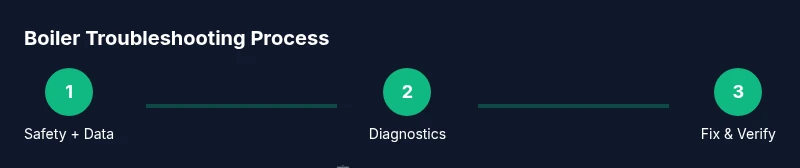
A clear workflow helps you stay organized and reduces the risk of missing critical steps. Begin with safety, ensuring power and fuel sources are isolated. Then verify basic operation: check pressure, test ignition, and inspect valves. Next, scan for leaks and inspect seals, gaskets, and joints. Finally, validate system controls, reset error codes, and perform a controlled test run. This workflow emphasizes documenting findings at each stage and evaluating whether your fixes meet the manufacturer’s guidelines before declaring the issue resolved.
Highlights:
- Prioritize safety: shut off electricity and gas when working on the boiler.
- Use manufacturer manuals as the ultimate authority for torque, spacing, and replacement parts.
- After each fix, run the system to confirm stability and log the outcome.
Safety, codes, and when to call a pro
Boiler work carries risks, including gas leaks, electrical shocks, and scalding. Always start by turning off power and gas supply, and use PPE such as gloves and eye protection. If you detect a gas smell, evacuate and call emergency services. Many jurisdictions require permits and inspections for boiler work, particularly when replacing major components or performing venting changes. When in doubt, or if the issue involves gas lines, the heat exchanger, or pressure vessel integrity, contact a licensed technician.
Checklist:
- Verify gas shutoff and electrical isolation before any work
- Confirm venting is clear and properly pitched
- Check for corrosion, worn gaskets, and cracked seals
- Know when to call a pro: persistent leaks, inconsistent flame, or unusual noises after fixes
Maintenance routines to prevent issues
Preventive maintenance is essential for reliable boiler operation. A quarterly regimen that includes cleaning burner assemblies, inspecting gaskets, testing safety devices, and flushing the system helps maintain efficiency and prolongs life. Regularly check water quality to avoid mineral buildup, scale, and corrosion. Schedule annual professional servicing to recalibrate controls and verify venting, combustion efficiency, and emissions. A clean, well-tuned system uses less fuel and reduces downtime caused by unexpected faults.
Maintenance calendar:
- Quarterly: inspect seals, clean burner, check relief valve, test controls
- Semi-annual: flush the system, test pressure, verify gauge accuracy
- Annual: professional service for combustion analysis and safety checks
Good practice: Keep a service log with dates and results to track improvements over time.
Efficiency tuning and energy savings for boilers
Boosting boiler efficiency not only lowers energy bills but also reduces wear and extends system life. Optimize by aligning burner settings with outdoor temperature, ensuring proper heat exchanger function, and improving insulation around pipes and the boiler cabinet. Consider upgrading controls to modulating thermostats, installing a high-efficiency circulator, or replacing aging components with modern, energy-rated equivalents. Water treatment also plays a crucial role: softened or conditioned water reduces scale formation and improves heat transfer efficiency. Small, consistent improvements accumulate into meaningful energy savings over a heating season.
Practical tips:
- Use outdoor reset controls to adjust heat output based on ambient conditions
- Regularly inspect insulation and reduce heat loss from exposed piping
- Schedule periodic professional combustion tuning for optimal efficiency
- Track energy use to quantify savings over time
Replacing parts vs. full replacement and choosing components
Deciding whether to replace individual parts or a full boiler depends on age, efficiency, operating costs, and reliability. If the boiler is relatively new and running efficiently, targeted part replacements (like sensors, pumps, or valves) can be cost-effective. For older units with frequent failures or escalating energy use, a full replacement with an energy-efficient model may be more economical in the long run. When selecting components, prioritize compatibility with your current system, expected lifespan, and maintenance support from the manufacturer. Always compare total cost of ownership, including installation, fuel use, and potential rebates.
Guidance:
- Assess the boiler’s age, maintenance history, and repair frequency
- Compare replacement parts with OEM specifications
- Consult a licensed professional for a reliability and ROI assessment
Authority Sources
- https://www.energy.gov
- https://www.osha.gov
- https://www.nist.gov
- https://www.ashrae.org
Tools & Materials
- Personal protective equipment (PPE)(Safety goggles, gloves, long sleeves)
- Non-contact infrared thermometer(Check surface temps and heat output)
- Pressure gauge or manometer(Calibrated; verify system pressure)
- Adjustable wrench set(Sizes 10-24 mm typical for fittings)
- Screwdrivers (Phillips & flathead)(Access panels and fittings)
- Multimeter (low voltage)(Test electrical components safely)
- Leak-detection solution spray(Spot leaks at joints during tests)
- Notebook or tablet for logs(Record readings and observations)
Steps
Estimated time: 60-90 minutes
- 1
Power down and isolate
Turn off the boiler, disconnect power to the control panel, and shut off the gas supply if applicable. This prevents accidental ignition or electric shock while you inspect components. Verify that no switches are left in the ON position and document the action taken.
Tip: Double-check the local shut-off valve position and tag it so others know service is in progress. - 2
Check and adjust pressure
Inspect the pressure gauge and ensure the reading matches the manufacturer’s specification. If low, bleed air from the system or top up with the correct water treatment as directed. If high, identify potential overfill or expansion tank issues and address accordingly.
Tip: Use the checklist from the service manual to avoid over-pressurizing. - 3
Inspect for leaks and corrosion
Examine joints, seals, gaskets, and the heat exchanger for signs of wear or leakage. Clean minor residue and reseal fittings if necessary. If corrosion is widespread or leaks are persistent, plan professional replacement.
Tip: Apply leak-detection spray to joints and monitor for bubbling as a leak indicator. - 4
Test ignition and burner safety devices
With power isolated, inspect the ignition system, electrodes, and flame sensor. Ensure gas valves open smoothly and that the burner lights reliably when power is restored. Look for flame color and stability as indicators of combustion efficiency.
Tip: Avoid touching hot surfaces after testing; recheck all safety interlocks before re-energizing. - 5
Verify controls and thermostat operation
Test the thermostat and control board to ensure signals match the desired temperature. Check for incorrect wiring or loose connectors. Calibrate sensors if the readings drift beyond tolerance, and reset fault codes if necessary.
Tip: Record control settings and any fault codes for future service calls. - 6
Document results and plan next steps
Log all readings, fixes, and outcomes, including parts replaced and test run results. If the issue recurs, escalate to a professional with a detailed summary to speed up diagnosis and repair.
Tip: Maintain a simple log for trend analysis over time.
Questions & Answers
What are boiler tech solutions?
Boiler tech solutions are practical, structured methods to diagnose, repair, and maintain boiler systems for safety, efficiency, and reliability. They combine data-driven checks with manufacturer guidance to minimize downtime and extend service life.
Boiler tech solutions are practical steps to diagnose and fix boilers while maximizing safety and efficiency.
How do I check boiler pressure safely?
To check pressure safely, power down the unit, then connect the proper gauge to the system and compare readings to the manufacturer’s spec. If the pressure is outside the recommended range, follow the manual to adjust or bleed air, and test again.
Power down, connect the gauge, compare readings, and adjust per the manual.
When should I replace parts vs the whole boiler?
If the boiler is relatively new and reliable, replacing worn components can be cost-effective. For older units with frequent failures and diminishing efficiency, a full replacement may deliver better long-term value.
Replace worn parts if the boiler is still efficient; otherwise consider a full replacement.
What safety precautions should I take before troubleshooting?
Always shut off power and fuel supply, wear PPE, and verify there are no ignition sources nearby. If you smell gas, leave the area immediately and contact authorities. Do not bypass safety controls.
Shut off power and gas, wear PPE, and call for help if you smell gas.
Why is my boiler making banging noises?
Banging noises often indicate kettling from mineral buildup, air in the system, or temperature fluctuations. Address by flushing mineral deposits, bleeding air, and ensuring proper flow and pressure.
Kettling and air in the system cause banging noises; flush and bleed as needed.
How often should I schedule boiler maintenance?
Most systems benefit from professional maintenance annually, with quarterly DIY checks for basic safety and cleanliness. A regular schedule helps catch issues early and keeps efficiency high.
Aim for annual professional service and quarterly basic checks.
Watch Video
Key Points
- Start with safety and documentation.
- Diagnose using a systematic data log.
- Prioritize simple fixes before expensive parts replacement.
- Choose maintenance over repair to extend boiler life.
- Know when to call a licensed technician.