Problem with Boiler No Hot Water: Troubleshooting Guide
Urgent, step-by-step guidance to diagnose and fix a boiler with no hot water. Learn safe checks, common causes, and when to call a pro from Boiler Hub.


Most often, a lack of hot water with a boiler stems from power or thermostat issues. The quickest fix is to verify the boiler is powered, reset any tripped switches, and confirm the thermostat is set correctly. If the problem persists, proceed with the diagnostic flow below and contact a pro for dangerous gas or leakage concerns. Boiler Hub advises caution.
Understanding the problem: problem with boiler no hot water
When homeowners notice cold taps or radiators while their boiler runs, they face a frustrating problem with boiler no hot water. According to Boiler Hub, the most common causes are simple power or control faults rather than a total boiler failure. This guide helps you quickly triage the issue, distinguish between safety-related shutdowns and minor settings, and decide whether a DIY fix is appropriate or if a pro should be called. Start by recognizing that no-hot-water symptoms can result from basic checks, and tackling them safely reduces risk and downtime. In many homes, the fix is straightforward: reset a switch, verify thermostat settings, and confirm adequate boiler pressure. If these steps don’t restore hot water, you’re entering the diagnostic flow that separates easy wins from complex repairs. Always prioritize safety, especially around gas-powered boilers and electrical components. Boiler Hub will outline practical checks you can perform this afternoon, with clear progression and when professional help is warranted.
Safety first: immediate checks you can do
Before touching any boiler components, turn off power at the switch and, if you smell gas or hear unusual noises, leave the area and call your gas provider or emergency services. Gas boiler systems require professional handling, so do not bypass safety devices or force components. When it’s safe, verify that the boiler switch is ON, the preset temperature is reasonable, and the timer is not set to a long-off period. Taking these safety steps first reduces the chance of electrocution or gas-related hazards and helps narrow down the fault quickly.
Quick checks you can do yourself
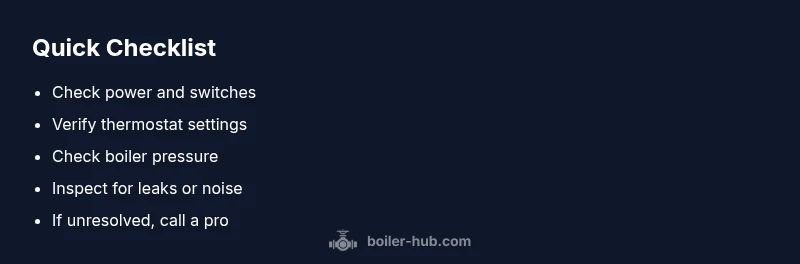
First, confirm the boiler is receiving power. A failed outlet or tripped breaker is a common reason for no hot water. Next, inspect the room thermostat and boiler thermostat for correct settings and mode (e.g., heat, not continuous standby). Check the pressure gauge on the boiler; if the needle shows very low pressure, the system may not heat water properly. If the display shows error codes, refer to the user manual or Boiler Hub’s troubleshooting database for exact meanings. These checks cover the majority of easy wins and align with Boiler Hub’s practical approach to home boiler care.
Common causes that cut hot water
Several issues can cause no hot water. Power or control faults are frequent culprits, including a tripped breaker or a blown fuse. Incorrect thermostat settings or a malfunctioning timer can prevent the boiler from heating water to the set temperature. A drop in boiler pressure—or a faulty pressure relief valve—can also impede heating. Less common but possible are failing diverter valves, aquastats, or pump problems that prevent hot water from circulating. Identifying which cause fits your symptoms guides the next steps.
How boiler pressure and valves affect hot water
Boiler pressure affects how efficiently the system heats and circulates water. If pressure is too low, the boiler may fail to heat or produce hot water you can rely on. The diverter valve directs hot water to heat zones or domestic taps; if it sticks or fails, hot water may be diverted away from the taps. The aquastat regulates burner operation; a faulty aquastat can prevent the boiler from firing at all. Understanding these components helps you focus on the most probable fault when hot water is missing.
How to test components safely (no tools required)
Start with the easiest tests: listen for the boiler firing when you demand hot water, feel pipes for warmth, and check for unusual sounds or leaks. Confirm the radiator valves and taps are fully open, as restricted flow can mimic a boiler fault. If your boiler has a sight glass or clear tubing, observe water clarity and movement. For gas boilers, never tamper with gas lines or seals. If the system remains unresponsive after these checks, proceed to the professional route.
When to call a professional and what to expect
If the above checks do not restore hot water, or you detect gas smells, water leaks, or persistent error codes, contact a licensed boiler technician. Preventive steps you can report include recent service history, any recent changes to thermostat settings, and a log of pressure readings. A pro will verify gas supply, venting, and combustion safety, inspect the diverter valve and aquastat, and test the circulator pump. Expect a diagnostic visit, followed by a repair plan with clear safety guidance.
Maintenance tips to prevent future no-hot-water issues
Schedule regular professional servicing to clean and inspect burners, heat exchangers, and safety devices. Keep the area around the boiler clear to avoid drafts or restricted airflow. Periodically check pressure, test relief valves, and replace worn gaskets or seals. Use a smart thermostat and keep spare parts for common components on hand. Regular maintenance reduces the chance of sudden no-hot-water failures and extends boiler life.
Final notes: Boiler Hub’s practical approach
Boiler Hub emphasizes a practical, safety-first approach to hot-water issues. Our team recommends starting with simple power and thermostat checks, then progressing through a clear diagnostic sequence. By documenting symptoms and keeping a service log, you’ll save time during future calls. The Boiler Hub team’s guidance aims to empower homeowners and facility managers to act confidently while knowing when professional help is essential.
Steps
Estimated time: 30-45 minutes
- 1
Verify power and reset
Turn off the boiler, switch off the circuit breaker, wait 30 seconds, then restore power and restart the boiler. Listen for ignition or burner activity and check if the hot water returns. If not, move to the next step.
Tip: Ensure your hands are dry and you’re standing on a dry surface before touching electrical components. - 2
Check thermostat settings
Confirm both room and boiler thermostats are set to appropriate heating temperatures and that the mode is correct (e.g., heat or domestic hot water). If you recently altered settings, revert to a known good configuration.
Tip: If a programmable thermostat is used, ensure schedule is not placing the system in a long-off period. - 3
Inspect boiler pressure
Look at the boiler pressure gauge. If the needle sits below the recommended range, follow your manual to repressurize the system using the filling loop. Do not over-pressurize.
Tip: Consult the manual or Boiler Hub for the correct pressure range for your model. - 4
Check for visible leaks and blockages
Inspect around the boiler and pipes for any water leaks or obvious blockages in radiators or taps. Remove any obstructions near the boiler to ensure safe operation.
Tip: Even small leaks can quickly lead to air in the system and reduced performance. - 5
Test the diverter valve and pump
If you suspect a diverter valve or circulating pump issue, observe whether hot water is flowing to taps and radiators as expected. Listen for pump operation and valve movement.
Tip: Diverter valves require professional testing; avoid forcing components to move. - 6
Call a professional if needed
If the above steps do not restore hot water or you detect gas smells, unsafe wiring, or significant leaks, contact a licensed boiler technician promptly.
Tip: Document any error codes and recent service history to speed up diagnosis.
Diagnosis: No hot water when boiler is on and demand is active
Possible Causes
- highPower issue (outlet, switch, breaker, wiring)
- mediumThermostat or control settings incorrect
- mediumLow boiler pressure
- lowFaulty diverter valve or aquastat
Fixes
- easyReset the boiler and ensure power is on; check circuit breaker and boiler switch
- easyVerify thermostat temperature and mode settings; ensure not in Eco or off mode
- easyCheck boiler pressure; if low, follow manufacturer guidance to repressurize
- hardIf the diverter valve or aquastat seems faulty, call a licensed professional
Questions & Answers
Why does my boiler run but no hot water comes out?
That usually points to a control or flow issue rather than a total boiler failure. Start by checking power, thermostat settings, and pressure. If these steps don’t help, a diverter valve or aquastat fault could be the cause and may require a professional inspection.
If your boiler runs but you don’t get hot water, start with power, thermostat, and pressure checks. If these don’t fix it, a valve or sensor fault may be the culprit and you should call a pro.
Can low boiler pressure cause no hot water?
Yes. Low pressure can prevent the boiler from circulating hot water properly. Repressurizing the system is often a straightforward fix if you follow the manual. If pressure drops again quickly, there may be a leak that needs professional assessment.
Low pressure can stop hot water from circulating. Repressurize carefully and watch for repeated drops, which signals a leak.
Should I reset my boiler when there is no hot water?
Resetting can clear minor faults, but it won’t fix systemic problems like pump or diverter valve failures. Use reset as a first step, then proceed with checking settings and pressure. If hot water still won’t come, seek professional help.
Reset first to clear minor faults, then check settings and pressure. If it doesn’t help, call a pro.
What safety steps should I take before calling a pro?
Turn off the boiler power and gas supply if you smell gas, and evacuate if necessary. Note any error codes, unusual noises, or water leaks. Do not attempt repairs beyond your knowledge level.
Turn off power and gas if you smell gas, note any codes or leaks, and call a pro rather than DIY dangerous tasks.
Can dirty filters or blocked vents cause no hot water?
Clogs can reduce heat transfer and airflow, leading to poor heating performance. Cleaning or replacing filters and ensuring vents are clear can help, but more complex issues like valve or pump faults require professional service.
Clogs can reduce heating, but complex issues should be checked by a professional.
When is it essential to call a professional?
If you suspect gas issues, a persistent leak, electrical faults, or repeated error codes that you cannot resolve, call a licensed boiler technician immediately. Regular maintenance by a pro also helps prevent future no-hot-water problems.
Call a professional if you suspect gas issues or if the problem persists after basic checks.
Watch Video
Key Points
- Start with power and thermostat checks
- Check boiler pressure before assuming a fault
- Differentiate safety shutdowns from simple setting errors
- Call a pro if gas smells or leaks are detected