Why Is the Boiler Not Heating Water? An Urgent Troubleshooting Guide
Urgent troubleshooting guide for boilers that won't heat water. Clear, step-by-step checks, safety tips, and when to call a pro to restore hot water fast.


Most likely, your boiler isn't heating water due to low system pressure or air in the loop. Start by checking the pressure gauge, refilling to the correct range, and bleeding radiators to remove trapped air. If the issue persists after these quick fixes, power-cycle the boiler and verify that the timer/thermostat is set correctly.
Understanding why the boiler isn't heating water
According to Boiler Hub, when a boiler fails to heat water, the root causes are usually related to pressure, air in the system, or control components. A low pressure reading can prevent water from circulating properly, while trapped air can form pockets that block flow. If the temperature sensor or boiler thermostat is misreading, the burner may not ignite or stay on long enough to deliver hot water. Older or poorly maintained units are more susceptible to diverter valve or circulator pump failures, which can also leave taps cold despite the boiler running. Start your diagnosis by confirming the basic operating state: is the boiler on, is there a flame or igniter sound (if gas), and is the display showing any fault codes? Document any error codes to use later when you consult the manual or a professional. Quick wins are usually found in the pressure gauge and simple bleed procedures.
Brand note: This is why homeowners and facility managers rely on trusted guidance from Boiler Hub to prioritize safety and effective fixes.
Quick checks you can safely perform before calling a pro
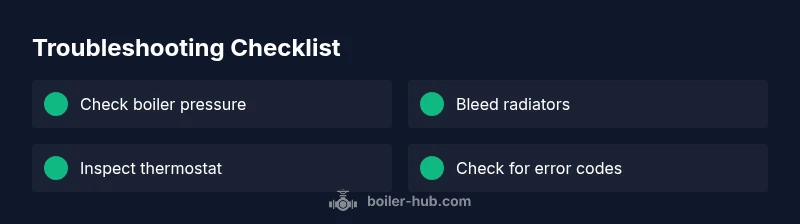
This section guides you through safe, basic checks that often restore hot water without requiring tools. First, ensure the unit is powered and receiving gas or electricity as appropriate. Then inspect the pressure gauge; if pressure is below the recommended range, top it up using the filling loop according to the manufacturer’s instructions. Next, bleed the radiators starting from the lowest floor to remove any trapped air that can prevent hot water circulation. While bleeding, watch the pressure gauge—refilling too much can raise pressure to an unsafe level. Also verify that the thermostat is set high enough to call for heat and that the timer is wired to enable heating during the current period. If you see an error code, refer to the manual or Boiler Hub’s 2026 troubleshooting guide for a quick interpretation. If none of these steps fix the problem, proceed to the diagnostic flow.
Tip: Always shut off power before touching wiring and use gloves where metal surfaces can be hot.
Diagnosing the top culprits: pressure, air, and circulation
Low system pressure is a frequent reason for a boiler not heating water. Check the expansion tank if your system has one; a leak or loss of air in the loop can reduce pressure. Air can also accumulate if radiators weren’t bled properly or if the pressure is too high after refilling. Air pockets interrupt water flow to the heat exchanger, leaving cold taps. Circulation problems are common in older systems: a failing circulator pump or a partially blocked heat exchanger can reduce flow, even with the burner firing. Finally, verify that electrical supply and safety devices are functioning—faulty fuses, blown relays, or a tripped breaker can stop heat without an obvious boiler fault code. The goal is to observe where heat is or isn’t appearing: do radiators warm first, then the water, or is nothing warm? Step through these checks systematically to determine the most probable cause.
Note: If you encounter any safety concerns or are unsure about parts of the system, stop and seek professional advice.
Safety reminders and when to call a licensed technician
Gas boilers require extra caution. If you smell gas, hear a hiss, or notice soot around the exhaust, evacuate and call emergency services. Do not attempt gas work yourself. Electric boilers still carry shock risk; turn off power at the breaker before handling wiring, and never bypass safety interlocks. If the basic checks don’t restore hot water, a licensed technician should inspect pressure vessels, heat exchangers, circulation components, and control systems. They can test for leaks, verify CO safety (carbon monoxide detectors recommended), and ensure venting is correct. Regular maintenance—annually for gas boilers and semi-annually for some electric models—can prevent many no-heat issues. Keep a log of service dates and any parts replaced to support future troubleshooting.
Steps
Estimated time: 30-45 minutes
- 1
Power and safety check
Ensure boiler is switched off, power supply is intact, and gas valve is on if applicable. Wait for the unit to cool before touching any components.
Tip: Never work on a hot boiler; hot surfaces can cause burns. - 2
Check pressure gauge
Locate the pressure gauge on the front panel. If pressure is below the recommended range, top up using the filling loop according to the manual.
Tip: Use clean water and avoid overfilling. - 3
Bleed radiators
Starting from the lowest radiator, bleed until air-free water emerges with a steady flow. Re-check system pressure after bleeding.
Tip: Place a container to catch water and avoid spills. - 4
Inspect thermostat and timer
Verify that the thermostat is set higher than the current water temperature and that the timer enables heating during the desired periods.
Tip: A mis-set thermostat is a common cause of no-heat. - 5
Reset and observe
Reset the boiler once and monitor for hot water. If the display shows error codes, reference the manual or Boiler Hub’s guide.
Tip: Document any error codes for service. - 6
Check for circulation issues
Listen for the circulator pump; feel radiator pipes for warm flow. If pipes stay cold, circulation problem exists.
Tip: Vibration or noise can indicate a failing pump. - 7
Call a professional if unresolved
If no improvement after these steps, contact a licensed boiler technician to diagnose pressure vessel, heat exchanger, or gas safety concerns.
Tip: Gas safety should never be neglected.
Diagnosis: No hot water or water not heating to the desired temperature
Possible Causes
- highLow boiler pressure or expansion tank issue
- highAir trapped in the system
- mediumFaulty thermostat or timer
- lowCirculation problem (pump, diverter valve)
- lowElectrical supply issue or safety switch tripped
Fixes
- easyCheck boiler pressure and refill to the recommended range when cold
- easyBleed radiators to remove trapped air
- easyReset boiler and verify thermostat/timer settings
- mediumInspect circulator pump and valve operation; check for leaks
- mediumCheck electrical supply, fuses, breakers, and gas valve status; call a professional if uncertain
Questions & Answers
What are the most common causes of a boiler not heating water?
The most frequent culprits are low pressure, air in the system, and thermostat or timer faults. Other possibilities include circulation issues or a faulty heat exchanger. Start with pressure and bleeding first.
Common causes are low pressure, air in the system, and thermostat faults. Start with pressure and bleeding.
Can I fix boiler pressure myself?
You can safely check and top up pressure on many boilers using the filling loop when the unit is cold. Follow the manufacturer’s instructions and never overfill. If you’re unsure, call a professional.
You can check the pressure when cold and top up using the filling loop. If unsure, call a professional.
Should I bleed radiators if there is no hot water?
Bleeding radiators can remove trapped air that blocks hot water circulation. Start with the lowest radiator and bleed until you see steady water flow.
Bleed radiators from the lowest to the highest until air stops coming out.
When is it safe to call a professional?
If there’s gas smell, persistent boiler faults, or no heat after basic checks, stop and contact a licensed technician. Gas safety is critical.
If in doubt, call a licensed boiler technician—gas safety is critical.
Can a faulty thermostat cause no heating?
A malfunctioning thermostat can prevent boiler activation or cause cycling issues. A professional should test and replace faulty components.
Thermostats can cause activation problems; have a pro check it.
Will regular maintenance prevent heating failures?
Regular servicing reduces the risk of no-heat problems by keeping components clean, seals tight, and safety devices functioning.
Regular maintenance lowers the chance of no-heat issues.
Watch Video
Key Points
- Check pressure and top up if needed to restore heat.
- Bleed air from radiators to improve circulation.
- Verify thermostat and timer settings before calling a pro.
- If unresolved, stop and contact a licensed boiler technician.