Boiler Is On But No Heating? Troubleshooting Guide
Urgent, practical steps to diagnose and fix a boiler that is on but no heating. Learn safe checks, diagnostic flow, and when to call a pro.


Most likely, your boiler is on but not heating due to a thermostat or pump issue, a closed valve, or air trapped in the system. Start by checking the thermostat setting and room sensor, then bleed radiators and inspect the feed and return pipes for blockages. If the problem persists, shut off power and call a pro.
Why a Boiler Is On But No Heating
According to Boiler Hub, many homeowners experience a situation where the boiler is on but no heating. The issue isn’t always dramatic—often it’s a small setting or an air block that prevents heat from circulating. In this guide we focus on urgent, practical steps you can perform safely. We emphasize safety, proper shut-offs, and technique to avoid damage or pressure hazards. By understanding how a typical boiler circuit works—thermostat, pump, valve, and heat exchanger—you can identify where heat is getting stuck and restore comfort faster. The goal is to get heat flowing again while avoiding expensive service calls. This approach also aligns with Boiler Hub Analysis, 2026, which highlights thermostat faults and air gaps as frequent culprits in no-heat scenarios.
The first move is always to confirm basic settings on the thermostat and the room sensor. Incorrect temperatures, disabled schedules, or settings like “eco” or “antifreeze” can stop heat even when the boiler is technically running. If you adjust these and still have no heat, you’ve already ruled out the simplest issue and can proceed to more hands-on checks with confidence. Safety remains the priority; never force valves or switches if something feels stuck or hot to the touch.
In many homes, the fix is simple and inexpensive. In other cases, a failed component requires professional service. This guide provides a logical flow so you can determine when you can fix it yourself and when it’s time to call a pro.
Common Causes at a Glance
- Thermostat settings or faulty sensor: A misread temp or failed sensor can tell the boiler to stay idle even when heat is requested.
- Air trapped in the system: Air pockets prevent circulating water from reaching radiators.
- Low boiler pressure: A drop in pressure can stop heat delivery despite the boiler staying on.
- Faulty diverter/zone valve or circulation pump: If water can’t be directed to radiators, you’ll feel cold rooms.
- Circulation pump failure: A failed pump means water isn’t circulating at all.
Each issue has a practical, safe fix you can attempt in a step-by-step sequence. In many cases, addressing thermoregulation and air flow resolves the problem without calling a technician. If you’re ever unsure, skip to the safety and professional steps for guidance. Boiler Hub’s guidance emphasizes gradual checks and avoiding high-risk interventions.
Safety First: What Not To Do
- Do not attempt repairs while the boiler is hot or under pressure.
- Do not open gas lines, flame guards, or sealed panels unless you have proper training.
- Do not override safety devices or bypass pressure relief valves.
- Do not ignore the smell of gas; evacuate and contact emergency services immediately.
When in doubt, prioritize safety and call a professional. This section is about safe, incremental checks you can perform without specialized tools. Always power off and, if needed, lock out and tag the system before starting any work. You’ll reduce the risk of burns, scalds, or gas exposure by following these precautions.
Step-by-step Diagnostics You Can Do
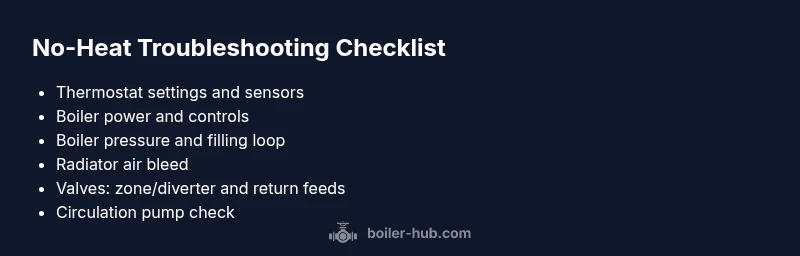
- Start with a quick thermostat check: verify settings, replace batteries if needed, and ensure the room sensor isn’t stuck at an extreme temperature.
- Confirm the boiler is receiving power and responding to a manual call for heat. If it doesn’t light or respond, there might be a control or electrical issue.
- Inspect the boiler pressure gauge and compare against the manufacturer’s recommended range. If pressure is low, follow the repressurization steps in your manual.
- Bleed radiators to remove air pockets. Use a radiator key on each radiator, release air until water appears, and close the valve.
- Check for valve positions: ensure feed/return and zone/diverter valves are open when heat is requested; close valves accidentally left shut can block heat flow.
- Listen for pump operation: a humming or lack of movement might indicate a seized or failing pump. If you hear grinding or the pump runs continuously, seek a professional assessment.
This flow helps you narrow down whether the issue is electrical, hydraulic, or mechanical, guiding you toward the right fix while keeping you safe. If none of these checks restore heat, move to the professional steps highlighted later in this guide.
How to Fix the Most Common Causes (Step-by-Step)
- Thermostat mis-settings: Reset to a comfortable setpoint and re-check the schedule. If the room sensor is faulty, replace it or relocate it to an area with representative temperature readings.
- Air in the system: Bleed radiators starting from the top floor and moving downward. Re-check pressure after bleeding since air release can alter pressure.
- Low pressure: Repressurize by following the boiler’s filling loop procedure to reach the recommended pressure range when cold. Recheck radiators for even heat distribution after repressurization.
- Zone/diverter valve or pump fault: Inspect valve positions and test for movement; if a valve doesn’t respond or a pump runs hot but no flow is observed, replacement may be required. This step often requires professional service.
- Gas and safety: If you ever suspect gas involvement, do not attempt further DIY steps; contact a licensed technician immediately.
The most common fixes are simple, but some cases involve components that require a technician. Use the safe, incremental approach described here and only escalate when the problem persists after all basic checks.
When to Call a Professional
If you have iterated through thermoregulation, air removal, pressure checks, and valve/pump inspection without restoring heat, or if you notice leaks, unusual noises, or a gas odor, it’s time to call a professional. A licensed technician can safely verify electrical controls, gas connections, and the integrity of the heat exchanger and circulator pump. Pro tip: prepare a short summary of what you’ve tried and note any readings from the pressure gauge and thermostat; this helps the technician diagnose faster.
Regular maintenance by a qualified pro reduces the odds of sudden no-heat events. If your boiler is older or has frequent no-heat episodes, consider a maintenance plan to keep components in good working order and to catch issues early before the heating season peaks. This proactive approach aligns with Boiler Hub’s recommendations for ongoing boiler maintenance.
Prevention Tips to Keep Heat On
- Schedule seasonal checks: Have a professional inspect your boiler annually and perform a system purge if needed.
- Keep the pressure in check: Regularly monitor boiler pressure and ensure the filling loop is used correctly.
- Maintain clean radiators: Bleed air and flush radiators periodically to prevent air locks and improve efficiency.
- Inspect thermostats and sensors: Replace weak batteries and verify placement to avoid false readings.
- Document changes: Note any adjustments you make and their effects, creating a log you can share with a technician if needed.
- Safety first: Never bypass safety devices or attempt risky repairs without training. When in doubt, call a professional.
By adopting these prevention steps, you can minimize future no-heat events and keep your home comfortable through the heating season. Boiler Hub’s guidance supports a proactive maintenance mindset to maximize reliability and safety.
Steps
Estimated time: 60-90 minutes
- 1
Verify thermostat and sensors
Begin by confirming the thermostat is set to a heat mode and the target temperature is comfortably above room temperature. If there is a remote room sensor, check that it isn’t stuck at a very low or high reading and that it’s communicating with the boiler. If batteries are low, replace them and re-test heat demand.
Tip: Keep a spare battery kit handy and label the thermostat location. - 2
Check power and boiler controls
Ensure the boiler is receiving power. Look for power to the boiler, check the on/off switch, and confirm there’s no tripped circuit. If your boiler has a digital fault display, note any fault codes for later reference.
Tip: If a fault code appears, consult the manual or manufacturer website before attempting resets. - 3
Assess boiler pressure
Locate the pressure gauge and compare with the manufacturer’s recommended range. If pressure is low, follow the boiler’s fill procedure using the filling loop to bring pressure back to the safe range when cold.
Tip: Do not force components if you feel resistance; stop and seek guidance. - 4
Bleed radiators to release air
Starting with the highest radiators, use a radiator key to vent small amounts of air until water appears. Close the valve and check if heat returns to each radiator. Repeat for all radiators as needed.
Tip: Work slowly; venting too quickly can cause air rush and noise. - 5
Check valves and pump operation
Ensure feed and return valves are open and that zone/diverter valves are correctly positioned. Listen for the circulating pump—if it hums without moving water, the pump may be failing or air-locked.
Tip: If you suspect a faulty pump, avoid running it dry and contact a pro. - 6
Test heat distribution across the house
Turn up the thermostat slightly and check several radiators in different zones. If some radiators heat while others don’t, the issue may be a valve or balancing problem in the affected zone.
Tip: Note which zones heat first to identify problem areas.
Diagnosis: Boiler is on but no heating
Possible Causes
- highThermostat or room sensor fault
- mediumAir trapped in the heating system
- highLow boiler pressure
- mediumFaulty diverter/zone valve
- mediumCirculation pump failure
Fixes
- easyCheck thermostat settings and replace batteries if needed
- easyBleed radiators to remove air
- easyCheck boiler pressure and repressurize to manufacturer range
- mediumInspect zone/diverter valve and circulation pump; replace if faulty
- hardIf issues persist or you smell gas, contact a professional immediately
Questions & Answers
Why is my boiler on but no heating?
Common causes include thermostat faults, air in the system, low pressure, or a stuck/diverter valve. A systematic check helps isolate the issue.
A common reason is thermostat or air issues; start with settings and bleeding radiators, then check pressure.
What should I check first when the boiler is on but not heating?
Start with thermostat settings, room sensor, and power. Ensure the boiler responds to heat calls and that the pressure is in the safe range.
First, verify the thermostat and power, then check the pressure and flow.
Can air in the system cause no heat?
Yes, trapped air can block circulation. Bleeding radiators is a common first fix to restore heat.
Air can block flow; bleeding radiators often fixes the problem.
Is low boiler pressure the cause of no heat?
Low pressure can prevent heat distribution even if the boiler stays on. Repressurize according to the manufacturer’s guidelines.
Low pressure can stop heat; check the filling procedure to restore it.
When should I call a professional?
If basic checks don’t restore heat, or you notice leaks, noises, or gas smells, contact a licensed technician.
Call a pro if basic steps don’t fix it or if you smell gas or see leaks.
Watch Video
Key Points
- Check thermostat settings first
- Bleed air from radiators to restore flow
- Verify boiler pressure and repressurize if needed
- Inspect valves and pump before calling a pro
- Call a professional if heat is not restored after basic checks