Munchkin Boiler Repair: A Practical How-To Guide
A comprehensive, step-by-step guide to diagnosing and safely repairing Munchkin boilers, with safety tips and maintenance actions from Boiler Hub.


By following these steps, you can safely diagnose and address common Munchkin boiler issues. This guide covers power checks, pressure testing, venting, and when to seek professional help. You’ll learn essential safety precautions, what tools you need, and how to verify the repair afterward. According to Boiler Hub, tackling boiler repairs with a clear plan reduces risk and protects your home’s heating system.
Understanding Munchkin boilers: design and common failure points
Munchkin boilers are compact, gas-fired units designed to deliver reliable hot water and space heating in small to mid-sized homes. They integrate the heat exchanger, burner, ignition system, and controls into a compact chassis. Understanding their layout helps you diagnose failures more quickly. According to Boiler Hub, most service calls stem from a handful of recurring issues, such as ignition problems, pressure faults, and vent obstructions. Typical failure points include a dirty burner, clogged condensate line, faulty vent sensor, and worn O-rings. Regular inspection of the burner nozzle, seal gaskets, and spark electrode is essential for safe operation. If your boiler shows signs of inconsistent heating, loud banging, or short cycling, begin with a visual inspection and then test levels with basic tools.
This section also highlights model-specific quirks that commonly accompany Munchkin boilers, such as sensor sensitivity to pilot flame quality and the impact of scale buildup on heat exchange efficiency. By knowing where to look first, you reduce diagnostic guesswork and keep you and your family safe.
Safety prerequisites before you start
Before you touch a Munchkin boiler, ensure you’ve created a safe work environment. Shut off electrical power at the breaker and close the gas supply if you suspect a leak. Never work on the boiler in the presence of strong gas odors. Use a carbon monoxide detector and keep children and pets away from the work area. Vent and combustion safety are essential; improper venting can lead to dangerous conditions. Boiler Hub analysis shows that many issues stem from interrupted power, improper venting, or neglected maintenance rather than dramatic internal failures. Always wear safety gear: gloves, eye protection, and closed-toe shoes. Have a fire extinguisher within reach and a bucket or towel to manage incidental spills.
Diagnostic mindset: what to check first
Approach each problem with a small, repeatable set of checks. Start with basic power and gas control verification, then confirm the boiler’s error codes and status indicators. If you have an external thermostat or zone valve, ensure it’s communicating properly with the boiler. Look for audible alarms, flickering lights, or unusual burner behavior. Keep a log of symptoms, when they occur, and any readings you take. This habit helps you spot patterns and provides helpful data if you need professional support later. Remember, non-destructive checks first—save potential component replacement for last resort.
Key components to inspect during repair
Focus on the most common failure points: ignition system (spark electrode and flame sensor), burner cleanliness, condensate trap and line, venting/air supply, pressure sensor, and circulating pump. A dirty burner or a faulty flame sensor is a frequent culprit for intermittent ignition and cycling. Inspect seals and gaskets for any signs of oil or gas leaks. Check the condensate line for clogs, especially in cooler months when condensate production increases. A failing circulating pump can mimic several electrical faults, so test its operation by observing flow when the system calls for heat. This section provides a practical framework for inspection without breaking your boiler warranty, when applicable.
Maintenance and prevention to extend life
Proactive maintenance is the best defense against sudden failures. Schedule annual professional service to clean the heat exchanger, verify gas pressures, and test safety controls. Between service visits, perform light checks: listen for odd noises, inspect vent terminals for obstructions, and verify that the CO detector remains functional. Use a boiler-specific treatment recommended by the manufacturer to reduce corrosion and scale buildup. Document any readings and keep records of maintenance activities for reference during future troubleshooting.
What to do after repairs: verification and test
After performing any repair, carefully cycle the boiler through a full heat call. Confirm the burner ignites properly and that the flame remains steady and blue with minimal yellow tipping. Check pressure gauges to ensure the system is within the recommended range and verify there are no new leaks around the fittings or condensate line. Run hot water through taps to ensure the system responds promptly. Finally, re-check CO levels in the home and confirm all safety devices (low-water cutoffs, pressure relief valves) function correctly.
Resource and references
For model-specific steps, refer to the Munchkin boiler manual and manufacturer guidance. This guide uses general troubleshooting principles suitable for many Munchkin units, but always follow the exact specifications for your model. If you encounter more complex issues or unsafe conditions, contact a licensed HVAC professional immediately.
Tools & Materials
- Multimeter(Test electrical circuits and boiler control board voltages)
- Manometer or pressure gauge(Check system pressure and test pressure relief valve)
- Wrench set(Loosen/tighten fittings on gas line and water connections)
- Screwdrivers (Phillips and flat head)(Access control boards and ignition components)
- Pliers and adjustable wrench(Grip and manipulate small components and clamps)
- Gas leak detector (electronic)(Immediately audible if a leak is suspected)
- Safety gear (gloves, goggles)(Protect hands and eyes during inspection)
- Towels or a bucket(Contain spills and manage condensate water)
Steps
Estimated time: 45-90 minutes
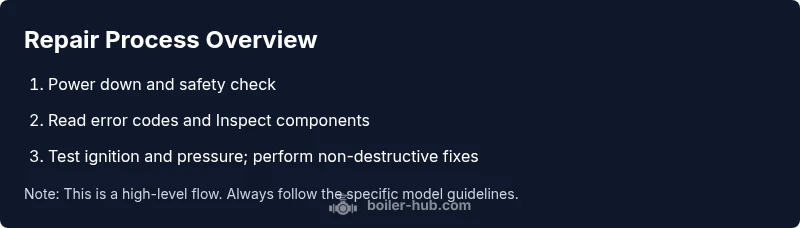
- 1
Power down and secure area
Switch off the boiler circuit breaker and close the gas supply valve if you suspect a leak. Allow the unit to cool before handling. This reduces the risk of electric shock and accidental ignition.
Tip: Always verify power is off at the breaker with a tester before touching any wiring. - 2
Read error codes and indicators
Record any error codes displayed on the control board or status lights. Compare against the model manual to identify likely fault categories (ignition, flame sensor, pressure, or sensor faults).
Tip: Take a photo of the display for reference and to show a tech if you call. - 3
Inspect ignition and flame sensor
Remove the burner access panel and inspect the ignition electrode for wear or buildup. Clean the flame sensor with a non-abrasive cloth if there’s yellowing or soot, then reassemble carefully.
Tip: A light cleaning with isopropyl alcohol on a soft cloth can restore sensor performance. - 4
Check system pressure and refill if needed
Use the recommended boiler pressure range to determine if refilling is necessary. If pressure is low, slowly add water via the fill valve and monitor until the gauge stabilizes.
Tip: Do not exceed the maximum pressure; overfilling can damage components. - 5
Bleed air from the system
Bleed air from radiators or the boiler’s air vent to prevent cold spots and improve heat transfer. Close vents once water appears and the system holds pressure.
Tip: Bleed slowly and listen for a consistent hiss to avoid drawing air back into the circuits. - 6
Inspect venting and condensate line
Check that the vent cap is clear and the condensate line is free of blockages. A blocked condensate line can trigger error codes and shutdowns.
Tip: Use a flashlight to inspect for mineral deposits; clear gently with a plumber’s snake if needed. - 7
Test post-repair operation
Power up the boiler, run a heat cycle, and observe proper ignition, flame stability, and heat delivery. Recheck for leaks or unusual noises.
Tip: Document readings and ensure the CO detector remains active after testing.
Questions & Answers
What are the most common signs a Munchkin boiler needs repair?
Common signs include frequent cycling, lack of hot water, burner flame that is yellow or unstable, loud banging or popping, and error codes on the control board. If you notice a gas smell or CO presence, shut down the system immediately and seek professional help.
Look for frequent cycling, no hot water, unusual flames, loud noises, or error codes; in a gas smell, evacuate and call for help right away.
Can I perform Munchkin boiler repairs myself?
Some basic maintenance and non-destructive diagnostics can be done by confident homeowners, but many repairs involve gas systems or sealed combustion chambers. If you’re unsure about gas safety, electrical wiring, or venting, hire a licensed HVAC technician.
Basic checks are possible if you’re comfortable with safety steps, but for gas and ignition work, it’s best to call a pro.
Is it safe to work on a boiler without a CO detector?
Yes, you should always have a functioning CO detector when working with gas appliances. CO detectors provide early warning of dangerous fuel-burning byproducts and should be placed in sleeping areas and near the boiler.
Always use a CO detector when dealing with gas boilers; it’s a crucial safety device.
How often should a Munchkin boiler be professionally serviced?
Most manufacturers recommend annual professional servicing to clean, calibrate, and test safety devices. More frequent checks may be needed in hard water areas or with older units.
Annual professional service is the usual recommendation, with more frequent checks if you have hard water.
What should I do if there’s a visible leak or strong gas odor?
If you detect water or gas leaks, or a strong gas odor, shut off the gas supply, evacuate the area, and call emergency services. Do not operate electrical switches near the suspected leak.
Shut off gas, leave the area, and call for help right away.
What basic tools are commonly sufficient for initial checks?
A basic set includes a multimeter, screwdriver set, adjustable wrench, and a gas detector. For more thorough checks, a manometer and leak detector extend your diagnostic reach.
A multimeter, screwdrivers, a wrench, and a gas detector cover common initial checks.
Watch Video
Key Points
- Power down and secure before inspection
- Follow a repeatable diagnostic flow
- Inspect ignition, flame sensor, and pressure first
- Maintain accurate maintenance records
- Consult a professional for gas-related or complex issues