Industrial Boiler Repair: A Practical Guide for Facility Managers
Learn practical, safety-focused strategies for industrial boiler repair. This Boiler Hub guide covers diagnostics, maintenance, and when to call professionals to minimize downtime and risk.


Industrial boiler repair is essential to prevent downtime and safety hazards in heavy-use facilities. This guide outlines how to diagnose common boiler issues, prioritize safety, and decide when to involve a professional. You’ll learn practical steps for safe troubleshooting and preventive maintenance, with a clear framework for when a repair makes sense versus replacement.
Understanding Industrial Boiler Repair
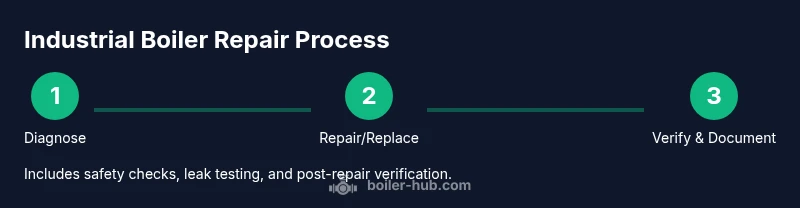
Industrial boiler repair involves diagnosing, repairing, and maintaining large-scale boiler systems used in manufacturing, power generation, and district heating. These systems are complex, integrating burners, fuel trains, feedwater, and control systems. Efficient repair requires not only mechanical fixes but also a strict adherence to safety standards and regulatory requirements. According to Boiler Hub, a proactive repair strategy reduces downtime, lowers operating costs, and extends equipment life. In practice, industrial boiler repair begins with a thorough assessment to determine root causes rather than simply replacing failed components. This approach preserves assets, protects worker safety, and keeps production lines running. The Boiler Hub team emphasizes safety, documentation, and prevention as core pillars.
Boiler systems vary by fuel type (gas, oil, or dual-fuel), capacity, and configuration. Understanding the specific design and control philosophy of your plant boiler is essential for effective repair planning. Always consult manufacturer manuals and follow local codes. The ability to interpret burner management systems, water treatment needs, and control loops will influence whether a repair is cost-effective or if replacement is preferable. Remember that industrial boilers operate under high pressure and temperature; even small mistakes can lead to major safety incidents. A disciplined, methodical approach—root-cause analysis, controlled testing, and thorough documentation—will yield better outcomes for uptime and safety.
Boiler Hub guidance: Prioritize documented diagnostics and comprehensive risk assessment before any work begins. This reduces the chance of rework and protects personnel. In addition, maintain clear communication with operators, safety officers, and management to align on repair scope and timelines.
Common causes of industrial boiler problems content that covers corrosion, scale build-up, burner misalignment, fuel supply variability, control faults, leaks, and pressure irregularities. It discusses why these issues deteriorate efficiency and reliability, and how proper diagnostics lead to durable repairs. It also highlights the role of water chemistry and feedwater quality in preventing damage to heat exchangers and firing equipment.
Boiler Hub note: Regular monitoring of water chemistry and burner alignment is essential to sustain efficiency and extend service life.
Tools & Materials
- PPE and safety gear (hard hat, gloves, eye protection)(Follow site safety policy and hazard assessment before starting any work.)
- Digital manometer or boiler pressure gauge(Used to verify operating and cut-off pressures during diagnosis.)
- Multimeter (electrical testing)(Check control circuits, sensors, and ignition components.)
- Gas detector(Critical when working near fuel trains or suspected gas leaks.)
- Wrench set (metric) and torque wrench(For adjusting fittings, valves, and fasteners according to spec.)
- Replacement gaskets, seals, and consumables(Keep a standard kit on hand for common wear items.)
- Manufacturer manuals and schematics(Important for correct sequence and clearances; keep digital copies.)
- Leak detection solution and cleaning supplies(For identifying minor leaks and maintaining surfaces.)
Steps
Estimated time: Total time: 2-6 hours
- 1
Power down and isolate the boiler
Begin by shutting off fuel supply and power to the boiler per lockout-tagout procedures. Vent the system safely and confirm there are no residual pressures that could cause sudden releases. Why: Prevents accidental ignition, hot surfaces, and uncontrolled releases during inspection.
Tip: Use visible signage and double-check with a supervisor before opening any service panels. - 2
Document symptoms and collect baseline data
Record observed symptoms (noises, flame color, erratic pressure, error codes) and capture readings from gauges and sensors. Gather recent maintenance history and any unusual operating events. Why: Baseline data helps identify root causes and avoids repeated checks.
Tip: Take timestamped photos of readings and store them with the work order. - 3
Check for leaks and visual integrity
Inspect condensate and feedwater lines, seals, gaskets, and joints for signs of leakage or corrosion. Look for scorch marks or soot around burners, which indicate combustion issues. Why: Early leak detection prevents water damage and energy waste.
Tip: Mark any wet areas with chalk for follow-up checks during testing. - 4
Validate fuel and combustion conditions
Verify fuel supply pressures and burner operation. Ensure airflow is consistent, and perform a basic combustion check if safe to do so with proper instrumentation. Why: Poor combustion reduces efficiency and increases emissions.
Tip: If you smell fuel or see unexpected color, halt work and call a qualified pro. - 5
Test electrical controls and safety devices
Check ignition system, flame safeguard, and control sensors. Inspect low-water cutoffs, pressure relief valves, and interlocks for proper function. Why: Electrical faults and failed safety devices are common repair drivers and major risk sources.
Tip: Document any fault codes and connect them to device manuals. - 6
Assess boiler pressure and water treatment
Review boiler pressure trends, verify normal operating range, and assess feedwater quality. Poor water chemistry accelerates scaling and corrosion of heat exchangers. Why: Water quality is a hidden driver of longevity and efficiency.
Tip: Coordinate with water treatment specialists to optimize chemistry routines. - 7
Decide on repair vs replacement and plan escalation
If defects are localized and components are available, plan targeted repairs. If multiple major components show wear or the boiler is nearing end-of-life, prepare a replacement pathway and a project timeline. Why: Informed decisions prevent costly downtime and extend asset life.
Tip: Obtain quotes from multiple qualified contractors to compare options.
Questions & Answers
What is the first step in industrial boiler repair?
Shut down the boiler following lockout-tagout procedures and isolate the fuel supply. Verify that ignition and fuel sources are secured before any inspection.
The first step is to shut down the boiler and secure the fuel supply under proper lockout-tagout procedures.
When is repair not cost-effective and replacement is better?
If the boiler is near the end of its life or many major components require replacement, replacement may be more economical and safer in the long run.
If the boiler is aging and many parts need replacement, replacement can be more economical.
How can I improve boiler efficiency after a repair?
Address leaks, calibrate controls, ensure proper combustion, and maintain water treatment to sustain efficiency gains.
Fix leaks, optimize combustion, and keep up with water treatment to improve efficiency.
What regulations apply to industrial boiler repairs?
Follow local safety codes and NFPA standards; obtain permits and inspections as required by your jurisdiction.
Follow local codes and NFPA standards and get any required permits.
What are warning signs of gas leaks or unsafe operation?
Unusual smells, hissing sounds, pilot light issues, and sudden outages are warning signs that require immediate attention.
Watch for gas smells or unusual flame behavior and call for professional inspection if suspected.
How often should an industrial boiler be serviced?
Most facilities schedule annual professional service with quarterly internal checks and routine monitoring.
Most facilities service annually, with occasional checks throughout the year.
Watch Video
Key Points
- Identify root causes before repairing components
- Prioritize safety and lockout-tagout procedures
- Document findings and maintain traceable work orders
- Know when to repair vs replace based on life expectancy
- Maintain water chemistry to sustain efficiency