How to Use Boiler Industrialist: A Practical Guide
Learn how to safely and effectively operate the Boiler Industrialist system with step-by-step startup, control operation, maintenance routines, and safety practices from Boiler Hub.


In this guide, you will learn the essential steps to safely use Boiler Industrialist, including initial safety checks, startup and shutdown procedures, control operation, and routine maintenance. The process focuses on safety, accuracy, and efficiency, with clear checklists and practical tips for homeowners and facility managers. By following these steps, you can achieve reliable performance while minimizing downtime. According to Boiler Hub, understanding control panels and safety interlocks is key to successful operation.
How to Use Boiler Industrialist: A Practical Introduction
If you are a homeowner or facilities manager, learning how to use boiler industrialist safely and efficiently is essential. This guide from Boiler Hub covers startup basics, control operations, safety checks, and routine maintenance. According to Boiler Hub, the path to reliable boiler performance begins with understanding its design, control logic, and safety features. Throughout this guide, you will see practical steps and checklists tailored to common industrial boilers used in small facilities and large homes. The phrase how to use boiler industrialist represents a practical skill set: you will blend theory with hands-on tasks, ensuring safe operation and long-term reliability. By the end of this section you should be able to prepare the system for operation, interpret boiler indicators, and follow a disciplined shutdown routine that protects personnel and equipment.
This article uses plain language, practical examples, and safety-focused guidance to help you move from basic familiarity to confident operation. You’ll learn how to verify fuel supply, check water levels, read pressure gauges, and conduct routine maintenance that preserves efficiency and extends service life. Whether you operate a small commercial boiler or a larger residential system, the core principles remain the same: safety first, accurate readings, and deliberate, repeatable steps. This aligns with best practices identified in Boiler Hub Analysis, 2026, which emphasizes methodical procedures and documentation as foundations of safe boiler use.
As you proceed, keep a dedicated logbook for readings, alarms, and maintenance actions. Consistency matters for detecting subtle changes that could indicate wear or a developing fault. Always consult the user manual for model-specific instructions and safety limits. If you ever feel uncertain, pause, reassess, and seek professional assistance. This approach mirrors Boiler Hub’s recommendation to treat boiler operation as a scheduled, repeatable process rather than a one-off task.
Safety Essentials: Personal Protective Equipment and Hazard Awareness
Before touching any boiler panel, ensure you have appropriate PPE: flame-resistant gloves, eye protection, and non-slip footwear. Confirm there is adequate ventilation and that all extinguishing equipment and CO detectors are within reach. Never bypass safety interlocks or automatic shutoffs; these systems exist to prevent dangerous conditions such as gas leaks, overheating, or excessive pressure. Always perform a quick site safety check, including clearances around vents, access to the control panel, and the absence of combustible materials in the immediate vicinity. If you detect a gas odor or hear unusual noises, stop work immediately and follow your facility’s emergency procedures. Boiler Hub emphasizes that prevention and preparedness dramatically reduce the risk of accidents and costly downtime.
Getting Set Up: Tools, Fuel, and Site Preparation
A smooth startup begins with a prepared worksite and the right tools. Gather PPE, the boiler manual, a flashlight, a wrench set, screwdrivers, a non-contact voltage tester, and a pressure gauge if the model requires calibration checks. Ensure the fuel supply is correctly configured and that fuel valves are in the open or safe position per the manual. Inspect venting paths for obstructions and verify that condensate lines are clear. Check water supply and ensure that makeup water is treated or conditioned to prevent scale buildup. Place a temporary drip pan under the boiler if leakage is possible. This preparation reduces the chance of delays caused by missing parts or unsafe conditions and aligns with Boiler Hub’s guidance on methodical setup.
Step-by-Step Startup and Shutdown Procedures
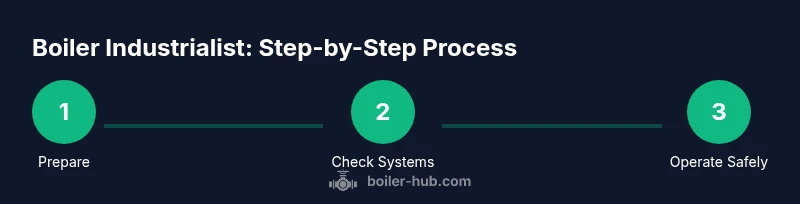
Starting or stopping a boiler industrialist involves a disciplined sequence, not a guesswork approach. Begin with a visual inspection of all safety devices, then confirm fuel and power are available. Power up the control panel, allow any pre-heat or purge cycles to complete, and verify that all indicators show normal status before lighting the burner. Once heat is established and the system reaches operating pressure, monitor fuel-to-air ratios and lock in stable readings. For shutdown, reverse the sequence, allow the boiler to cool, depressurize safely, and close fuel valves. Keeping a written log of readings and any anomalies helps track performance over time. The key is repeating the same steps in the same order for reliability, which Boiler Hub brands as a cornerstone of safe operation.
Operating Controls and Reading Indicators
Modern boilers use a combination of digital displays, pressure gauges, and status LEDs. Learn to interpret the main indicators: current pressure, flame status, ignition light, and fault codes. The control panel often includes a mode selector (manual/automatic), a reset button, and diagnostic menus. Always verify that the operating pressure matches the manufacturer’s specification for your system, and check for any fault codes that require service. Regularly test safety devices like high-limit switches and low-water cutoffs to confirm they respond correctly. By becoming fluent in the control interface, you’ll reduce reliance on trial-and-error methods and increase safe, predictable operation. Remember to consult the manual for model-specific indicators and parameter limits.
Maintenance and Troubleshooting Basics
Routine maintenance stabilizes performance and extends boiler life. Schedule regular inspections of flame stability, fuel lines, and electrical connections. Keep the combustion area clean and check for signs of corrosion or leaks. For troubleshooting, start with simple checks: power supply, fuses, wiring integrity, and sensor calibration. When fault codes appear, refer to the manual’s code table and perform the recommended reset or service procedure. If the fault persists, isolate the boiler and contact a certified technician. Boiler Hub’s approach is to separate quick fixes from deeper issues and to document every fault, action, and outcome for accountability and future reference.
Efficiency Tips and Common Pitfalls
Efficiency gains come from proper tuning, clean heat exchange surfaces, and disciplined operation. Regularly inspect heat exchangers for soot buildup and ensure proper venting to prevent back-drafting. Use proper water treatment to prevent scale and corrosion, which reduce heat transfer efficiency. Avoid frequent rapid cycling by maintaining stable operating conditions and sequencing the boiler with other building systems to minimize standby losses. Common pitfalls include neglecting routine maintenance, bypassing safety controls, and using improper fuel quality. Boiler Hub stresses that small efficiency improvements compound over time into meaningful energy savings and lower operating costs.
Documentation, Logging, and Compliance
Keep detailed records of maintenance schedules, fuel consumption, readings, and any anomalies. A well-kept log supports troubleshooting and compliance with local safety regulations. Include model numbers, serials, recent service actions, and technician contact information. If your facility is subject to audits or safety inspections, having complete documentation can expedite reviews and demonstrate due diligence. Finally, familiarize yourself with applicable codes and standards from your jurisdiction and national bodies. Boiler Hub encourages homeowners and facility managers to create a simple, consistent documentation routine that can be followed by teams with varying levels of boiler experience.
Tools & Materials
- Personal Protective Equipment (PPE): safety glasses, gloves, hard hat(Protect from hot surfaces and potential chemical exposure)
- Boiler owner's manual and model-specific wiring diagrams(Use for sequence, limits, and maintenance guidance)
- Flashlight or headlamp(Illuminates dim boiler rooms and control panels)
- Wrench set and screwdriver set(For panel access and fittings)
- Non-contact voltage tester(Verify circuits before handling electrical components)
- Pressure gauge and thermometer (optional)(Helpful for calibration and validation during setup)
- Draft testing materials (smoke pencil or CO detector)(Confirm proper venting and CO safety)
- Notebook and pen(Record readings, maintenance actions, and codes)
Steps
Estimated time: 45-60 minutes
- 1
Inspect safety devices and surroundings
Visually verify the presence and integrity of CO detectors, emergency shutoff, and flame sensors. Ensure clearance around vents and remove any clutter that could impede servicing. This step reduces risk before power is applied and helps you catch obvious issues early.
Tip: If any safety device is missing or damaged, do not proceed until it is repaired. - 2
Confirm fuel and power availability
Check that the fuel valve is in the correct position and that electrical power is supplied to the boiler and controls. Do not start if there is a smell of gas or a noticeable fuel leak. Confirm gas pressure or fuel supply according to the manual.
Tip: Use a non-contact tester on electrical circuits and look for loose connections. - 3
Check water makeup and pressure
Inspect the feed water supply, make-up water valve, and pressure levels. If your boiler requires a specific water treatment, ensure chemicals are topped up and within spec. Low water or high mineral content can damage heat exchange surfaces.
Tip: Record the starting pressure and confirm it aligns with the manufacturer spec. - 4
Power up and pre-purge
Turn on the control panel and allow any pre-purge or ignition sequence to complete. Do not intervene if ignition is slow or fails; monitor indicators for fault codes and follow the manual’s reset procedure if needed.
Tip: Keep a safe distance during ignition and have a fire extinguisher ready nearby. - 5
Ignite and establish operating conditions
Light the burner per the manual and observe flame stability. Monitor the pressure and temperature to reach the recommended operating range. If fluctuations occur, pause operation and check for air leaks, fuel issues, or sensor faults.
Tip: Stabilize within the target range before increasing load. - 6
Test safety interlocks and alarms
Trigger a controlled shutdown or test event to confirm that high-limit, low-water, and flame sensors respond correctly. Reset fault codes and log results. This ensures quick reaction in real fault conditions.
Tip: Never bypass safety interlocks even if the boiler seems to operate normally. - 7
Shutdown and cooldown
When ending a session, gradually reduce the boiler load, switch to standby, and close fuel and water valves as appropriate. Allow the system to cool safely and record any anomalies observed during the cycle.
Tip: Document the shutdown time and any unusual readings for maintenance reviews.
Questions & Answers
What is the first step before starting a Boiler Industrialist?
Begin with a safety check: verify CO detectors, clear the area, and ensure all interlocks are functional. This foundational step reduces risk and prepares the system for a controlled startup.
Start with a safety check, confirm detectors and interlocks, and clear the area before powering up.
How often should I perform routine maintenance on the boiler?
Schedule a basic inspection weekly and a more thorough service quarterly, with annual professional servicing. Regular maintenance keeps efficiency high and reduces unexpected failures.
Do a quick weekly check and a more thorough quarterly service, plus an annual professional inspection.
What should I do if the boiler fails to ignite?
Check fuel supply, gas pressure, ignition system, and safety interlocks. If the fault code persists, consult the manual and contact a technician rather than forcing a restart.
Check fuel, ignition, and safety devices. If it won’t ignite, consult the manual and call a technician.
Can I operate Boiler Industrialist for domestic hot water?
Some boilers support domestic hot water with proper piping and controls. Verify the model’s capabilities in the manual and configure setpoints accordingly to avoid cross-contamination or overheating.
Some models can supply domestic hot water if configured correctly; check your manual.
What safety devices should I test during startup?
Test the high-limit switch, low-water cutoff, flame safeguard, and CO detectors. Confirm alarms trigger correctly and reset after a fault is resolved.
Test high-limit, low-water, flame safeguard, and CO detectors, then reset after faults.
Where can I find model-specific instructions?
Refer to the boiler’s owner manual and wiring diagrams for model-specific start-up sequences, limits, and maintenance tasks. If unavailable, contact the manufacturer or a licensed service provider.
Check the owner manual or contact the manufacturer for model-specific steps.
Watch Video
Key Points
- Prepare the site and materials before any operation.
- Follow a fixed startup and shutdown sequence to ensure safety.
- Regular maintenance prevents performance loss and downtime.
- Document readings and alarms for ongoing reliability.
- Always prioritize safety and consult a professional when in doubt.