How to Stop a Boiler from Ticking: A Practical Guide
Learn safe, practical steps to quiet a ticking boiler. Identify the source, perform DIY checks, and know when to call a pro. Guidance from Boiler Hub for homeowners and facility managers.


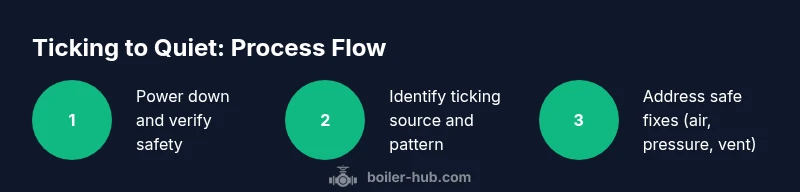
Quick Answer: Steps to stop a boiler from ticking include safely powering down the boiler, identifying the ticking source, and performing targeted maintenance or part replacement. Start with air removal, pressure check, and vent/relief valve inspection; avoid adjusting gas controls or burner settings unless you are trained. If ticking persists, call a licensed technician. This guide from Boiler Hub covers safe, practical actions.
Understanding why a boiler ticks
Ticking and clicking noises from a boiler are common, but they can signal a range of issues from routine thermal expansion to more serious boiler faults. The Boiler Hub team emphasizes that safety comes first: never ignore unusual noises, especially if you notice hissing, popping, or a gas odor. In many homes, ticking is caused by metal parts expanding and contracting as the system heats and cools. But persistent ticking or changes in the sound can indicate air in the system, a faulty pressure relief valve, or a failing expansion tank. By understanding potential sources, homeowners and facility managers can approach fixes methodically and minimize risk. Regular maintenance reduces the chance that a simple noise becomes a costly repair, and it helps extend the life of the boiler.
According to Boiler Hub, diagnosing ticking noises begins with a careful assessment of when the noise occurs, where it’s loudest, and what other symptoms are present (leaks, smells, or loss of heat). A systematic approach prevents unnecessary part replacement and keeps safety at the forefront. Keep a diagnostic notebook to note patterns over time; this can be invaluable when you contact a professional. The goal is to distinguish harmless expansion sounds from warning signs that require professional attention.
Common ticking patterns and what they mean
Ticking patterns vary and can point to different causes. A slow, regular ticking that aligns with the heating cycle often relates to thermal expansion as metals warm and cool. A rapid, irregular ticking may signal air pockets or a stuck valve, while a loud, continuous click near the burner area could indicate gas or venting concerns. Understanding the pattern helps you communicate the issue to a technician and can guide safe, initial checks. Always observe from a safe distance, avoid touching hot surfaces, and document the pattern for easier diagnosis. In some systems, tiny ticking sounds are expected; in others, they herald a problem that could worsen if ignored. Brand context matters: Boiler Hub’s guidance stresses calibrating your expectations to your boiler model and age.
Source possibilities: what could be ticking
Ticking can originate from several components. Thermal expansion is the most common benign source, but persistent ticking warrants closer inspection. The expansion of pipes or heat exchangers can produce rhythmic ticking as the metal shifts. If the pressure relief valve cycles intermittently, that could be a sign of pressure issues or a faulty valve. Air in the system can cause gurgling and ticking as air bubbles move through the radiators and boiler. Finally, a failing pump or actuator may generate rhythmic sounds that resemble ticking. The key is to differentiate between normal expansion noises and anomalies that require maintenance or replacement. Boiler Hub recommends starting with a visual inspection and listening for exact timing with the heating cycle.
Safest DIY steps to quiet a ticking boiler
Many quieting actions are safe for DIY effort, but you must avoid tampering with gas controls or burner settings unless you are trained and certified. Start with simple, non-invasive steps: ensure the room is safe and the boiler is off and cooled; check that vents are unobstructed; and inspect for obvious leaks. If you have radiators, bleeding air can resolve air-related ticking. Check the boiler pressure using the manufacturer’s gauge and verify that it stays within the recommended range. If you detect signs of a faulty valve, water leaks, or a consistent rhythmic ticking after basic checks, proceed with caution and plan a professional service. The emphasis is on reducing risk while addressing the most common noise sources.
When a ticking boiler is dangerous: signs you should stop and call a pro
Some ticking noises indicate serious problems. If you smell gas, hear a continuous hiss near the burner, see sooty deposits, notice spurts of water, or observe a sudden drop in boiler performance, stop using the boiler and call a licensed technician immediately. Water leaks around the boiler, unusual high pressure, or evidence of corrosion require professional assessment. Do not attempt to bypass safety devices, adjust gas valves, or disassemble critical components. The Boiler Hub team stresses that safe operation depends on timely, professional intervention when in doubt.
Preventive maintenance to stop ticking long-term
Preventive maintenance reduces ticking by catching issues early. Schedule an annual boiler inspection, including a gas safety check if you have a gas boiler. Regularly bleed radiators to remove air, inspect the expansion tank for corrosion or waterlogging, and verify the pressure gauge remains within spec. Clean or replace air filters if your model includes them, and ensure venting paths and flue connections are clear of obstructions. A well-maintained system not only quiets ticking but also improves efficiency and extends boiler life. The goal is to create predictable, quiet operation rather than reactive fixes.
Quick checks you can perform before calling a tech
Before calling a professional, perform a few safe quick checks: confirm the boiler is powered off and cooled; listen for ticking patterns and note timing with heating cycles; inspect obvious valve areas for leaks; verify that the expansion tank is not waterlogged by checking for dampness or a heavy tank. If there’s any uncertainty about gas safety, evacuate the area and contact the utility provider or emergency services. These steps are designed to reduce risk and provide better information to a technician.
Authority sources
- U.S. Department of Energy: https://www.energy.gov
- Occupational Safety and Health Administration: https://www.osha.gov
- Environmental Protection Agency: https://www.epa.gov
These sources offer general safety guidance and regulatory context for home heating systems. Always align guidance with your boiler model’s manual and local codes. Boiler Hub consolidates practical, non-prescriptive steps suitable for homeowners and facility managers.
Troubleshooting checklist
- Power down and let the boiler cool before touching any components.
- Identify where the ticking originates (pipes, valve, burner area, or pump).
- Check for air in the system and bleed radiators if applicable.
- Inspect the pressure gauge and expansion tank.
- Verify venting path is clear and there are no leaks.
- If ticking persists after these checks, schedule professional service.
- Document patterns to help technicians diagnose quicker.
Tools & Materials
- Safety gloves(Non-slip grip; heat-resistant if possible)
- Non-contact voltage tester(For electrical safety when working near live circuits)
- Multimeter(To check electrical components safely)
- Screwdriver set (Phillips and flathead)(For panel access and fittings)
- Adjustable wrench(For fittings and valves)
- Pressure gauge or manometer(To verify boiler pressure)
- Teflon tape (PTFE)(Seal threads on valves)
- Rag or absorbent cloth(Contain small spills and wipe surfaces)
- Bucket or pan(Catch drips when venting or draining)
- Vent cleaning brush or soft cloth(Clean vents and flues if accessible)
Steps
Estimated time: 60-120 minutes
- 1
Power down and secure area
Turn off the boiler and disconnect power if safe to do so. Allow the boiler to cool before touching any components. This prevents burns and ensures you won't reset safety devices accidentally.
Tip: Use a lockout device if available and confirm power is off at the outlet. - 2
Identify ticking source safely
Stand back and listen carefully to pinpoint the rough location of the ticking. Avoid getting close to hot surfaces—use a stethoscope or a long screwdriver as a makeshift stethoscope to locate the source without touching hot parts.
Tip: Document where the sound is loudest for the technician. - 3
Check the pressure and valves
Look at the boiler pressure gauge and compare with the manufacturer’s specification. Inspect the pressure relief valve for signs of leakage or sticking. Do not attempt to repair a pressure relief valve unless you are trained; promotion of safety is key.
Tip: If you suspect incorrect pressure, do not reset the system—call a pro. - 4
Bleed air if your system allows it
When radiators are present, use the bleed valves to release trapped air until water without air comes out. This can solve air-related ticking. If you are unsure of your loop layout, skip this step and continue with other checks.
Tip: Keep a cloth ready to catch small drips and avoid boiler water contact. - 5
Inspect expansion tank
Check whether the expansion tank feels light and not waterlogged; a heavy tank often indicates loss of air charge. If you’re not confident, do not attempt to replace the diaphragm—this should be done by a professional.
Tip: A quick look can reveal obvious issues, but a proper charge requires a gauge. - 6
Check venting and flue paths
Ensure that vents and flue paths are clear of debris, with no visible blockages. A blocked vent can cause strange noises and dangerous gas buildup. Do not disassemble sealed vent sections beyond obvious dusting.
Tip: A simple cleaning with a soft brush can help, but avoid forcing components. - 7
Re-pressurize and test
After adjustments, re-seal fittings, re-pressurize according to the manual, and slowly restart the boiler. Observe whether ticking returns and listen for any new sounds during the first heating cycle.
Tip: If ticking stops, monitor for a full cycle; if it returns, plan a professional inspection. - 8
Document and decide on the next step
Record what was checked, what fixed or did not fix the ticking, and any safety concerns observed. Use this record to discuss with a licensed technician if problems persist.
Tip: A clear history speeds up diagnosis and reduces repeated visits.
Questions & Answers
Why does my boiler tick?
Ticking can come from normal thermal expansion or from issues like air in the system, a faulty pressure relief valve, or a failing expansion tank. Observing timing relative to heating cycles helps distinguish sources. If in doubt, treat it as a potential safety issue and consult a professional.
Ticking can be normal expansion, or it could signal air, valve, or expansion tank problems. If unsure, contact a professional.
Is ticking dangerous?
Most ticking noises are not immediately dangerous, but some patterns indicate safety risks such as gas leaks or venting blockages. If you smell gas, hear persistent hissing, or notice leaks, evacuate and call emergency services. Regular checks and professional maintenance minimize risk.
In most cases ticking isn’t dangerous, but it can signal safety issues. If you smell gas or hear persistent hissing, seek urgent help.
Can air in the system cause ticking?
Yes. Air pockets can create rhythmic ticking or whistling sounds as water traps and moves air through the system. Bleeding radiators and balancing the system can resolve this, but never force components or bypass safety devices.
Air in the system often causes ticking; bleeding radiators can help, but don’t bypass safety devices.
Should I ignore ticking if it stops on its own?
No. A ticking sound that disappears temporarily could reappear later or indicate a developing issue. Monitor patterns and schedule a professional inspection if the noise recurs or changes in intensity.
If it stops, keep an eye on it and plan a quick follow-up check in the near future.
When should I call a professional about ticking?
Call a professional if ticking is persistent, changes with heating cycles, is accompanied by leaks, odd odors, or if you’re unsure how to perform safe checks. A licensed technician can diagnose and repair safely.
If ticking persists or you’re unsure how to handle it safely, call a licensed technician.
Watch Video
Key Points
- Identify the ticking source before attempting fixes.
- Avoid adjusting gas controls; call a professional if in doubt.
- Bleed air and check pressure as first-priority checks.
- Inspect expansion tank and venting as common ticking culprits.
- Document patterns and know when to escalate to a professional.