How to Stop a Boiler: Safe Step-by-Step Guide
Step-by-step guide to safely stop a boiler (gas or electric). This educational article prioritizes safety, proper shutdown, post-shutdown checks, and professional follow-up when needed.


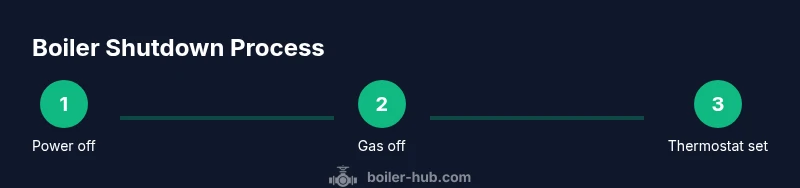
To stop a boiler safely, begin by turning off the boiler's power at the wall switch or breaker. If you have a gas boiler, close the gas shut-off valve outside or near the boiler. Then lower the thermostat to minimum and set the boiler to 'off' if available. In an emergency (gas smell, hissing noise), evacuate and call the gas emergency number.
Why stopping a boiler safely matters
Learning how to stop a boiler is a foundational safety skill for homeowners and facility managers. A deliberate shutdown protects you from burns, gas leaks, and pressure-related incidents, and it helps prevent damage to heat exchangers, pumps, and condensate lines. When you learn how to stop a boiler, you reduce emergency repair costs and downtime. According to Boiler Hub, many shutdown-related incidents stem from skipping steps or attempting to shut off only the thermostat. A structured, safety-first approach minimizes risk and preserves equipment longevity. This article uses practical guidance suitable for gas, oil, or electric boilers and emphasizes real-world steps you can perform without specialized equipment.
Boiler shutdown basics: types and controls
Boilers have different shutdown mechanisms depending on fuel type and installation. A gas-fired boiler may feature a service switch, a manual shut-off valve, and an automatic safety interlock. An electric boiler relies on a power switch or breaker, a thermostat setting, and safety relays. Oil boilers combine electrical controls with fuel shut-offs. Knowing which controls you have is essential to stop a boiler safely. If you know your boiler model, you can consult the owner’s manual for model-specific shutdown procedures. The goal is to disable power, stop fuel flow if applicable, and prevent re-ignition until the system has cooled and been inspected.
Emergency vs planned shutdown: what to do
In an emergency—such as the smell of gas, unusual hissing, or a sparking smell—prioritize personal safety first. Evacuate if advised to do so by local guidelines and contact the gas emergency number. For planned shutdowns (maintenance or servicing), follow a step-by-step sequence that includes powering down, fuel shut-off, thermostat adjustment, and verification that all indicators show a safe shutdown. Always move from least hazardous to most hazardous actions: power first, then fuel, then controls. This reduces the chance of accidental re-ignition or pressure surges.
Step-by-step shutdown checklist (high level)
When stopping a boiler, you typically follow a sequence: identify power sources, interrupt fuel supply if safe, adjust or set controls to off, and verify shutdown. The exact order can vary by model, but the safe practice remains consistent: power down, secure fuel, set controls to off, and allow the system to cool before inspection. Always keep an exit path clear and have a flashlight handy for working in tight boiler rooms. This high-level overview provides a safety-first framework you can adapt to your equipment.
Post-shutdown checks and maintenance planning
After stopping the boiler, inspect for any warning lights, leaks, or unusual sounds as the system cools. Do not attempt re-ignition or reset if you notice abnormal conditions. Document the shutdown steps you performed and consult the boiler manual or a licensed technician before restarting. Write down model information, location of shut-off valves, and any unusual behavior observed during shutdown. Regular maintenance and professional inspections help catch issues that simple shutdowns cannot resolve.
When to call a professional and what to expect
If you are unsure about any step, or you detect a gas leak, do not proceed—call a professional. A certified technician will verify gas integrity, inspect heat exchangers and safety interlocks, and test for leaks after shutdown. Expect an inspection report, recommended service intervals, and guidance on safe restart procedures. Boiler Hub recommends scheduling a professional check after any abnormal shutdown or emergency shutdown to confirm system integrity and safety.
Tools & Materials
- Boiler power switch or service disconnect(Locate on boiler or nearby; switch to OFF)
- Gas shut-off valve key or wrench(Only if you have a gas boiler; ensure safe access)
- Thermostat(Set to minimum or OFF )
- Safety gloves(Heat-resistant, non-slip for handling controls)
- Safety glasses(Protect eyes from any splashes or debris)
- Flashlight(Helpful in dark boiler rooms)
- Screwdriver set and adjustable wrench(For valve panels or service access if needed)
- Owner's manual for boiler model(Useful for model-specific shutdown steps)
Steps
Estimated time: 20-40 minutes
- 1
Identify the boiler power source and switch it off
Locate the boiler power switch or the service disconnect. Move the switch to OFF and confirm a visible change in indicators or a lack of live power. This prevents electrical hazards during any subsequent shutdown actions.
Tip: If the switch is hard to reach, use the main circuit breaker panel as a backup, but only if it is safe and accessible. - 2
Close the gas shut-off valve (if gas boiler)
If you have a gas boiler and can safely reach the shut-off valve, close it by turning the handle clockwise until it stops. Do not force valves that resist. This stops gas flow to the boiler and reduces ignition risk during shutdown.
Tip: Only perform this if you do not detect a gas odor or leak; if you smell gas, evacuate immediately. - 3
Lower the thermostat to minimum and set boiler OFF
Turn the thermostat down to its lowest setting or to OFF. This minimizes the chance of restart during the shutdown process and gives the system time to respond to the power and fuel cuts.
Tip: Avoid cycling the thermostat multiple times; a single, deliberate setting is safer. - 4
Turn off the boiler at the main electrical panel
If the boiler has a separate service switch or is connected to a breaker, switch the corresponding breaker to OFF. This ensures there is no residual power that could cause unexpected restart.
Tip: If you lock the panel or are unfamiliar with electrical safety, contact a professional instead of forcing access. - 5
Ventilate the area and avoid flames or sparks
Open nearby doors or windows to vent the space. Do not operate open flames, electric lighters, or power tools near the boiler while it is shutdown or cooling.
Tip: Keep children and pets away from the boiler room during and after shutdown. - 6
Wait for the system to cool and verify shutdown
Give the boiler time to cool before performing any checks or attempting a restart. Confirm that power indicators are off and there are no signs of vibration or steam.
Tip: If safe, perform a quick visual inspection for leaks once the area is cooled. - 7
Call a professional before restarting
If you observed leaks, gas odor, strange noises, or corrosion, contact a licensed technician before attempting to restart. They will perform a thorough safety assessment and proper recommissioning.
Tip: Document the shutdown steps you performed and any unusual observations to share with the technician.
Questions & Answers
When is it necessary to stop a boiler?
Stop a boiler when you detect safety risks such as gas odors, leaking fluids, or unusual noises. A controlled shutdown prevents damage and keeps occupants safe.
Stop a boiler whenever there’s a safety risk like gas odors or leaks. A controlled shutdown helps protect people and equipment.
Is it safe to adjust the thermostat when stopping a boiler?
Setting the thermostat to minimum helps prevent restart, but it does not replace turning off power and fuel valves. Always follow the shutdown sequence.
Setting the thermostat to minimum helps prevent restart, but you still need to cut power and fuel.
Can I shut off the gas supply while the boiler is running?
Only if you can reach the shut-off safely and there’s no immediate gas odor. If you smell gas, evacuate and call emergency services rather than attempting to shut off gas yourself.
Only if you can reach it safely and there’s no gas smell. If you smell gas, evacuate and call emergency services.
What signs indicate I need a professional immediately?
Gas smell, hissing noises, flame irregularities, visible leaks, or soggy electrical connections require professional assessment.
Gas smells or hissing noises mean a professional should check it right away.
What should I do after shutting down the boiler?
Ventilate the area, inspect for leaks after cooling, and contact a technician before restarting. Keep notes of all actions taken.
Ventilate, inspect for leaks after cooling, and contact a technician before restarting.
Watch Video
Key Points
- Prioritize safety before any shutdown actions.
- Know your boiler type and controls before stopping.
- Shut power, fuel, and thermostat in a deliberate sequence.
- Consult a professional after any abnormal shutdown.