How to Reduce Boiler Pressure on Vaillant
Learn to safely reduce Vaillant boiler pressure with a practical, step-by-step approach. Understand normal pressure ranges, bleed radiators, and正确 repressurize to restore efficiency and safety.


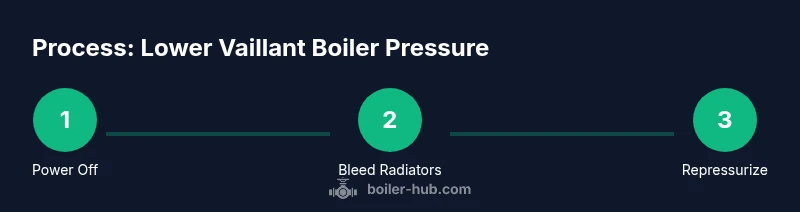
To reduce Vaillant boiler pressure, first switch off and let the system cool. If the gauge sits above 2 bar, bleed radiators to release some water and lower pressure, then repressurize using the filling loop to the recommended range of 1-1.5 bar when cold. If pressure remains high, stop and seek professional help.
Why high boiler pressure happens on Vaillant
Vaillant boilers, like many sealed heating systems, rely on a stable pressure to keep water circulating and the heat exchanger functioning safely. When pressure climbs beyond the manufacturer’s safe window, the boiler may lock out, vent hot water via the safety valve, or cycle on/off unexpectedly. Common causes include overfilling during service, a failing expansion vessel, radiator or pipe leaks, or rapid temperature changes in a short period. Regular checks help catch early warning signs: a rising gauge, frequent leaks, or water dripping around connections. In most Vaillant models, the normal cold pressure is around 1 bar and can rise toward 2 bar when the system is hot. The Boiler Hub team notes that small fluctuations are normal, but sustained high readings warrant investigation to prevent damage and inefficiency.
Understanding the pressure gauge and target range
Keep an eye on the gauge while the boiler is cold for a baseline reading. A typical Vaillant cold pressure is about 1 bar; when the system is hot, it may rise toward 2 bar. If readings exceed 2.5 bar, safety systems may trip or the boiler may shut down. Note that different Vaillant models have slightly different tolerances, so consult your manual for model-specific values. The pressure should settle within 1-1.5 bar when the system is cold after any bleeding or top-up. Understanding these ranges helps you decide whether bleeding or a minor top-up is appropriate, and reduces the risk of over- or under-pressurizing.
Safe, non-destructive methods to lower pressure
The safest way to reduce pressure is to remove some water from the loop by bleeding radiators, starting with the highest floor first. Use a radiator bleed key or screwdriver if required by your valves. Place a towel and container beneath the bleed valve to catch water. Open the valve slowly until you hear a hiss of air, then allow a small stream of water to escape until the gauge drops toward the 1-1.5 bar range. Close the valve promptly. After bleeding, recheck the pressure and repeat on other radiators if needed, ensuring you do not drain too much water. If the gauge remains stubbornly high, stop bleeding and don’t continue to release water. In most cases, you can avoid a top-up by bleeding only enough to reach the desired range.
When to call a professional
If bleeding radiators does not lower the pressure, or the gauge climbs again after a normal cycle, there may be a fault such as a worn expansion vessel, a hidden leak, or an unsafe valve. A professional HVAC technician can perform a full fault diagnosis, test the expansion vessel, and service the pressure relief system. Regular servicing helps prevent recurring pressure problems and prolongs boiler life.
Tools & Materials
- Radiator bleed key(One per radiator; ensure you have access for all zones)
- Old towels or cloths(Protect floors from water during bleeding)
- Container or bowl(Catch water from the bleed valve)
- Gloves (optional)(Protect hands while handling valves)
Steps
Estimated time: 45-60 minutes
- 1
Power off and cool the boiler
Switch off the boiler at the mains or control panel and allow at least 30 minutes for the unit to cool. Hot water and steam can cause scalding, and pressure readings can be unreliable when hot.
Tip: Never touch hot components; use a cloth when handling controls. - 2
Prepare the workspace and tools
Place towels and a container under the radiator valves. Confirm you have the bleed key or valve tool ready. This reduces mess and ensures you catch escaping water.
Tip: Have a friend nearby if you need an extra pair of hands. - 3
Bleed the highest radiator first
Starting with the highest floor radiator, slowly open the bleed valve using the key. Allow air to escape briefly, then close once water begins to flow steadily. Monitor the pressure gauge as it drops.
Tip: Open valve just a quarter to half turn to avoid a flood. - 4
Check gauge and bleed as needed
After each radiator, check the boiler pressure. If it remains well above 2 bar, bleed a little more from the next radiator. Do not drain to zero; you want to stay within the safe range.
Tip: Bleed in small increments to avoid over-releasing water. - 5
Repressurize if needed using the filling loop
If the pressure has dropped too much or you’ve completed the bleed and the gauge sits below 1 bar, carefully operate the filling loop to raise pressure back to the recommended 1-1.5 bar when the system is cold.
Tip: Do not exceed 1.5 bar when cold; over-pressurizing risks damage. - 6
Power up and test for leaks
Turn the boiler back on and observe for stable operation. Check radiators and valves for leaks over the next 24 hours. If pressure keeps rising, discontinue use and contact a professional.
Tip: Keep a log of readings for future maintenance.
Questions & Answers
What is the normal boiler pressure for a Vaillant boiler?
Most Vaillant boilers operate around 1 bar when cold and up to about 2 bar when hot. If the gauge stays above 2.5 bar, switch off the boiler and seek guidance. Refer to your manual for model-specific values.
For most Vaillant boilers, aim for about 1 bar when cold and no more than 2 bar when hot. If it climbs past 2.5, switch off and get help.
Can I reduce pressure by bleeding radiators?
Bleeding radiators can lower system pressure, but do so in small steps and monitor the gauge. If pressure remains high after bleeding, there may be an underlying fault such as a faulty expansion vessel.
Yes, bleeding radiators can help, but do it slowly and watch the gauge. If it stays high, you likely have a fault.
Why does Vaillant boiler pressure rise after bleeding?
Rising pressure after bleeding usually means the system was overfilled or there is a leak or expansion vessel issue. Bleeding reduces water volume; if the vessel is faulty, pressure can rebound quickly.
If pressure rises again after bleeding, you may have an expansion vessel problem or a leak.
Should I top up pressure after lowering it?
Yes. After lowering, bring the boiler pressure back to the manufacturer’s recommended range (usually around 1-1.5 bar when cold) using the filling loop. Do not exceed the limit.
Yes—top up to the recommended 1-1.5 bar when cold.
Is it safe to use the boiler's pressure relief valve to reduce pressure?
No. Manually opening a pressure relief valve can be dangerous and is not a recommended method for reducing pressure. Only trained technicians should handle this.
No—don’t use the relief valve yourself; call a pro if high pressure persists.
When should I call a professional?
If bleeding and topping up do not stabilize pressure or if the gauge repeatedly rises, schedule a service. A professional can test the expansion vessel, check for leaks, and service valves safely.
Call a pro if pressure still won’t stabilize after steps or keeps rising.
Watch Video
Key Points
- Know your target pressure: 1-1.5 bar when cold, up from 1 bar.
- Bleed radiators first to reduce pressure safely.
- If pressure remains high, investigate expansion vessel and leaks.
- Top up only to the recommended level after bleeding.
- Seek professional help for persistent or repeated pressure rises.