How to know if your boiler is working
Learn how to know if your boiler is working with practical, safe checks. This Boiler Hub guide helps homeowners identify faults early and prevent breakdowns.


You can quickly verify boiler function by confirming ignition, pressure, heat output, and stable electrical supply. Gather basic safety checks, access to the boiler, and a working pressure gauge. According to Boiler Hub, a practical quick check helps homeowners spot issues early and reduce the risk of breakdowns. This snippet targets common symptoms like no heat, strange noises, or leaks.
Understanding boiler status indicators
Boilers communicate status through a mix of indicators: flame presence, burner sound, pressure readings, and fault codes displayed on a digital panel or light sequence. According to Boiler Hub, a quick scan of these signals can reveal whether the system is operating within normal ranges or if a fault needs attention. Start by noting the boiler model and reading any error codes displayed. Having your owner's manual handy helps you map codes to likely causes. If you have a modern condensing boiler, a healthy heat exchanger and a consistent flame are typical signs of good performance. When something seems off—unusual noises, frequent cycling, or weak heat—record the symptoms and compare them to the troubleshooting section of your manual. This baseline makes it easier to identify when readings drift away from normal, and it gives you precise information when you call for service. The Boiler Hub Team also emphasizes documenting patterns over time to distinguish random glitches from developing faults.
Safety first: basic precautions before checking
Before touching any boiler components, ensure you switch off power at the breaker and set the thermostat to a safe setting. If your system runs on gas, never attempt to adjust gas valves or relight a pilot flame unless you are trained. Wait until the boiler has cooled and any heat-producing parts are safe to handle. Wear eye protection and gloves, and keep a clear path around the unit. If you smell gas or hear unusual hissing, exit the area and call the gas emergency line. These precautions protect you from burns, electrical shocks, and gas leaks while you perform a basic status check.
How to safely power down and reset your boiler
Power down the boiler using the main switch or the breaker, and allow at least 5–10 minutes for components to discharge. If your manual provides a reset procedure, follow it precisely and do not force anything. After resetting, re-energize the system and observe whether ignition occurs and the flame stabilizes. If you see a fault code reappear, note the exact code and refer to your manual or contact support. Resetting is a common first step for temporary glitches, but repeated resets may mask a deeper problem.
Reading the pressure gauge and temperature display
Locate the pressure gauge on the front panel; typical residential systems should sit between 1 and 1.5 bar when cold and rise slightly when operating. If the pressure is too high or too low, you may experience insufficient heat delivery or no heat at all. Check the temperature display to confirm that the water is approaching the setpoint and that the radiators warm evenly. Document the readings with a note of the boiler model, ambient temperature, and whether the readings change when the system cycles on or off. Small deviations are normal, but large swings warrant professional assessment. The panel might also show fault codes that guide diagnostic steps.
Verifying heat output and hot water delivery
Turn up the thermostat to demand heat and observe how quickly radiators begin to warm and whether domestic hot water becomes available. Listen for the burner igniting smoothly and maintaining a steady flame. If some radiators stay cool while others heat, there may be balancing or circulation issues. If you have a combi boiler, ensure you are drawing hot water from a tap and that there is no cold water shock. If the system is not delivering heat within a reasonable time, note the time to ignition and compare it to your boiler’s typical performance range.
Common symptoms and what they indicate
Frequent cycling or short burn times can point to overheating, improper flow, or a faulty thermostat. Banging, gurgling, or abnormal noises may indicate air in the system or a failing heat exchanger. Leaks or damp patches around valves, seals, or the flue suggest a seal failure or corrosion. No heat with a functioning display could mean a broken pump, airlock, or frozen pipes. Each symptom narrows down potential causes, but many issues share similar signs, so keep notes to guide a professional assessment. Boiler Hub analyses repeatedly show that symptoms evolve, not appear in isolation.
Quick fixes you can try (non-invasive)
Bleed radiators to remove air pockets and restore even heat distribution. Check for blockage in the condensate pipe or frost protection valves (if present). Replace worn seals or tighten loose fittings where safe to do so. Do not open burner casings or attempt internal repairs. If you’re unsure, switch off the boiler and contact a licensed technician. These steps can improve performance without specialized tools when done correctly.
When to call a professional: red flags
Call a technician if you notice a persistent loss of pressure, water leaks, a burning smell near the boiler, or the unit failing to ignite after multiple reset attempts. Recurrent fault codes, furnace-like smells, or a fuel spill are clear indicators that you need expert help. Timely service can prevent costly damage and prolong boiler life, especially for older or high-use systems. Always use a gas-safe or qualified technician for gas boilers. The Boiler Hub Team recommends scheduling annual inspections to catch issues early.
Maintenance checklist to keep boilers reliable
Schedule annual servicing and annual gas safety checks as appropriate for your system. Inspect the flue and ventilation for blockages and ensure the air intake is clear. Test safety controls, such as the high-limit thermostat and pressure relief valve, during a service. Keep the area around the boiler clean and free of clutter. Replace worn gaskets and seals as recommended by the manufacturer. A proactive maintenance routine reduces the likelihood of breakdowns and improves efficiency. Boiler Hub emphasizes consistency and record-keeping for long-term reliability.
Practical troubleshooting flowchart
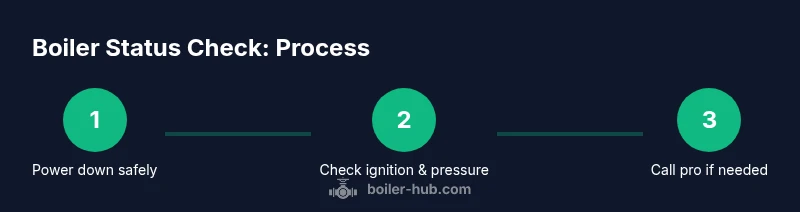
Having a plan helps you decide between simple fixes and escalation. Use a simple flow: 1) Is there heat? 2) Is the pressure in the normal range? 3) Any fault codes? 4) Did a reset fix it? 5) If issues persist, contact a professional. This approach reduces unnecessary service calls and speeds up resolution while keeping safety central.
Tools & Materials
- Owner's manual for your boiler(Model-specific steps and safety guidance)
- Safety gloves(Heat-resistant, EN 388 recommended)
- Flashlight(Bright LED for inspecting joints and flue)
- Screwdriver set (flat and Phillips)(For minor panel screws if accessible)
- Wrench set(For radiator valves if accessible)
- Bucket or tray(To catch drips during bleeding)
- Rags and cleaning cloths(Wipe spills and keep area tidy)
- Non-slip footwear(Safety shoe recommended)
Steps
Estimated time: 60-90 minutes
- 1
Power down safely and prepare
Turn off the boiler at the main switch or breaker and set the thermostat to a safe level. Gather your manual and basic tools, and ensure the area around the boiler is uncluttered.
Tip: Wait 5–10 minutes for any residual heat to dissipate before touching components. - 2
Check ignition status and burner
Listen for the ignition sound and look for a steady flame. If there is no flame, note any fault codes displayed and avoid forcing ignition.
Tip: Do not attempt to reignite a gas boiler unless you are trained and follow the manufacturer procedure. - 3
Inspect pressure gauge
Read the pressure gauge; typical cold range is around 1 bar, rising slightly when heating. Record whether it moves when the system cycles.
Tip: If the pressure is outside the normal range, avoid adjusting valves unless directed by the manual. - 4
Test hot water delivery
Turn on hot water and observe how quickly it heats and reaches the set temperature. Check for an even temperature at taps.
Tip: Note time to heat and any temperature fluctuations for reference. - 5
Bleed radiators
With a radiator key, release trapped air from radiators one at a time. Catch drips in a bucket and repressurize if required.
Tip: Bleed from the highest radiator first to improve system balance. - 6
Check for leaks and seals
Visually inspect joints, pipes, and seals for dampness or corrosion. Wipe any minor spills and note locations for service if leaks persist.
Tip: Even small leaks can worsen; schedule a professional check if leaks appear. - 7
Reset the boiler
If the manual allows, perform a controlled reset and observe for a normal restart. Do not continue if fault codes reappear.
Tip: Only reset once; repeated resets may conceal a deeper issue. - 8
Reassess performance
Recheck heat output, ignition, and gauge readings after a test cycle. Compare to your initial baselines.
Tip: Keep a log of readings to track trends over time. - 9
Document findings and plan next steps
Record gauge ranges, temperatures, symptoms, and any codes. Decide whether further at-home checks are safe or if professional service is required.
Tip: Include model, serial, and service history for future reference.
Questions & Answers
What counts as a boiler working properly?
A boiler is working if it ignites reliably, reaches set temperature, delivers heating or hot water as requested, and shows no fault codes. Regular operation should be quiet, with no leaks or corrosion. If readings deviate, document them for service.
A working boiler ignites reliably, heats water and radiators, and shows no fault codes.
What are common signs my boiler isn't working?
No heat, no hot water, frequent cycling, unusual noises, leaks, or pressure readings out of range are typical signs a fault exists. Check the basics first and note any fault codes.
No heat, no hot water, odd noises, leaks, or pressure drift signal potential faults.
Can I fix boiler issues myself?
Some safe checks like bleeding radiators or a manual reset are fine. Do not adjust gas valves or open internal components unless you are a licensed technician. Persistent issues require professional service.
You can do simple checks, but avoid gas valves or opening the unit—call a pro for repairs.
What should I do if there is no heat but the boiler is on?
First verify the thermostat and water flow. If the issue persists, inspect pressure and radiators, but if unresolved, shut down safely and contact a technician.
If there's no heat but the boiler is on, check thermostat, pressure, and radiators, then call a pro if it persists.
How often should I service my boiler?
Most boilers benefit from annual servicing by a qualified technician, with additional checks if performance changes or unusual sounds occur.
Most boilers should be serviced once a year by a qualified technician.
What is a pressure drop and why does it matter?
A sudden pressure drop can indicate leaks or air in the system. Monitor the gauge and seek professional help if it doesn't stabilize.
A pressure drop signals trouble—look for leaks or air in the system and contact a pro if it doesn't stabilize.
Watch Video
Key Points
- Verify ignition, pressure, and heat output first.
- Document readings and fault codes for service clarity.
- Do not perform dangerous internal repairs; call a professional when needed.
- Regular maintenance improves reliability and efficiency.