How to know if my boiler is on
Learn reliable methods to verify boiler operation with safe checks, display cues, and control settings. This step-by-step guide from Boiler Hub covers power, thermostat, and common indicators to confirm your boiler is active.


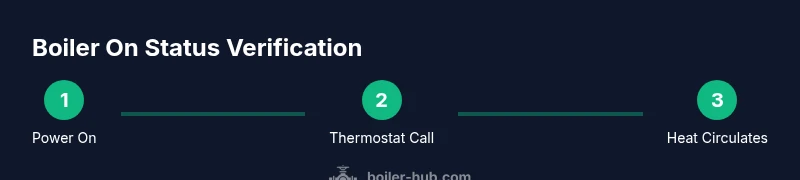
The quickest way to know if your boiler is on is to check power, listen for the burner or circulator, and read the display or indicator lights. Verify that heat is actually circulating by feeling return pipes and checking the thermostat against room temperature. This 2-minute check helps you confirm status safely.
What does it mean when a boiler is on or off?
According to Boiler Hub, understanding boiler on/off status is essential for safe heating and reliable comfort. When the boiler is on, the control system powers up, the burner or circulator activates, and hot water or steam begins to move through the system. Off state usually means no power, a cooled heat exchanger, and no movement of hot water. Recognizing the difference helps prevent unnecessary service calls and supports energy efficiency. In this section we explore what indicators to expect and how to interpret them in everyday home heating scenarios.
Quick sanity checks you can perform safely
Before diving into technical checks, there are a few high-level, safe steps you can take. Start with the simplest: confirm the boiler’s power switch is in the ON position and the circuit breaker is not tripped. If a programmable thermostat controls the system, verify it is set to a temperature that should trigger heating and that it is communicating with the boiler. Do not touch fuel lines or combustion components unless you are trained to do so. These quick checks can save time and reduce unnecessary worry when assessing boiler activity.
Visual indicators of an active boiler
Look for clear signs that the boiler is operating: a warm boiler cabinet, a ticking or buzzing sound indicating a burner or circulator cycle, and a consistent flame if you have a gas boiler (note: never inspect a flame up close). The presence of hot water circulating through radiators or baseboard heaters is another strong cue that the boiler is on. If the display shows a running status icon, countdown timer, or a text reading that matches your intended heat setting, this is typically a positive signal. Remember that some boilers operate quietly; absence of noise does not always mean off.
Checking the power supply and main switch safely
Power availability is foundational to boiler operation. Start by inspecting the switch on the boiler itself and the wall outlet or circuit breaker feeding the unit. If you have a hard-wired boiler, verify the disconnect switch is ON and that the house supply provides power to the boiler room. Use a non-contact tester to confirm voltage at accessible terminals only if you are trained and comfortable with electrical work. If you sense a fault (burning smell, traced overheating, or obvious damage), stop and call a professional immediately.
Reading the boiler display and status codes
Many modern boilers present status indicators on a digital display or LEDs. A steady power symbol, a running indicator, or a heat-readout often confirms that the boiler is on. If you see error codes, blinking lights, or unfamiliar symbols, consult the user manual or manufacturer’s website for the exact meaning. Do not ignore codes related to pressure, temperature, or flame safety, as these can signal safety concerns that require service.
Thermostat and control settings involved in boiler operation
The thermostat and boiler controls must be synchronized for the boiler to stay on as expected. Ensure the thermostat is calling for heat, the setpoint is above room temperature, and there is no obstruction of dials or sensors (dust, loose wiring, or moisture can affect readings). In a multi-zone system, verify that the zone valves or pumps are opening and that the boiler is responding to calls from the thermostats. If the thermostat is old or battery-powered, consider replacing batteries or upgrading to a programmable model for more reliable signaling.
Common causes of false readings or misunderstandings
Misreads happen if you rely on one cue alone. A silent boiler might still be on if a circulator is running with a short cycle, or the flame sensor is temporarily obstructed. Conversely, an active radiator can feel hot while the boiler briefly cycles off due to high outdoor reset settings or an overlarge room. Electrical glitches or thermostat misconfigurations can also create apparent status discrepancies. Cross-check multiple indicators (display, sound, heat circulation) to confirm operation.
Safety risks and precautions when inspecting a boiler
Never attempt to open gas valves, fuel lines, or combustion chambers unless you are qualified. If you smell gas, hear hissing, or detect a strong flame outside the burner, evacuate immediately and contact your gas supplier or emergency services. Wear protective gloves and eye protection if you must inspect exposed components, and power down the unit safely before touching any wiring. Regular maintenance by a licensed technician is the best way to ensure accurate status checks and safe operation.
Quick verification checklist to confirm boiler on status
Use this concise checklist to reduce confusion:
- Ensure the boiler and power switch are ON and circuit breakers are closed.
- Confirm the thermostat calls for heat and is set above room temperature.
- Check the display for a running status, heat symbol, or temperature readout.
- Listen for the burner, pump, or fan activity, and feel radiators or pipes for heat transfer.
- If in doubt, wait 2–3 minutes to observe consistent activity before taking action.
When to call a professional for boiler status concerns
If indicators are ambiguous, you notice unusual noises, signs of moisture near the boiler, or repeated on/off cycling, contact a licensed boiler technician. Do not attempt repairs beyond basic safety checks. A pro can diagnose control issues, flame quality, pressure problems, or sensor faults that could pose safety risks.
Tools & Materials
- Flashlight(Bright LED; hands-free preferred (headlamp or cap light).)
- Non-contact voltage tester(Used to verify power at access points without touching live wires.)
- Screwdriver set(Flat and Phillips; for accessing service panels if you are trained.)
- Owner’s manual(Helpful for model-specific indicators and codes.)
- Protective gloves(Heat-resistant if handling hot surfaces after shutdown.)
- Thermometer or IR temp gun(Useful to verify radiator and pipe heat flow.)
Steps
Estimated time: 60-90 minutes
- 1
Verify main power is on
Check the boiler switch and the corresponding wall outlet or disconnect. Ensure the circuit breaker feeding the boiler is not tripped. If you power down for safety, wait until you can safely restore power before testing again.
Tip: If the breaker trips repeatedly, there may be a short or overload; consult a professional. - 2
Check thermostat call for heat
Confirm the thermostat is set to a higher temperature than the current room temperature and that it is communicating with the boiler. If you have a programmable model, review schedules that might delay activation.
Tip: Refresh the thermostat display or replace batteries if readings appear unstable. - 3
Look at the boiler display indicators
Read the status indicators on the boiler control panel. A running icon, flame symbol, or temperature reading usually confirms that the boiler is active. If your model uses LEDs, note which lights are illuminated.
Tip: Document codes or symbols you see for later reference when troubleshooting. - 4
Listen for burner and circulator activity
With the boiler powered and the thermostat calling for heat, listen for a burner ignition or a hum from the circulator pump. If you hear no sound after a short delay, there may be an ignition or pump issue.
Tip: Keep ears at a safe distance and avoid placing hands near moving components. - 5
Feel for heat circulation
Check radiators, baseboards, or hot water pipes for warmth. If heat isn’t flowing but the boiler is on, the issue may be with a valve, pump, or air lock in the system.
Tip: Be cautious of hot surfaces; use a glove to check if needed. - 6
Inspect for error codes or fault indicators
If an error code appears, compare it to the manual or manufacturer site to understand the fault. Codes often point to pressure, flame safety, or ignition concerns.
Tip: Do not ignore codes; many indicate safety-related shutdowns. - 7
Review multi-zone controls (if applicable)
In homes with multiple zones, confirm valves or pumps are opening when heat is called. A zone that stays closed can give the impression the boiler is off.
Tip: Test by forcing a zone call and observing valve/pump response. - 8
Power down safely if you’re unsure
If you smell gas, hear hissing, or see obvious damage, shut down power and fuel supply only if you are trained—otherwise evacuate and call professionals.
Tip: Always prioritize safety over diagnostics. - 9
Document and plan next steps
Record what you observed, including readings, noises, or codes. Use this information when contacting a professional to speed up diagnosis.
Tip: Keep a simple log near the boiler for quick reference. - 10
Schedule professional service if needed
If uncertainty remains after checks or if signs of a fault persist, arrange a service visit with a qualified technician.
Tip: Regular maintenance reduces the risk of unclear boiler status in the future.
Questions & Answers
How can I tell if my boiler is on without touching anything?
Check the power switch, verify the display shows a running icon or temperature reading, and listen for the burner or circulator. If unsure, rely on multiple indicators rather than a single cue.
You can tell by checking the display and listening for the burner, and by feeling heat movement in the system. If in doubt, review the full guide.
My boiler seems cold but is not producing heat. Could it still be on?
Yes, it could be in a short cycle or awaiting a heat call. Verify thermostat settings, zone valves, and the circulator. If still uncertain, perform a safe step-by-step check and consult a technician if needed.
It might be on but not delivering heat yet due to a cycle or valve issue. Check thermostat and valves, and if unsure, seek professional help.
What should I do if the boiler display shows an error code?
Refer to the manual for the exact code meaning. If the issue involves pressure, flame, or ignition, stop using the boiler and contact a licensed technician.
If you see an error code, check the manual for its meaning and call a professional if it indicates a safety issue.
Can a thermostat mislead me about boiler status?
Yes. A faulty thermostat or weak batteries can misreport heat calls. Check battery status, recalibrate, or replace the thermostat if readings are inconsistent.
A bad thermostat can mislead you; verify by cross-checking with the boiler’s display and zone valves.
Is it unsafe to touch boiler components to check status?
Only touch what you are qualified to handle. Do not open fuel lines or combustion chambers. If in doubt, power down and call a professional.
Only touch safe exterior components. For anything internal, contact a pro.
When should I call a professional for boiler status concerns?
If indicators are inconsistent, you sense gas odors, or you see signs of damage, schedule a licensed boiler technician visit.
If things don’t add up or you notice damage, call a professional.
Watch Video
Key Points
- Verify power, thermostat, and display when checking boiler status
- Use multiple indicators to confirm operation before actions
- Document codes and symptoms to inform professional diagnoses
- Prioritize safety; call a pro for complex or dangerous checks