How to Fix Boiler Ignition: A Practical DIY Guide
Learn how to diagnose and fix boiler ignition issues safely with our step-by-step guide. Includes safety tips, tools, common causes, and when to call a pro. Ideal for homeowners and facility managers seeking practical troubleshooting insights.


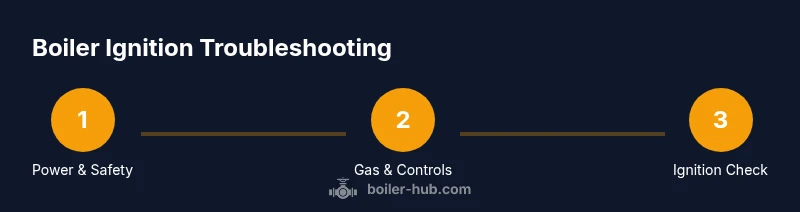
To fix boiler ignition, start with basic safety checks, verify power, gas supply, and the thermostat, then reset the boiler and inspect the ignition electrode for dirt. If the boiler still won't ignite or you smell gas, shut off power and gas and call a licensed technician. This guide covers safe steps and escalation.
Understanding Boiler Ignition: What It Is and Why It Fails
Boiler ignition is the moment when a gas-fired boiler lights and begins heating water. In most modern boilers, a gas valve opens, an electronic ignition or hot-surface igniter creates a spark or heat, and a flame sensor confirms that combustion has started. When ignition succeeds, a safe flame is established and the system continues to operate. When ignition fails, the boiler will typically display an error code or emit a fault signal, and it may cycle off to prevent unsafe conditions. Understanding the sequence helps you identify where trouble starts.
Most residential ignition problems fall into a few broad categories: power or control issues (a tripped breaker or failed pressure switch), a blocked or shut-off gas supply, dirty or damaged ignition components (electrodes or flame sensor), or venting problems that prevent proper combustion. The Boiler Hub Team notes that many ignition faults arise from routine maintenance being neglected, especially dirty components or a blocked vent. Quick checks that respect safety can rule out several common causes before calling a pro.
sectionEndNoteRequired":false},{
Tools & Materials
- Non-contact voltage tester(Test boiler power at disconnect box or switch; ensure no live circuits before touching electrical components.)
- Flashlight(Bright, handheld light to inspect hard-to-see ignition area.)
- Owner’s manual or model-specific guide(Having your exact model helps verify reset procedures and service intervals.)
- Soft cloth or non-abrasive brush(Gently clean spark electrodes and flame sensor; avoid scratching surfaces.)
- Safety gloves and eye protection(Personal protection during inspections.)
- Ventilated workspace(Ensure the area is well-ventilated before inspecting the boiler.)
Steps
Estimated time: 45-60 minutes
- 1
Power down and ensure safety
Turn off the boiler’s electrical supply at the switch or service panel. If you can safely do so, switch off the gas supply at the valve only after you have confirmed there is no gas odor and you are in a ventilated area. This first step minimizes the risk of electric shock or accidental ignition while you inspect fixtures.
Tip: Verify there is no live power with a non-contact tester before touching any wiring. - 2
Check power and perform a soft reset
Confirm the boiler is not displaying a fault code and that the power supply is stable. Use the reset function per your manual by holding the reset button for the recommended duration (often a few seconds). This can clear transient faults that prevent ignition.
Tip: If you cannot locate the reset button, refer to the model guide or contact support for the exact procedure. - 3
Verify thermostat and control settings
Make sure the thermostat is set higher than the current water temperature and that the boiler controls (like economy mode) aren’t suppressing ignition. A mis-set thermostat can prevent the system from initiating combustion.
Tip: Look for a lockout indicator or fault code on the boiler’s display if present. - 4
Inspect gas supply and shut-off valve
Check that the gas shut-off valve is fully open and that any secondary valves are in the correct position as per the manufacturer’s instructions. If you sense a gas odor at any point, discontinue troubleshooting immediately and evacuate.
Tip: Do not attempt to override safety devices or bypass gas controls. - 5
Examine ignition components accessible
With the service panel open (if safe to do so), inspect visible ignition components. Clean soot, dirt, or moisture from the spark electrode and flame sensor with a dry cloth. Do not use liquids or solvents that could damage components.
Tip: Handle components gently; damaged parts should be inspected by a professional. - 6
Attempt a safe re-ignite
Re-enable power and attempt ignition as per the manual. Observe whether a spark occurs and if a flame starts. If the flame does not establish within a short window, stop and proceed to professional service.
Tip: Do not stand directly in the flame path or lean into the burner area. - 7
Document results and plan next steps
Record any fault codes, observations, and the exact steps you took. This information helps a technician diagnose the issue faster. Schedule professional service if ignition still fails after the checks.
Tip: Include model number, serial, and last maintenance date when you contact a pro. - 8
If you smell gas, evacuate and call for help
Gas smells require immediate action: evacuate the area, avoid using switches or phones near the gas odor, and call the gas emergency line from a safe location. Do not attempt to relight a boiler in this scenario.
Tip: Always prioritize safety; a professional should verify gas integrity before any restart.
Questions & Answers
What are the most common signs of ignition problems?
Common signs include fault codes or indicators on the boiler, a clicking sound without flame, no flame after ignition attempts, or repeated cycling of the boiler. These clues point to ignition, gas, or sensor issues that require inspection.
Look for fault codes and a lack of flame after attempting ignition. If you hear clicking but see no flame, there may be a sensor or spark issue.
Is it safe to troubleshoot boiler ignition myself?
Basic safety checks can be done, such as ensuring power and thermostat settings and inspecting for obvious signs of gas odor. Do not touch gas controls beyond basic checks, and never bypass safety interlocks. If in doubt, contact a licensed technician.
You can do some simple safety checks, but don’t bypass safety systems. When unsure, call a pro.
What should I do if I smell gas during troubleshooting?
If you smell gas, evacuate immediately, avoid creating sparks, and call your gas emergency number from a safe location. Do not operate electrical switches or phones near the odor.
Gas odor means danger—leave the area and contact emergency services right away.
How often should I service my boiler to prevent ignition problems?
Regular annual servicing by a qualified technician helps prevent ignition problems by cleaning components, testing safety devices, and ensuring venting is clear.
Annual service keeps your boiler reliable and safe.
Can low water pressure affect ignition?
Yes, very low pressure can affect ignition indirectly by triggering safety interlocks or reducing combustion stability. If you notice pressure changes, have the system inspected.
Low pressure can trigger safety shutoffs, so get it checked.
When should I call a professional for ignition issues?
If you encounter persistent ignition failures after basic checks, the presence of gas odor, or if you’re uncomfortable performing any step, call a licensed boiler technician.
If in doubt, it’s best to call a professional for safety and accuracy.
Watch Video
Key Points
- Prioritize safety; power down and ventilate before touching any boiler parts.
- Ignition failures are often due to dirty electrodes, sensors, or interrupted gas supply.
- Use the reset and thermostat checks as quick first steps before deeper inspection.
- When in doubt or if gas is involved, contact a licensed technician for service.