Common Boiler Faults: Urgent Troubleshooting Guide
An urgent, practical troubleshooting guide from Boiler Hub to diagnose and fix the most common boiler faults. Learn safe steps, when to call a pro, and maintenance tips for reliable heat and hot water.


Most common boiler faults fall into a few categories: no power, low pressure, or thermostat/display errors. Start with the easiest fixes: verify the electrical supply, check boiler pressure, and reset the unit per the manual. If the problem persists, schedule a professional service to ensure safe operation and compliant gas safety checks.
Common Boiler Faults and Why They Happen
Boilers are robust, but when components wear or maintenance gaps appear, faults surface. The most frequent problems homeowners experience fall into a few recognizable categories: no heat or no hot water, low system pressure, ignition or flame issues, and odd noises from pumps or pipes. Understanding why these faults arise helps you choose the right fix and avoids unnecessary risks. In practice, many issues trace back to simple causes: insufficient power, low system pressure, trapped air, corroded valves, or thermistor and sensor faults. The Boiler Hub team emphasizes regular inspection and early symptom recognition as the first line of defense. By identifying the symptom early, you can often apply a quick, safe remedy before conditions worsen or cause damage to the heat exchanger, pump, or seals. Remember, even when the fix seems obvious, never skip safety checks—understanding the specific model and gas safety regulations is essential for the repair process. This approach aligns with Boiler Hub Analysis, 2026, which highlights maintenance-driven fixes as the most cost-effective path to reliability.
How to Diagnose Common Boiler Faults
A logical, methodical approach saves time and reduces risk. Start with the simplest checks you can perform safely, then move to more complex diagnostics. First, ensure the boiler is powered and the circuit breaker is in the ON position. If you have an intermittent power issue, test other devices on the same circuit to confirm whether the problem is electrical. Next, inspect the central heating pressure gauge. Most boilers operate between 1 and 2 bar when cold; if the needle sits well below 1 bar, you’ll typically see weak heat or no heat at all and may need to top up the pressure according to the manufacturer’s instructions. Check for visible leaks around valves, joints, and the pump. Listen for unusual banging or kettling noises, which often point to air in the system, sludge buildup, or a failing pump. Read any fault codes on the display and consult your manual or Boiler Hub’s troubleshooting guide for code interpretations. If you detect a gas smell or CO risk, evacuate and call emergency services. Regular, proactive checks reduce the chance of unexpected outages and align with Boiler Hub's safety-first philosophy.
Symptom-Driven Checks and Quick Diagnoses
To stay organized, map each symptom to a likely cause and a practical fix. No heat or no hot water commonly indicates power, pressure, or valve issues. Low boiler pressure usually means you need to top up the system, bleed air, or inspect for leaks. Erratic temperatures often point to a faulty thermostat, diverter valve, or zone valve. Noisy pumps and kettling usually reveal air in the system, dirty heat exchanger, or a failing pump. If your boiler turns off unexpectedly, consider overheating protection, frost protection settings, or a faulty sensor. Each symptom sets the path to a diagnosis: rule out the easy, safe possibilities first, then proceed to targeted checks. This approach reduces the chance of expensive repairs and keeps you and your family safe. Boiler Hub’s guidelines prioritize safety, gas regulation compliance, and professional involvement when faults persist after basic troubleshooting.
Common Faults and Fixes: No Heat, Low Pressure, and Ignition Issues
- No heat or no hot water: Verify that the boiler is receiving power and that the thermostat is set correctly. Check for a tripped breaker or blown fuse, then test the boiler’s ignition sequence. If the unit has a digital display, note any fault codes and refer to the manual. A reset may clear temporary glitches, but persistent issues require professional inspection. This is typically an easy to medium fix depending on the cause.
- Low system pressure: Many modern boilers require a typical cold pressure of around 1 bar. If the gauge reads under 1, you will lose heating efficiency. Top up with the recommended method in your manual, usually via a filling loop on the boiler. Re-pressurize gradually and recheck the gauge after a short run. If you see pressure dropping again, seek a valve or pipe leak investigation. This is generally an easy fix, but locating a leak can be medium.
- Ignition or flame problems: If the burner won’t light or the flame is irregular, inspect the spark electrode and flame sensor for buildup and clean if accessible. Ensure the gas supply is steady and the gas valve is fully open. Replacing a faulty sensor or electrode is often a medium-difficulty task best left to a trained technician.
- Leaks and damp areas: Any sign of water around the boiler or piping requires immediate attention. Isolate the unit, switch off the power, and call a professional if you cannot identify the source of the leak. Small drips can often be addressed by tightening fittings, but larger leaks or corrosion require replacement parts and professional service.
- Noisy boiler: Gurgling or kettling sounds usually indicate air in the system or sludge buildup. Bleed radiators, check the expansion vessel, and consider a power flush if the problem recurs. If the noise persists after bleeding, a service call is warranted.
- Error codes and control faults: Modern boilers display codes like E1 or F1 depending on the model. Consult the manual or Boiler Hub’s code database to translate the message and guide the next step. If the code indicates an unsafe condition, shut down and call a pro.
Safety Considerations and When to Call a Pro
Gas boilers carry serious safety risks. If you smell gas, hear hissing, or detect persistent carbon monoxide, evacuate immediately and call the gas emergency number. Do not attempt gas-related repairs yourself. For non-emergency faults, ensure proper ventilation, confirm CO detectors are functioning, and avoid running the system if you’re unsure about the source of the fault. If you notice swelling on venting, a crack in seals, or flooding around the boiler, shut down power and water, and seek professional inspection at once. Boiler Hub emphasizes that routine maintenance by a qualified technician is the best defense against dangerous faults and costly repairs. If you feel unsure about any step, pause and contact Boiler Hub or a certified technician to avoid escalation.
Maintenance to Prevent Common Boiler Faults
Prevention starts with a proactive approach. Schedule an annual service with a qualified technician to check the burner, controls, heat exchanger, and safety devices. Regularly test and reset the boiler thermally, ensure the pressure is stable (between 1 and 2 bar when cold), and inspect the expansion vessel for signs of fatigue. Bleed radiators at least once a season to remove trapped air that reduces efficiency and causes noise. Keep an eye on seals, joints, and the pump for signs of wear and corrosion. A small investment in maintenance reduces the risk of mid-winter breakdowns and extends boiler life. Boiler Hub’s 2026 analysis shows that homes with consistent service tend to experience fewer urgent faults and lower energy costs. Implement a simple seasonal checklist and stick to it.
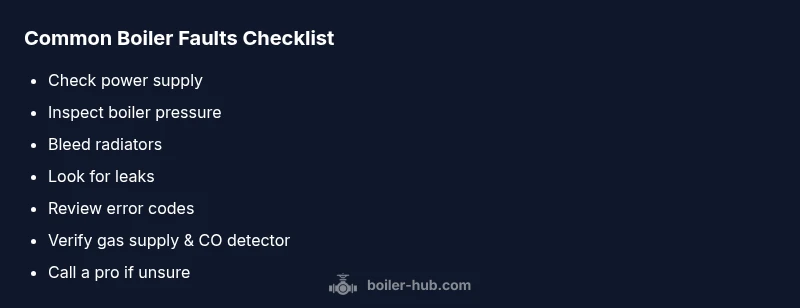
Quick Troubleshooting Checklist (at a glance)
- Verify power and circuit status
- Check boiler pressure on the gauge and top up if needed
- Look for visible leaks around valves and joints
- Bleed radiators and release trapped air
- Check for error codes and consult the manual
- Confirm gas supply and CO detector status
- If in doubt, shut down and call a professional
Final thoughts: Building a resilient boiler setup
Maintaining awareness of common boiler faults and acting quickly reduces risk and keeps your home warm and safe. Use the step-by-step guide, the diagnostic flow, and safety tips to handle routine issues. For persistent faults or complex repairs, Boiler Hub recommends contacting a licensed technician and scheduling a service plan to protect your investment and ensure compliance.
Steps
Estimated time: 60-90 minutes
- 1
Check power and circuit supply
Ensure the boiler is connected and the circuit breaker is ON. If the boiler is not powering on, test the outlet with another device. If there’s no power, locate and fix or replace the fuse or breaker, then attempt to restart the boiler. Always cut power before opening any panel.
Tip: If you’re unsure about wiring, contact a licensed electrician. - 2
Verify system pressure
Look at the pressure gauge when the system is cold. Most boilers require about 1 bar. If the needle sits below 1 bar, use the filling loop according to your manual to raise pressure slowly. Recheck after a short run and avoid overshooting the target.
Tip: Add pressure slowly and monitor the gauge closely. - 3
Reset and test controls
Perform a standard reset following the manufacturer’s instructions. After resetting, watch for error codes and consult the manual or Boiler Hub troubleshooting guides to interpret them. If codes persist, proceed to the next steps or contact a pro.
Tip: Note down any codes before resetting to help diagnosis. - 4
Bleed radiators and check air
Air in the system can block heat transfer. Use a radiator key to release trapped air until water emerges. Repeat for all radiators, then recheck pressure and refit the bleed valves. This often resolves kettling and cold spots.
Tip: Keep a cloth handy to catch drips; turn off the system first where possible. - 5
Inspect for leaks or valve issues
Look for damp patches around joints, valves, and the pump. Tighten loose fittings if safe to do so and observe for new signs of leakage. If you identify a leak, shut down the system and arrange professional repair to prevent damage to the heat exchanger.
Tip: If you see active dripping, don’t attempt major repairs yourself.
Diagnosis: Boiler won't heat or provide hot water
Possible Causes
- highNo electrical power or tripped breaker
- highLow boiler pressure
- mediumThermostat or control fault
- lowWater leaks or expansion vessel failure
Fixes
- easyReset breaker and verify power supply to boiler
- easyTop up boiler pressure to the recommended range using the filling loop
- mediumReset the boiler and test controls; replace faulty thermostat if codes persist
- hardInspect for leaks and water loss; replace expansion vessel if needed
Questions & Answers
What are the most common boiler faults homeowners face?
Homeowners most often encounter no heat or hot water, low boiler pressure, ignition or flame issues, and odd noises from the pump or radiators. Quick checks usually resolve simple cases, but persistent faults require professional attention.
The most common boiler faults are no heat, low pressure, ignition problems, and noisy pumps. Most can be checked safely at home, but ongoing issues should be inspected by a professional.
How can I tell if my boiler pressure is too low?
If the pressure gauge sits near zero or below 1 bar when cold, heat output will be limited. You’ll likely see the boiler struggle to heat water. Top up the pressure following the manufacturer’s instructions and bleed radiators if needed.
Low boiler pressure shows as a reading well below 1 bar when cold. Top up per the manual and bleed radiators if necessary.
Is it safe to reset the boiler myself?
Resetting is often safe for temporary glitches, but follow the manual and note any fault codes. If codes persist or you’re unsure, stop and contact a professional to avoid unsafe conditions.
You can reset for temporary glitches, but if codes come back, seek professional help.
What should I do if I smell gas around the boiler?
Leave the area immediately, call the gas emergency number, and do not operate electrical switches or lighting. Do not re-enter until it’s declared safe by professionals.
If you smell gas, evacuate and call emergency services right away.
When should I call a professional for boiler faults?
Call a professional if you detect gas smells, CO alarms, persistent fault codes after basic checks, or any signs of leaks, corrosion, or water damage around the boiler.
Call a professional if there’s gas, CO, leaks, or persistent fault codes after basic checks.
Can air in the system cause noises in a boiler?
Yes, air can cause kettling or banging noises. Bleed radiators, then recheck pressure. If noises persist, it may indicate sludge or pump issues requiring service.
Air in the system can cause kettling; bleed radiators and monitor. Seek service if noisy patterns continue.
Watch Video
Key Points
- Identify the symptom, then test the simplest causes first
- Keep boiler pressure within the recommended range
- Use a safe, staged approach before calling a pro
- Gas safety and CO detection are non-negotiable
- Regular maintenance reduces emergency failures