Can You Fill a Boiler While It's On? Safety, Handling, and Best Practices
Explore why you should not fill a live boiler, understand the risks, and follow a safe, off-state refill workflow with a step-by-step guide, tips, and expert-backed safety sources.


No. You should not fill a boiler while it's on. Filling a hot or pressurized boiler risks scalding, water hammer, and rapid pressure changes. Always switch off power or gas, allow cooling and depressurization, then refill according to the manufacturer’s instructions. If unsure, consult a licensed technician.
Safety reality check: can you fill a boiler while it's on?
The question, can you fill a boiler while it's on, is one many homeowners ask when they notice a drop in water or a slow recovery. The honest answer is no—live boilers carry hot water, steam, and pressurized circuits. Adding water at this moment can trigger scalding, sudden pressure spikes, or mechanical stress that damages valves, fittings, or the tank itself. Boiler Hub emphasizes safety as the default posture: never attempt to top up water when the unit is energized or hot. If you are unsure, pause and review the manual or contact a licensed technician. This cautious approach protects occupants and equipment and aligns with standard safety practices in both residential and commercial boiler maintenance.
People often assume a quick top-up is harmless, but the risks spread quickly once heat, pressure, and electric or gas energy intersect. The safest practice is to treat any refill as a controlled maintenance task that requires the boiler to be off, cooled, and depressurized. Treat this as a non-negotiable rule, not a suggestion, because a misstep can cause serious injuries and costly equipment damage.
The hazards you must know
Water under pressure can escape through vents, joints, or relief devices, causing burns or property damage. Steam can burn within seconds, and a sudden influx of water into a hot system can create a water hammer effect, which may rattle pipes, loosen joints, or crack components. Electrically powered parts add another layer of risk if moisture enters electrical enclosures. Boilers rely on tightly tuned pressure and temperature controls; bypassing safety mechanisms or improvising a refill increases the likelihood of vent releases, leaks, or system failure. Boiler Hub’s guidance is explicit: do not improvise around live equipment. Always de-energize, depressurize, and follow the manufacturer’s refill steps exactly as written.
If you’re unsure about any step, stop and consult the service manual or a qualified technician. The right approach protects your home, your family, and your boiler.
Understanding boiler pressures and water supply
Each boiler is designed to work with a controlled feed and an expansion system. The feed valve, balance between input water and thermal expansion, and relief devices all contribute to safe operation. When you refill a hot, pressurized boiler, the added water can compress air pockets, trigger relief valves, or disturb mineral deposits, leading to leaks or reduced efficiency. This is why real-world guidelines consistently emphasize following the manufacturer’s instructions and maintaining all safety devices in good condition. In short, pressure and temperature are not adjustable on a whim; they are part of a designed safety envelope. Respect that envelope to prevent dangerous outcomes and ensure long-term reliability of your boiler system.
Boiler Hub highlights that safety is not a one-time step but a continuous discipline: verify the state of electrical or gas supply, check the gauge, and only proceed when conditions are within the safe operating window described by the model’s manual.
Safe workflow: prep before you refill
Preparation matters as much as the refill itself. Before touching any water, confirm you have the correct manual for your boiler model and that all safety devices—pressure relief valves, expansion tank, and feed lines—are intact and accessible. Gather PPE such as heat-resistant gloves and eye protection, a dry rag, and a container or drainage plan to catch any accidental spills. Ensure the area is well-lit, dry, and free of obstructions. Clear communication with other occupants about the maintenance activity reduces the risk of accidental interference. Finally, turn off the energy source (electric, gas, or oil) and verify the boiler is cool enough to touch. A disciplined prep phase is the best guard against accidents and mistakes during a refill.
The goal is to operate a safe, contained procedure that minimizes exposure to hot surfaces and pressurized water while you verify system readiness for a controlled refill.
Safe refill procedure (off, step-by-step)
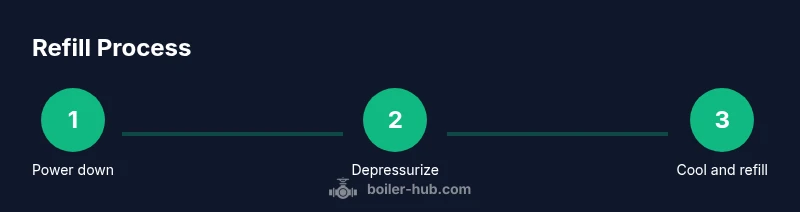
Step 1: Power down and isolate. Switch off the boiler’s electrical supply and close the fuel valve if applicable. This eliminates ignition risk and stops any automatic re-fill cycle. Step 2: Allow cooling and depressurization. Give the unit time to return to safe temperature and release pressure through the installed safety pathways per the manual. Step 3: Close the water inlet valve. Make sure it is fully closed to prevent any unexpected flow during inspection or refilling. Step 4: Inspect for leaks and damage. Look for drips, corroded joints, or signs of wear on fittings and the expansion tank. Step 5: Prepare to refill slowly. Have a clear plan and a method to monitor the pressure gauge as you introduce water. Step 6: Open the fill line gradually (if your system uses a manual fill). Feed water slowly while watching the gauge and staying mindful of hot surfaces. Step 7: Bleed air if needed. Some systems require releasing air pockets after water begins to fill; follow the manual’s procedure. Step 8: Recheck and re-energize. When the pressure and water level stabilize, restore power or gas and test the boiler briefly for normal operation. Step 9: Monitor for leaks. After restarting, observe for several minutes to confirm stability and safety. The core message is that the entire refill should occur only after the boiler is off and cold, with strict adherence to the model’s guidance.
This structured approach reduces the likelihood of scalding, water hammer, or valve damage and aligns with professional maintenance standards.
What to do if you notice issues during refill
If you detect abnormal noises, unexpected pressure changes, leaks, or fault codes during or after refilling, stop and reassess. Do not attempt to force water or bypass sensors. Shut down the energy source and consult the service manual or a licensed technician. Documentation of symptoms—noise, heating irregularities, fluctuations in pressure—helps a technician diagnose root causes quickly and accurately. Boiler Hub advises timely professional intervention when anything seems off, especially if the system is older or has a history of safety concerns. Delayed service can lead to more serious problems, including boiler breakdown, gas leaks, or carbon monoxide exposure.
Maintenance habits to prevent frequent refills
A well-maintained boiler reduces the need for emergency refills and prolongs system life. Schedule annual professional servicing to inspect the feed valve, expansion tank, pressure relief valves, and control components. Keep the area around the boiler clear, dry, and accessible for quick inspections. Track any pressure drops or changes between service visits and note corresponding temperature readings or noise. Replacing worn components proactively—such as the pressure relief valve or feed valve—can prevent sudden failures. Boiler Hub emphasizes ongoing maintenance as a cornerstone of safe, reliable heating, rather than reactive fixes. Regular checks help you catch issues before they escalate.
Authority sources and safety standards
For safety standards and best practices, rely on guidance from recognized authorities and always cross-check with your boiler model’s manual. Key resources include OSHA.gov for safety standards, energy.gov for energy and safety guidelines, and nist.gov for standards and measurement accuracy. These sources provide foundational principles relevant to boiler operation and servicing, beyond model-specific steps. The Boiler Hub approach is to integrate general safety practices with model-specific instructions, ensuring a personalized, safety-first protocol for every system. While guidelines provide a framework, your model’s manual should always be the primary reference during a refill or maintenance activity.
Quick recap: core takeaways
- Do not refill a live boiler; always power down first.
- Allow cooling and depressurization before adding water.
- Follow the manufacturer’s instructions precisely; don’t improvise.
- Inspect for leaks and safety device integrity prior to refilling.
- Record observations and seek professional help if anything seems off.
Tools & Materials
- Boiler owner's manual(Specific model instructions for refill and safety)
- Personal protective equipment (PPE)(Heat-resistant gloves, eye protection)
- Adjustable wrench or valve keys(To operate valves if needed)
- Flat-head and Phillips screwdrivers(For panel access or bypass screws)
- Dry rag or towel(Wipe spills and dry surrounding area)
- Non-slip footwear and protective gear(Prevent slips in a wet area)
- Leak detection cloth or bowl(Catch drips during refilling)
- Notebook and pen(Record readings and steps)
Steps
Estimated time: Approximately 20-40 minutes total, depending on system and accessibility
- 1
Power down and isolate
Shut off the boiler’s electrical supply and close the gas or fuel valve if present. This ensures there is no ignition source or water feed while you work. The goal is to work on a de-energized system to prevent accidental activation.
Tip: Verify the power switch is off at the wall and the breaker is not tripping. - 2
Cool and depressurize safely
Give the boiler time to cool to a safe temperature. If your system has an accessible relief path, allow pressure to relieve only through the built-in device according to the manual.
Tip: Never force or bypass a relief valve; this could cause scalding or an explosion. - 3
Close the water inlet valve
Ensure the cold water inlet valve to the boiler is fully closed to stop any incoming water while you prep for refilling later.
Tip: Confirm valve posture with a visual check; a slightly open valve can still feed water. - 4
Check for leaks and damage
Inspect visible pipes, fittings, and the expansion tank for signs of wear or leaks before proceeding.
Tip: Address any leaks before adding water; they point to a possibly faulty component. - 5
Prepare to refill slowly
Position a clean container or drain pan to catch any spillover. Prepare to introduce water gradually once you begin. This avoids rapid pressure changes.
Tip: Work with a calm, deliberate pace; rushing increases risk. - 6
Open the fill line gradually
If your system uses a manual fill valve, begin feeding water slowly while monitoring the gauge. Do not exceed the recommended pressure or temperature.
Tip: Keep hands away from hot surfaces as you proceed. - 7
Bleed air if needed
Some systems require purging air via an air vent after water is introduced. Do this gently per the manual.
Tip: Air pockets can prevent efficient heating and cause noises. - 8
Recheck, re-energize, and test
Once the water level and pressure are steady, restore power/gas and run the boiler briefly to confirm normal operation. Check for leaks again and observe for stability.
Tip: If anything abnormal occurs, shut down and seek professional help.
Questions & Answers
Is it safe to top up a boiler while it is still warm?
No. Warming water into a hot boiler can cause scalding and pressure surges. Wait for it to cool and depressurize first.
Top up a boiler only after it has cooled and depressurized, per the manual.
What should I do if I accidentally start refilling a hot boiler?
Shut off the water supply, turn off power or gas if safe to do so, and allow the system to cool before continuing.
If you start filling while hot, stop, turn off water and energy, and let it cool.
Can I use a regular garden hose to refill?
No. Use the boiler’s dedicated feed or follow the manual’s recommended method to avoid pressure imbalances.
Use the recommended fill method, not a random hose.
Do I need a professional to refill after maintenance?
If you are unsure about the steps or notice leaks or abnormal pressure, contact a licensed technician.
If in doubt, call a pro to refill and check your system.
What safety gear should I wear?
Wear heat-resistant gloves and eye protection; keep clothing away from hot surfaces.
Wear gloves and eye protection when handling a boiler.
Watch Video
Key Points
- Never fill a live boiler.
- Power down, cool, depressurize first.
- Follow manufacturer instructions exactly.
- Inspect for leaks before refilling.
- Document observations for future service.