Boiler Troubleshooting: Quick, Safe Fixes When Your Boiler Does Not Work
Urgent, practical guidance to diagnose and fix a boiler that does not work. Step-by-step checks, safety notes, and when to call a professional for reliable heat.


When a boiler does not work, the most likely causes are power supply issues, a tripped safety switch, thermostat faults, or ignition problems. Start with the simplest checks: ensure the boiler is powered, reset any tripped breakers, verify thermostat settings, and inspect the gas valve if you have a gas boiler. If the display shows codes, consult the manual or Boiler Hub’s guidance for code-specific steps. If in doubt, stop and call a licensed pro.
Quick Start: Why a Boiler Might Not Work
If the boiler does not work, you’re not alone. This situation is more common than many homeowners realize, especially after seasons of heavy use or long stretches without service. According to Boiler Hub, the root causes tend to be mundane but highly solvable: a simple power issue, a tripped safety switch, a faulty thermostat, or an ignition fault in gas boilers. Recognizing these symptoms early can save time and protect your home from cold snaps. In this guide, we’ll walk through a calm, methodical approach that prioritizes safety and reliability. You’ll learn to separate what you can fix yourself from what requires professional service, and you’ll understand how routine maintenance can prevent recurring failures. As you read, keep a notebook of what you observe—display messages, strange noises, and pressure readings—so you can provide precise details if you need to call in a technician. Boiler Hub’s team emphasizes practical, implementable steps rather than speculation, so you can act with confidence when your boiler won’t cooperate.
Safety First: Immediate precautions before troubleshooting
Safety always comes first when dealing with boilers. Before touching electrical or gas components, shut off the boiler at the wall switch and, if possible, the main service disconnect. If you detect a gas odor or hear an unusual hissing sound, evacuate the area and call the gas emergency line. Do not attempt to relight pilots or tamper with gas valves unless you are trained. Wear eye protection and avoid loose clothing around exposed wiring or moving parts. These safety steps prevent accidents and keep you and your home out of harm’s way while you diagnose the issue. Remember: when a boiler does not work, you must treat every situation as potentially dangerous until proven safe by proper checks.
Basic Checks: Power, Fuel, and Thermostats
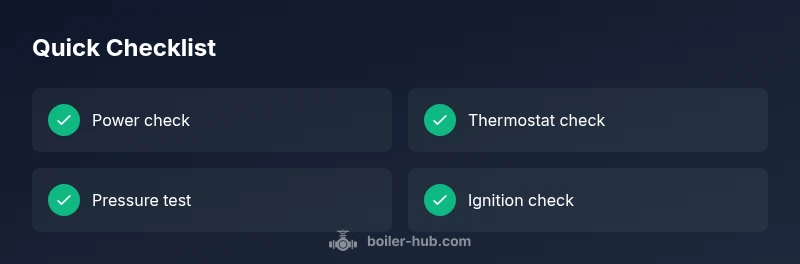
Start with the simplest, most common culprits. Check that the boiler is plugged into a working outlet or that the hard-wired supply is on. Flip the main switch off, then back on, and reset any circuit breakers. If you have a gas boiler, verify that the gas valve is fully open and that the gas line is delivering fuel without leaks—that smell of gas or a hissing line is a reason to stop and call professionals. Inspect the thermostat position and settings; ensure it is not set so low that hot water is never requested. If your system uses batteries in a wireless thermostat, replace them and re-sync. These basic checks address a large share of “boiler does not work” scenarios and often restore normal operation without specialized tools.
Diagnostic Flow: Symptoms to Diagnosis to Solutions
A structured diagnostic path helps you identify root causes quickly. If the boiler display is completely dark or unresponsive, the issue is likely electrical (power, switch, or breaker). If the display shows an error code, consult the manual or Boiler Hub’s database for code-specific guidance. A banging, gurgling, or whistling noise often points to trapped air, water hammer, or low water conditions that require bleeding or refilling. Low pressure on the gauge typically means the expansion tank or fill valve needs attention. If the boiler runs but provides no heat, examine circulation, zone valves, and thermostat wiring. Following a symptom-to-diagnosis approach reduces wasted effort and improves safety—especially if you need to call a pro later.
Quick Fixes You Can Try in Order
Apply fixes in the order of simplicity and safety. First, perform a careful power cycle: turn off the boiler, wait 30 seconds, then power it back on. If there is a reset option on the control board, use it according to the manual. Check for a mis-set thermostat or a tripped relay and correct as needed. For gas boilers, ensure the gas valve is open and listen for a gas flame ignition; if the flame won’t ignite, do not tinker with gas lines—call a professional. If the pressure gauge is low, consult the boiler’s manual on safe re-pressurizing procedures and perform bleeding or topping up as directed. If none of these steps restore heat, escalate to professional service.
Prevention and Maintenance to Avoid Recurrence
Regular maintenance is the best defense against future failures. Schedule annual professional servicing, especially before peak heating seasons. Bleed radiators to remove trapped air, check for leaks around fittings, and inspect the expansion tank and pressure settings. Keep the area around the boiler clear of dust and debris; a clean, accessible service area makes future inspections faster and safer. Tracking performance over time helps you spot creeping issues early, reducing emergency repairs and downtime when the weather turns cold.
When to Call a Pro and What to Expect
Certain symptoms require licensed expertise. If you notice persistent water leaks, a persistent gas odor, electrical shocks, or if the boiler fails to ignite after attempted resets and safety checks, contact a professional. A qualified tech will confirm safety first, perform pressure and combustion analysis, inspect ignition or burner assemblies, and verify venting and flue integrity. You should be prepared with your observations, recent maintenance history, and any error codes displayed. Boiler Hub recommends avoiding improvised fixes on gas or high-pressure systems to prevent dangerous incidents and costly damage.
Steps
Estimated time: 60-90 minutes
- 1
Power down for safety
Shut off the boiler at the wall switch and the main breaker. Wait 60 seconds, then turn the power back on. This resets minor electronics and can clear a temporary fault.
Tip: Never bypass safety switches; a reset should be deliberate and controlled. - 2
Verify the power source
Test the outlet with a small appliance or use a multimeter to confirm voltage. If the outlet is dead, address the circuit issue before proceeding with boiler-specific checks.
Tip: A failed outlet is a common cause and often the easiest fix. - 3
Check thermostat settings
Ensure the thermostat is set to heat and not a cooling mode. If wired, inspect connections and look for loose wires. Replace batteries if it uses a wireless thermostat.
Tip: Reset the thermostat if it has a separate reset option. - 4
Inspect gas supply (gas boilers only)
Confirm the gas valve is fully open and there are no gas odors. Do not attempt to adjust gas lines yourself; call a licensed professional if you suspect gas issues.
Tip: Never ignore the smell of gas; evacuate and call emergency services. - 5
Check water pressure and leaks
Look at the pressure gauge and ensure it is within the normal range specified by your boiler’s manual. Check for leaks around fittings and valves, tightening connections if safe to do so.
Tip: Bleed radiators to remove air if you notice cold spots. - 6
Inspect ignition and burner
If the boiler attempts to ignite but flames fail to sustain, inspect the burner assembly and flame sensor. Cleaning may help, but avoid aggressive adjustments.
Tip: A dirty flame sensor is a common cause of failed ignition and can be cleaned safely with proper tools. - 7
Test reset and re-fire
After completing the above, perform a controlled reset and attempt to re-fire the boiler. Observe for error codes and note them if present.
Tip: Record the steps taken and any codes to share with a pro.
Diagnosis: Boiler won't turn on or provide heat
Possible Causes
- highPower issue (outlet, switch, breaker)
- mediumThermostat or control wiring fault
- mediumGas supply or pressure problem (gas boilers)
- lowLow water pressure or expansion tank issues
- lowIgnition or flame sensor problem (gas boilers)
Fixes
- easyCheck the main power switch and reset any tripped breakers; test the outlet with a lamp
- easyInspect thermostat settings and wiring; replace batteries if needed and recalibrate
- mediumVerify gas supply, valve position, and look for audible gas flow; do not tamper with gas lines
- easyInspect pressure and expansion tank; re-pressurize or bleed radiators as directed by the manual
- mediumCheck ignition components or flame sensor; if uncertain, call a professional
Questions & Answers
What should I do first if my boiler won't start?
Begin with safety: switch off power, check the display or codes, and then verify basic things like power, thermostat, and gas valve. If you smell gas, exit immediately and call the gas emergency line. If no code appears, try the simple resets described in this guide before seeking professional help.
First, turn off power and check basic controls. If you see a code, refer to the manual; if you smell gas, leave and call for help.
Why is my boiler not turning on even though the thermostat shows it's on?
The thermostat may be miscalibrated or have loose wiring. Check the thermostat settings, confirm it is calling for heat, and re-seat any loose connections. If it uses batteries, replace them and re-sync the device.
Check the thermostat settings and wiring, and replace batteries if needed.
Can I fix a boiler that won't ignite on my own?
Ignition problems can be hazardous, especially with gas. Basic checks are fine, but if ignition fails after safety checks, call a licensed technician. Do not attempt to repair gas lines or ignition components yourself.
Ignition issues can be dangerous; contact a pro if basic checks don’t fix it.
What maintenance tasks help prevent boiler failures?
Annual servicing, bleeding radiators, checking pressure, and inspecting valves are key maintenance tasks. Keep the area around the boiler clean and accessible to simplify future inspections and reduce downtime.
Regular servicing and bleeding radiators help prevent failures.
Is it safe to keep using a boiler that makes unusual noises?
Strange noises can indicate air in the system or a mechanical issue. Stop using the boiler if you smell gas, and contact a professional to diagnose and fix the problem before continuing use.
Unusual noises can signal problems; stop and call a pro if gas smell occurs.
Watch Video
Key Points
- Start with safe power and basic checks.
- Follow a diagnostic flow before calling a pro.
- Never bypass safety devices or tamper with gas lines.
- Document symptoms to aid future diagnosis.