Where Do Boilers Leak From: Urgent Troubleshooting Guide
Learn where boilers typically leak from, quick safety steps, diagnostic flow, and expert guidance to stop leaks fast. A practical Boiler Hub troubleshooting guide for homeowners and facility managers.


Boiler leaks almost always start at fittings, gaskets, valves, or the heat exchanger. The quickest fix is to shut down the boiler, turn off the water supply, and reduce pressure if safe. Then inspect accessible joints for moisture, tighten loose connections, and vent any pressure safely. If the leak persists or involves the heat exchanger, call a licensed professional immediately.
Where do boilers leak from: understanding the problem
Leaks from a boiler can feel urgent because water and steam exposure risks electric shock, slippery floors, and potential gas safety concerns. In many homes, the question of where do boilers leak from centers on age, material degradation, and pressure dynamics. A high-quality, properly installed boiler operates with sealed joints and controlled pressure; when corrosion, warped fittings, or worn gaskets occur, leaks follow. According to Boiler Hub Analysis, 2026, aging components are a leading contributor to small, stubborn leaks that escalate if ignored. This section lays the groundwork for recognizing the most common sources and distinguishing between minor drips and major failures. Understanding the typical failure modes helps you act fast and protect both people and property.
Signs a leak is active and where to look
- Puddles on the floor or a damp area around the base of the boiler
- White, crusty mineral deposits or brown staining around joints
- Humming, banging, or strange pressure changes on the gauge
- Frequent refilling of the system or rising boiler pressure
These signs point to specific areas to inspect first. Always prioritize safety: if you smell gas, hear hissing near gas lines, or see standing water combined with scorch marks, evacuate and call emergency services. Regularly checking the area around the boiler can reveal leaks early and prevent costly damage.
Common leak sources on boilers and how they manifest
Boilers typically leak from a few familiar spots. The most common include the pressure relief valve, condensate drain or line, water inlet/outlet fittings, pump seals, and gasketed joints on the heat exchanger. A tiny seepage at a valve stem may widen into a drip if vibrations persist. A cracked heat exchanger or corroded main seal, while less frequent, is a critical failure that requires immediate professional attention. Understanding these sources keeps you focused when inspecting the unit and reduces unnecessary disassembly by nonprofessionals.
Safety first: immediate actions when you detect a leak
- If you notice water, turn off the boiler power at the switch or circuit breaker before touching any components. 2) If your system uses gas, ensure there is no gas odor or flame; if you detect gas, evacuate and contact the utility or emergency services. 3) Shut off the water supply to the boiler if you can access the isolation valve safely, and place towels or a catch pan to prevent floor damage. 4) Do not attempt to seal a suspected heat exchanger leak with tape or sealant; such fixes can hide dangerous problems and delay proper repair. 5) Contact a licensed technician for leaks that involve the heat exchanger, gas connections, or if the leak is not easily isolated.
How to inspect safely without disassembly
Begin with obvious exterior joints and drain valves first. Use a flashlight to inspect carefully around the burner access panel, pump seals, and flange gaskets. Check the pressure gauge for abnormal readings and compare to the system's normal operating range. If you see moisture on the outside of pipes or fittings, wipe it down to confirm if it’s a fresh leak or residual moisture from a prior leak. Avoid opening pressure-bearing components unless you are trained; a sudden release of pressure can injure you.
Diagnostic flow: symptom-driven reasoning you can follow
If you see water pooling: check condensate line or drain valve; if dry but damp joints exist, focus on fittings and gaskets. If pressure rises rapidly after refill, suspect the pressure relief valve or a faulty expansion tank. If you smell burned plastic or see scorch marks near electrical connections, stop and call a professional immediately. For any leak that involves the heat exchanger or gas lines, professional service is mandatory. Use a notebook to log dates, sounds, and observations to share with the technician.
Step-by-step fixes for the most common leak type (loose fittings or valves)
- Safety: ensure power and water are off and the boiler is cool. 2) Visually identify the source of the leak at the fitting or valve. 3) Close the valve or valve stem if it is accessible and not seized; gently tighten by a quarter-turn, then recheck for leaks. 4) If a gasket is leaking, replace the gasket with the correct size and material; do not reuse old gaskets. 5) Refill the system slowly and monitor the area for new drips over 24 hours. 6) If the leak returns or you feel uncertain, stop and call a professional.
When to escalate: heat exchanger, main seals, or gas connections
Leaks from the heat exchanger or main seals typically require component replacement and are not safe for DIY fixes. Gas connections also demand licensed expertise to prevent fire or gas exposure. Always err on the side of caution: if you can’t identify a safe, reliable fix, arrange professional service promptly. A delayed response can lead to water damage, mold growth, and system inefficiencies.
Prevention tips: maintenance to minimize future leaks
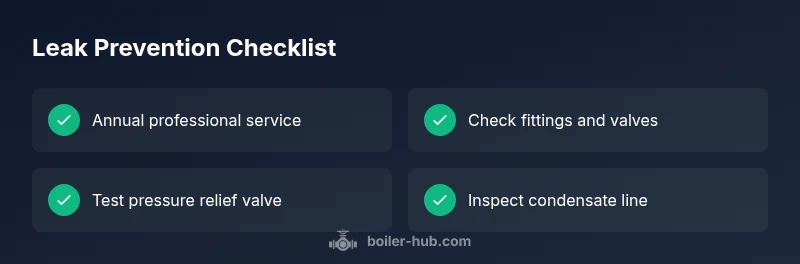
- Schedule annual boiler servicing by a qualified technician and keep service records
- Inspect and tighten exposed fittings every 6–12 months, especially after leaks or vibrations
- Flush the system to remove mineral buildup that can corrode seals and gaskets
- Test the expansion tank and pressure relief valve for proper operation
- Use a drip tray and secondary containment in boiler rooms to catch leaks early and prevent mold
What to prepare before a service visit and how to document leaks
Create a simple leak diary: note when the leak started, daily moisture levels, and any noises or gauge readings. Photograph corroded fittings, valve stems, and any white crust around joints. Write down boiler model, serial number, and date of last service. This helps the technician diagnose quickly and reduces downtime. Keep a clean, dry area around the boiler so the technician can access components safely and efficiently.
Steps
Estimated time: 60-90 minutes
- 1
Ensure safety and power down
Before touching any boiler components, switch off the boiler at the main power switch and allow the system to cool. If you smell gas, evacuate and call emergency services. Do not attempt to operate valves or seals while wet or under pressure.
Tip: Keep a dry, non-slip mat near the boiler to improve footing during inspections. - 2
Identify the leak source
Carefully inspect visible joints, valves, and the condensate line for moisture. Use a flashlight and wipe the area to determine if fresh drips are occurring. Note where the water appears first and whether it travels along a specific pipe.
Tip: Mark the suspected area with a piece of tape for quick reference during the repair or when you call a pro. - 3
Tighten or reseal minor connections
If a fitting or valve is loose, gently tighten it with the appropriate tool. Do not overtighten, as this can strip threads or crack seals. If a gasket appears worn, replace it with the exact same size and type.
Tip: Only perform this step if you can safely reach the joint and the system is depressurized. - 4
Check the condensate line and drain valve
Ensure the condensate line is clear and correctly pitched to drain. If the drain valve is leaking, replace the valve or gasket. Confirm there is no obstruction that could cause backflow or pressure buildup.
Tip: Have a bucket ready to catch any residual condensate during replacement. - 5
Refill and test the system
Slowly refill the system and monitor the joints over the next 24 hours for new drips. Record pressure readings and any changes in the gauge to determine if the leak was resolved or requires further action.
Tip: Keep a log with dates and readings to share with a technician. - 6
Escalate if the leak persists
If the leak continues after the above steps, or if you encounter a heat exchanger, main seal, or gas line leak, stop and call a licensed boiler technician immediately. Do not attempt major disassembly or replacement without professional training.
Tip: Ask for a written estimate and a list of recommended parts before any service.
Diagnosis: Water dripping or pooling near boiler; damp spots; rising pressure or unusual noises
Possible Causes
- highLoose fittings or valve connections
- highCondensate line or drain valve leak
- mediumPressure relief valve seepage
- lowCracked heat exchanger or failed gaskets
- lowExpansion tank or pipe corrosion
Fixes
- easyTighten accessible fittings or replace defective washers
- easyInspect condensate line and drain valve; replace gaskets or seals as needed
- mediumTest and replace pressure relief valve if leaking
- hardShut down boiler and call a pro for heat exchanger or major component leaks
Questions & Answers
What are the most common sources of boiler leaks?
Most boiler leaks originate at fittings, gaskets, valves, or the condensate line. Less common but serious causes include heat exchanger cracks or worn seals. Identify the source first before planning any repair.
Most leaks come from fittings or the condensate line. If it’s the heat exchanger, call a pro.
Can I fix a leak myself?
Only for simple, accessible joints and when the system is depressurized and safe to handle. Do not attempt repairs on pressure vessels or gas lines. When in doubt, contact a licensed technician.
DIY fixes are only for easy joints. For anything else, call a pro.
What should I do immediately if there is a gas smell near the boiler?
Evacuate the area and call your gas supplier or emergency services. Do not operate electrical switches or try to fix gas lines yourself.
If you smell gas near the boiler, evacuate and call emergency services.
How often should I service my boiler to prevent leaks?
Annual professional servicing is recommended to identify wear, corrosion, and weak seals before leaks develop. Regular checks help extend the life of your boiler.
Have a pro service your boiler yearly to prevent leaks.
If a leak is found, what should I tell the technician?
Provide photos, notes, gauge readings, and the model/serial number. Describe the sequence of events and when the leak started to help the technician diagnose quickly.
Share photos, readings, and model details with the tech.
Watch Video
Key Points
- Act quickly to shut down power and water when a leak is detected
- Identify whether the leak is from fittings, valves, or the heat exchanger
- DIY fixes are suitable only for simple, non-pressurized joints
- Call a licensed pro for heat exchanger leaks or gas line issues