Tube Leakage in Boiler: Diagnosis, Fixes & Safety
Learn to identify tube leakage in boiler, diagnose causes, and safely fix or coordinate with a professional. Steps and safety tips from Boiler Hub for homeowners and facility managers.


Tube leakage in boiler is commonly caused by corroded tubes, failed seals, or a cracked header. Begin by shutting off the boiler and isolating the system, then inspect for corrosion, staining, or obvious cracks. If a leak is detected, do not operate the boiler; arrange professional assessment immediately.
What is tube leakage in boiler? Causes and warnings
Tube leakage in boiler is a serious condition that can escalate quickly if left unchecked. According to Boiler Hub, leaks often begin as small seepage that erodes surrounding metal and can compromise pressure boundaries. Common culprits include corrosion from aggressive water chemistry, mineral scale that concentrates stresses, thermal fatigue from cycling, and mechanical damage from vibration or improper maintenance. Early signs include damp areas around heat exchanger tubes, crusty mineral deposits, warm or moist patches on boiler walls, and rising boiler water loss without obvious steam release. If you notice any of these indicators, treat them as urgent and establish an immediate shutoff protocol to avoid a potential runaway pressure event. In boilers where water treatment is not up to spec, acids or alkaline treatments may accelerate deterioration, making tube failure more likely. Regular chemical testing and proper feedwater treatment are essential to minimize risk and extend tube life. Regular inspection should be part of boiler maintenance routines to catch corrosion and fatigue before a leak becomes critical.
Immediate safety steps when you detect a leak
Safety comes first when you suspect tube leakage in boiler. If you observe dampness, witness steam leakage, or hear gurgling sounds, shut down the boiler following the manufacturer’s lockout procedures. Isolate electrical supply, close the manual boiler isolation valve, and prevent unauthorized access to the area to avoid scalding or contact with hot surfaces. Do not attempt to seal a leak with tape or temporary fixes, as pressure and heat will exacerbate the problem. Ventilate the area if steam is present to reduce the risk of burns and inhalation hazards. If the leak continues after shutdown, evacuate, and contact a licensed technician for on-site assessment. Document the symptoms, including approximate time of detection, observed color of water, odor, and whether steam is visible, to help the technician diagnose faster and safer.
Visual cues and signs of tube leakage
Look for discolored water around the boiler and corrosion pits along tube walls. Crystalline deposits at joints often indicate mineral-rich leaks. A sudden drop in pressure without a corresponding heat load increase can signal a leak somewhere in the tube bundle. Listen for hissing or whistling sounds, which may indicate escaping steam constrained by faulty seals. In some cases, you may see wet floors or wall surfaces near the boiler, or hear a steady seep accompanied by warm patches on metal surfaces. Early imaging with infrared cameras can reveal heat anomalies where leakage is occurring. Remember, even small signs deserve professional evaluation to prevent catastrophic failure.
Diagnostic flow: symptom → diagnosis → solutions workflow
This workflow helps homeowners and facility managers quickly gauge the problem: start with visible symptoms, rule out simple causes, then determine the right repair path. Symptom: dampness around tubes or visible steam. Diagnosis: likely corrosion, seal failure, or cracking; confirm with pressure test and visual inspection. Solutions: if the leak is minor, isolate the affected section and schedule a professional repair; if widespread, prepare for tube replacement and system flush. Maintain a log of boiler operating hours and water treatment quality to anticipate future issues. Always follow safety protocols and never open pressurized sections without proper lockout/tagout.
Step-by-step: how to address the most common tube leak
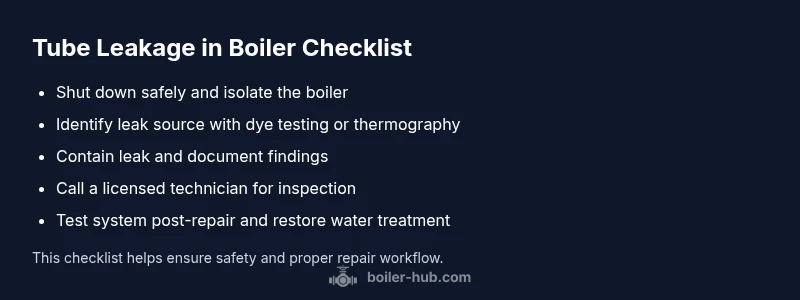
- Safety first: power down, lockout/tagout, and evacuate non-essential personnel. 2) Isolate and depressurize: close the feedwater valve, vent excess pressure, and ensure the system is cool before touching components. 3) Confirm leak source: inspect heat exchanger tubes, headers, and seals for corrosion or cracks; use dye testing if necessary. 4) Contain the leak: place secondary containment and absorbent materials around the area; avoid mixing cool down fluids with hot surfaces. 5) Notify professionals: call a licensed boiler technician and provide diagnostics, photographs, and a map of where leakage is observed. 6) Post-repair steps: verify system integrity, perform pressure testing, and restore water treatment to recommended levels. 7) Documentation: log the repair details, replacement parts, and follow-up inspection date. 8) Return to service: slowly re-pressurize, monitor for recurrence, and schedule preventive maintenance. Tip: never attempt to weld or patch pressurized tubes yourself.
Prevention tips to avoid future leaks
Implement a robust water treatment program to prevent corrosion and mineral buildup, including regular blowdown procedures and weekly monitoring of pH and conductivity. Schedule annual boiler inspections and ensure gaskets, seals, and expansion joints are replaced on recommended cycles. Use high-quality, compatible fittings and avoid abrupt thermal shocks by staging heat-up and cool-down. Keep an updated log of maintenance events, water chemistry results, and any deviations in boiler performance. Train staff to recognize early warnings, such as unexpected moisture, stains, or quiet leaks, so that issues are addressed before they escalate.
When to call a professional and what to expect
If there is any doubt about the leak’s source or if the boiler is under warranty, contact a licensed professional immediately. A technician will typically perform a visual inspection, pressure tests, dye penetrant checks, and sometimes bore-scope inspections to locate hidden leaks. Expect replacement of corroded tubes or seals, flushing the system, and verifying proper water chemistry afterward. Confirm that all safety devices are tested and reset after repair. For facility managers, arrange temporary boiler shutdown, coordinate with maintenance crews, and communicate expected downtime to stakeholders. In the long run, schedule preventive maintenance to reduce the risk of recurrence and ensure compliance with safety regulations.
Long-term maintenance and safety best practices
Adopt a proactive maintenance mindset: implement a formal inspection schedule, keep treatment chemicals within recommended ranges, and train staff on safety protocols. Use non-destructive testing where feasible to monitor tube integrity without disassembling the boiler. Maintain a detailed equipment history and update it after every incident. Establish a clear escalation path for leaks, including immediate shutoff, containment, and professional involvement. Finally, ensure proper ventilation in boiler rooms and tighter controls on ignition sources to minimize risk during inspection or repair.
Steps
Estimated time: 1-2 hours
- 1
Ensure safety and shut down
Begin by following lockout/tagout procedures to prevent accidental restart. Allow the boiler to cool before touching any components. This minimizes burn risk and reduces the chance of sudden pressure release.
Tip: Keep a clear exit path and assign a helper to maintain a safe perimeter. - 2
Isolate and depressurize
Close the feedwater valve and any vents to reduce pressure. If the system is hot, do not force cool-down; let it reach near-ambient temperatures before proceeding.
Tip: Use proper PPE and avoid standing in the discharge path. - 3
Locate the leak source
Perform a careful visual inspection of tubes, headers, and seals. If necessary, use dye testing or infrared thermography to pinpoint the exact location.
Tip: Photograph the area from multiple angles for the technician. - 4
Contain and document
Contain the leak with secondary containment; collect any escaping water and note color, odor, and steam presence. Record operating conditions and approximate leak rate for the service call.
Tip: Label the area with warning signs to prevent accidental contact. - 5
Call a licensed boiler technician
Contact a certified technician for a thorough assessment, diagnosis, and repair. Provide the leak location, observations, and any maintenance history.
Tip: Ask about required tube replacements and warranty implications. - 6
Plan for repair and post-checks
Schedule replacement of damaged tubes/seals and perform system flush. Verify water chemistry and perform a pressure test after repairs.
Tip: Request a written report and a restart checklist. - 7
Return to service
Gradually re-pressurize and monitor for recurrence. Ensure all safety devices function and record the restoration in the boiler log.
Tip: Set up a follow-up inspection within 1-3 months. - 8
Prevent future leaks
Implement protective measures like improved water treatment, regular inspections, and vibration analysis to catch early signs of wear.
Tip: Review maintenance intervals with your boiler manufacturer.
Diagnosis: Visible tube leakage or dampness around boiler tubes, unusual steam release, or sudden pressure drops
Possible Causes
- highCorrosion from poor water chemistry or pitting
- mediumThermal fatigue from cycling and high-temperature stress
- lowMechanical damage from vibration or improper maintenance
Fixes
- easyIdentify leak source through visual inspection and pressure testing; isolate the affected section
- easyShut down, depressurize, and prepare for professional service; document signs and timing
- hardReplace corroded tubes or seals; perform system flush and restore proper water treatment
Questions & Answers
What causes tube leakage in boilers most often?
Most leaks stem from corrosion due to improper water chemistry, mineral buildup, or thermal fatigue from cycling. Mechanical damage or poor maintenance can also contribute. Regular water treatment and scheduled inspections dramatically reduce risk.
Most leaks come from corrosion or fatigue caused by cycling; regular maintenance helps prevent them.
Is a small leak dangerous, and can I repair it myself?
Even small leaks can rapidly escalate. Do not attempt DIY repairs on pressurized tubes or heat exchangers. Call a licensed boiler technician for a safe assessment and repair.
Small leaks can become big problems; don’t fix them yourself—call a professional.
How long does a typical tube replacement take?
Repair time depends on leak location and boiler design. Replacing corroded tubes and testing the system often takes several hours to a day, plus post-repair checks.
Replacement can take several hours depending on the boiler, plus testing afterward.
What maintenance prevents tube leaks?
Maintain proper water chemistry, perform regular blowdowns, inspect seals and headers during routine maintenance, and schedule annual professional inspections.
Keep the water chemistry right and have yearly professional checks to prevent leaks.
When should I involve safety regulators or report a leak?
If the leak involves hazardous materials, dangerous pressure, or violates safety standards, contact the appropriate safety regulator and document the incident for compliance.
If it involves safety or regulatory concerns, inform the proper authorities and document it.
Watch Video
Key Points
- Shut down safely at first sign of a leak.
- Don’t attempt DIY fixes on pressurized tubes.
- Document symptoms and call a licensed technician promptly.
- Regular water treatment reduces corrosion risk.
- Plan for preventive maintenance after repair to avoid recurrence