Is a Leaking Boiler Bad? A Troubleshooting Guide
Discover why a leaking boiler is a red flag, how to diagnose common causes, and safe steps to troubleshoot. Boiler Hub's expert guide for homeowners and facility managers.


Is a leaking boiler bad? Yes—it's dangerous and requires immediate action. Steps to take: 1) if safe, shut off the boiler power and gas supply; 2) ventilate the area and keep people away; 3) call a licensed technician right away; 4) do not use the boiler until inspected. If you smell gas, leave immediately and contact emergency services.
Is a leaking boiler bad? Immediate risks and why you should act now
A boiler that leaks is not just an annoyance; it can escalate into significant hazards for your home or building. is a leaking boiler bad is a direct question homeowners ask, and the answer is yes—the risk to people and property is real. Water around electrical panels, damp ceilings, and fuel or gas traces create slip hazards, mold growth, and potential exposure to carbon monoxide if combustion is involved. According to Boiler Hub, a leak often signals a failing seal, corroded heat exchanger, or damaged valve that can worsen quickly if ignored. Prompt action preserves safety, reduces energy waste, and protects valuables. In this guide we cover how leaks happen, how to assess them safely, and the right steps to take to minimize damage while you schedule professional service.
Common leak causes and what they mean
Leaks around a boiler can stem from several common sources. A failing gasket or loose fitting at valves and joints is the most frequent cause because temperature and pressure stress slowly wear seals. The pressure-relief valve can fail or stick, releasing water and reducing safety margin. A cracked heat exchanger or corroded boiler casing is more serious and often requires replacement. Condensate drains, traps, and piping can develop cracks or blockages that leak when the system cycles. Mineral buildup from hard water accelerates corrosion, especially in older units. If you notice a steady stream rather than a small dribble, or white/or chalky residue, you’re likely facing one of these issues. Early detection improves outcomes and lowers repair costs. Boiler Hub notes that addressing leaks early preserves efficiency and reduces the likelihood of a total boiler failure.
Safety first: immediate steps you can take
If you discover a leak, safety is the top priority. First, determine whether you can safely approach the unit. If there is any gas odor, evacuate immediately and call emergency services. If electrical devices are near the water, avoid touching switches. If the area is dry and safe, shut off the boiler using the wall switch or the service valve, then isolate the fuel supply if you can safely access it. Clear the space of children and pets, and place towels or a bucket to catch drips to minimize water damage. Do not attempt to seal a leak with tape or epoxy; this could worsen the problem or delay proper repair. After shutting down, ventilate the room and monitor for any signs of rising humidity, which could indicate a hidden leak.
How to diagnose the leak and collect data
A systematic approach helps you communicate effectively with technicians and potentially reduce downtime. Start with visuals: note where the leak originates (valve, joint, or the boiler body), the color and texture of the water, and whether it’s accompanied by steam or hissing sounds. Check the boiler pressure gauge; most residential systems should sit within a recommended range noted on the exterior panel. Look for frost or mineral deposits around the joints that signal a slow, persistent drip. Photograph the area from multiple angles, and keep a simple diary of when the leak appears (during heating cycles or during standby). These details speed up diagnosis and help the technician determine whether the issue is a simple gasket replacement or a more complex heat-exchanger problem.
When to call a professional vs DIY steps you can take
Small, cosmetic drips near accessible fittings may be tightened or resealed by a trained homeowner, but many leaks require licensed service. Do not attempt to disassemble the heat exchanger or repair a cracked shell yourself. A pro will check the pressure relief valve, expansion tank, and gas line safety, and perform pressure tests to confirm integrity. If you have an older unit, weigh the cost of repairs against replacement; a system over 15-20 years old often becomes less reliable and more expensive to fix in the long run. While waiting for a technician, avoid running hot water or heating to minimize damage. Remember: if the leak is accompanied by strong odors, gas smells, or yellow flames, evacuate and call emergency services immediately.
Preventive maintenance to reduce future leaks
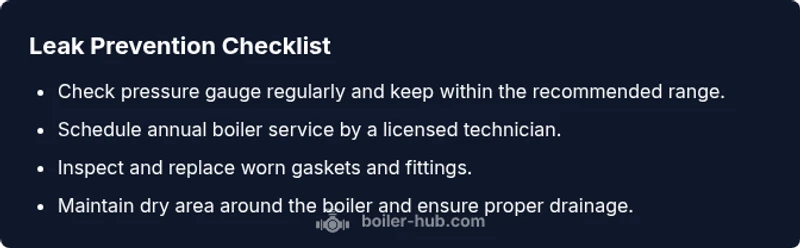
Prevention is cheaper than repair. Schedule annual boiler servicing with a qualified technician to check seals, valves, the expansion tank, and vents. Regularly inspect the area for signs of moisture, corrosion, or mineral buildup, and address small drips promptly before they become larger leaks. Use a water treatment plan if your water is hard to reduce mineral sediment. Maintain proper pressure in the system and replace worn gaskets promptly. Keeping the boiler area dry and organized reduces accidental damage and makes leaks easier to spot early. Effective maintenance saves energy, improves reliability, and extends the life of your boiler.
Steps
Estimated time: Total time: 45-90 minutes
- 1
Power down and isolate safety sources
Turn off the boiler at the wall switch and shut off the gas supply if you can do so safely. Do not touch electrical components near standing water. Verify power is off before approaching the unit.
Tip: Use a non-contact tester to confirm power is truly off before handling any components. - 2
Assess leak severity and locate origin
Look for the exact source of the leak: valve joint, gasket, pipe, or the boiler shell. Note whether the leak is constant or intermittent and if it worsens with heating cycles.
Tip: Take clear photos from multiple angles to show any dripping patterns. - 3
Contain and minimize damage
Place towels, a bucket, and plastic sheeting to protect floors and nearby surfaces. Avoid blocking ventilation or gas lines. Do not attempt crude fixes that involve sealing a leak with tape.
Tip: Keep children and pets away from the area. - 4
Document the leak for service clarity
Record readings from the pressure gauge, note the leak’s location, and log the time of day it occurs. Prepare a concise summary for the technician.
Tip: Include environmental conditions such as humidity and recent water usage. - 5
Call a licensed professional
Contact a certified HVAC technician or boiler specialist. Share your photos, notes, and any readings you collected to speed up the diagnostic process.
Tip: Ask about warranty implications and whether the unit qualifies for replacement options. - 6
Post-repair checks and follow-up
After repair, have the technician perform a test run, verify pressure stability, and check for additional leaks. Schedule a follow-up inspection if the leak returns.
Tip: Keep maintenance records for warranty and future service.
Diagnosis: Visible water leak from boiler cabinet or pipework
Possible Causes
- highLoose fittings or gaskets
- highFaulty pressure relief valve
- mediumCorroded heat exchanger or boiler shell
- mediumCracked condensate line or trap
- lowAging system with mineral buildup
Fixes
- easyTighten accessible fittings or replace worn gaskets where safe
- hardDepressurize and replace faulty pressure relief valve, under professional guidance
- hardSchedule professional inspection to assess heat exchanger integrity and potential replacement
- mediumRepair/replace condensate line or trap
Questions & Answers
Why does my boiler leak water?
Leaks usually come from worn seals, loose joints, or corrosion. They can also stem from a faulty pressure relief valve or condensate line. A pattern of dripping helps determine whether the issue is minor or requires extensive service.
Leaks typically come from worn seals or corroded parts; a professional should check the pressure valve and heat exchanger.
Can a boiler leak be caused by hard water?
Yes. Hard water creates mineral buildup that accelerates corrosion and weakens joints, leading to leaks over time.
Hard water buildup can cause leaks by corroding components over time.
Is it safe to run a boiler that leaks?
No. Do not operate the boiler until a professional inspects the unit. Leaks can worsen and create safety risks.
No—leaks are a sign something is wrong, and running it can make the problem worse.
What should I do right after I notice a leak?
Turn off power and gas if safe, contain the leak, and contact a licensed technician as soon as possible.
Turn everything off if you can safely, contain the leak, and call a pro.
How long do boiler repairs take?
Repair duration varies. Minor fixes may be quick, while major replacements require more time and parts.
Fixes can range from a few hours to longer depending on parts and the system.
When should I replace instead of repair?
Age, repair history, and efficiency determine the wiser choice. A professional can help decide whether replacement is more economical.
If the boiler is old and unreliable, replacement may be smarter.
Watch Video
Key Points
- Shut down safely if a leak is present.
- Not all leaks are equal—serious issues require a professional.
- Document leak details to speed diagnosis.
- Schedule annual maintenance to prevent future leaks.